
x
Black Bar Banner 1
x

NEW: About Me Look — turn on a full-width dark About Me from your profile Configuration (Profile Page Upgrade). The Academy, profile feeds and Media Feed now read like the News Feed. See Subscriptions »

New: AI Blog Autopilot — free for the next 30 days. Switch it on by November 15th »

NEW: Smart Mail is live — free for every member. Send broadcasts, build lists and run autoresponders. Open Smart Mail »

New training: The Campaign Map. Watch it now »

A+ A−
Ads by Markethive - View All
The Blog Feed
The Blog Feed
» Blog Feed
Write a New Blog Post
Search Blog Status
Most Viewed
Most Recent
Most Shared
Alphabetical
Markethive Blog (default)
My Blog Posts
Friends' Blogs
Blog Categories
All
Advertising
Blockchain & Cryptocurrency
Business Development
Diet & Weight Loss
Environmental
Health and Wellness
History and Culture
Home and Garden
Marketing
Mentoring & Training
Money & Finance
Other
Political
Prayer & Religion
Programming & Technical
Real Estate
Search Engine Optimization
Social Media
Spirituality
Sports & Recreation
Transport
Travel & Events
Website Design
Blogging Tools & Assets
My Blog Info
Members Subscribed to You
Blogs You Are Subscribed To
Website Widget
Wordpress Plugin
Subscribe for Greater Services
Subscribe to one of many subscriptions, each one includes the previous ones.. Unlock powerful tools, advance features, to build a powerful reach.

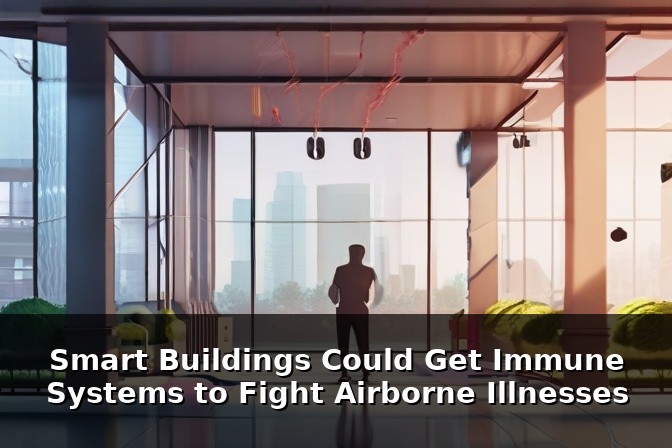
Smart Buildings Could Get Immune Systems to Fight Airborne Illnesses

Posted by CEO Thomas Prendergast on June 25, 2026 - 12:15pm


Smart Buildings Could Get Immune Systems to Fight Airborne Illnesses

Building Immune Systems: A New Era for Indoor Air

The post-pandemic world is reshaping how we think about the air inside our offices, schools, and homes. A new federal initiative is channeling about $150 million into technologies that act like an immune system for buildings—proactive, intelligent defenses that keep indoor air clean and safe. Rather than waiting for pathogens to spread, these systems aim to detect, neutralize, and optimize air quality in real time, quietly protecting occupants from airborne threats.

What this funding is catalyzing

The focus is to accelerate research, testing, and deployment of integrated solutions that improve indoor air without sacrificing energy efficiency. Key goals include validating safe and effective disinfection methods, integrating sensors with building management systems, and creating scalable solutions that can be retrofitted into existing structures as well as incorporated into new builds. The overarching aim is healthier indoor environments across schools, healthcare facilities, offices, and public venues.

Core technologies behind the ‘immune system’ idea

  • Enhanced filtration and purification: Upgrading HVAC filters (think higher MERV ratings and HEPA-capable components) and deploying compact air purification devices in crowded or high-risk zones.
  • Ultraviolet disinfection: Safe, integrated UV-C solutions that inactivate pathogens in air streams or on surfaces, designed with safety mechanisms to protect occupants.
  • Real-time sensing and AI-driven control: Networks of air-quality sensors (CO2, particulates, volatile compounds) feeding smart algorithms that adjust ventilation, filtration, and balancing energy use.
  • Advanced oxidation and photocatalysis: Targeted chemical processes that neutralize airborne contaminants and reduce surface bioburden in critical areas.
  • Energy-conscious design: Strategies to increase effective air changes per hour while keeping energy consumption in check, using smarter zoning and demand-responsive ventilation.
  • Retrofitting for scalability: Solutions that can be added to existing buildings without massive overhauls, making immune-system tech accessible to a wide range of facilities.

From data to safe decisions

At the heart of these systems are metrics that translate into actionable controls. Indoor air quality (IAQ) indicators such as CO2 levels, PM2.5, humidity, and temperature become real-time inputs for automated adjustments. Dashboards in facility rooms and centralized control centers empower managers to respond quickly to changing conditions, while standardized benchmarks help ensure a consistent level of protection across different sites.

Challenges to navigate

  • Energy and cost: More ventilation and disinfection can raise energy use and maintenance costs, so solutions must balance protection with sustainability.
  • Safety considerations: UV-C and oxidation technologies require safeguards to prevent human exposure and unintended byproducts like ozone.
  • Maintenance and reliability: Sensor calibration, filter replacements, and system uptime are critical for trust in the system.
  • Equity and access: Ensuring schools, small businesses, and public facilities can adopt these technologies is essential to avoid widening disparities in indoor air quality.
  • Standards and interoperability: Integration with existing building management systems requires clear standards and compatible interfaces.

Expect pilot programs in high-traffic spaces—schools, healthcare facilities, transit hubs, and office campuses—to evaluate effectiveness, energy impact, and user safety. Watch for developments in regulatory guidance, standardized performance metrics, and scalable deployment kits that make it easier for building owners to adopt immune-system tech without disruptive renovations.

Opportunities for builders, business owners, and innovators

As these technologies mature, they open doors for new services and products: AI-enabled IAQ monitoring platforms, integrated HVAC upgrades, and retrofit packages tailored to different facility types. For Markethive members, this trend highlights a growing market for intelligent building solutions, data-driven facility management, and sustainable health-focused infrastructure. Embracing these innovations can enhance occupant well-being, attract tenants, and create new revenue streams through proactive facility management.