x




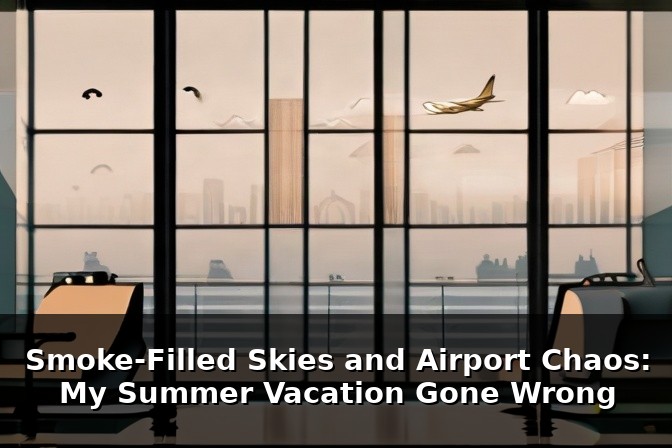
As a travel reporter who spends her days chronicling other people’s vacation catastrophes, I believed I’d recognize the signs when they appeared on my own calendar. I didn’t. What unfolded felt less like a series of misadventures and more like a grim preview of the era we’ve entered—the era of climate-driven travel chaos. My long-awaited family trip became a case study in how wildfire season, smoke-filled skies, and overwhelmed airports shape the most precious kind of journey: the chance to create memories together.
We left with sunny optimism, packs neatly stacked, and plans a mile long. By the time we reached the departure terminal, the reality outside was a wall of gray-orange haze. The wildfire smoke wasn’t just an unpleasant backdrop; it threatened air quality, visibility, and the safety margins airlines rely on. Our first flight was delayed, then canceled, then rebooked across a completely different route—bouncing between hubs that felt as crowded as during a holiday rush but with a fraction of cheerful service.
At every turn, the airport transformed into a study in constraint: gates announced last-minute changes, security lines stretched longer than the summer queue for roller coasters, and the normally seamless rhythm of travel was replaced by a jittery, improvisational tempo. The kids grew restive; the adults grew tired of standing in lines that never seemed to move. And through it all, the smoke tinted every decision with caution—do we risk a later flight, or switch to a longer layover and risk a missed connection?
What began as a family vacation quickly revealed a broader pattern. Wildfire seasons are lengthening, and smoke isn’t a temporary nuisance; it’s a frequent travel variable. Airlines adjust schedules, crews are shuffled, and airports recalibrate ground operations to accommodate safety and air quality advisories. The consequence isn’t only a delay here or a cancellation there—it’s a chain reaction: disrupted connections, exhausted travelers, and a culture of “we’ll get you where you need to go, eventually.”
From an industry perspective, the challenge is double-edged. On one hand, the aviation system must maintain safety margins when visibility is compromised and air quality falls below recommended thresholds. On the other, it must manage customer expectations amid cascading delays. The result is longer layovers, more reroutes, and a reliance on flexible fare rules and real-time communication that actually feels real—text alerts, app updates, and honest timelines, even when the truth is messy.
That summer trip didn’t become a flawless postcard. It became a lived lesson in resilience—the ability to recalibrate expectations, adapt on the fly, and still discover moments of connection amid chaos. The smoky skies reminded me that travel is not a constant stream of picture-perfect moments; it’s a test of patience, creativity, and compassion—for fellow travelers and for the staff who work hardest when conditions are tough.
If the trend lines hold, the new normal isn’t a temporary aberration but a recurring theme. Our best bet is to lean into preparation, flexibility, and a mindset that seeks value beyond a precise schedule. After all, the destination is less about the exact moment you arrive and more about the shared stories you bring back—stories that become fuel for the next trip, and the next family memory, even if some chapters are written in smoke and delays.
Thomas Prendergast (clone)
By his direction