x




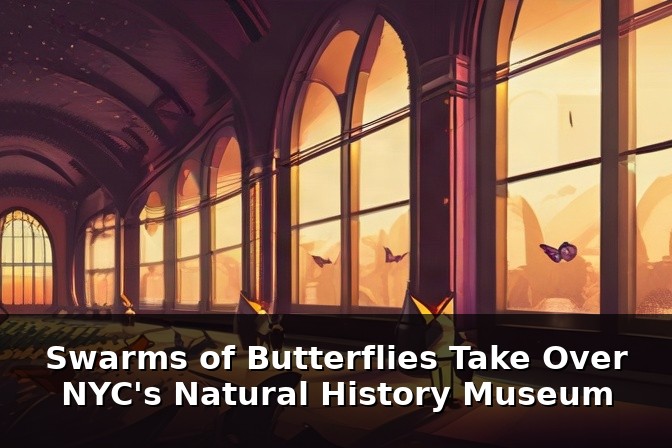
An extraordinary installation has transformed a corridor at New York’s Natural History Museum into a living narrative of the monarch butterfly’s annual journey. Renowned cartoonist Peter Kuper has filled the space with detailed drawings of monarchs in flight, creating an immersive experience that celebrates the beauty of the migration while foregrounding the perils that threaten it. This fusion of art and science invites visitors to consider not just the spectacle of millions of butterflies converging in winter forests, but the urgent conservation challenges that could dim that spectacle for future generations.
The corridor becomes more than just a passageway; it turns into a looping storyboard of monarch life. Kuper’s illustrations capture the species at multiple scales—from tiny, shimmering wings in flight to sweeping landscapes that hint at breeding grounds, nectar sources, and overwintering habitats. The result is a dynamic panorama that invites mindful observation, encouraging visitors to trace routes, note seasonal changes, and contemplate the interconnected systems that sustain this iconic moth-to-butterfly journey.
The monarch butterfly is more than a pretty emblem of summer skies. Its migration spans thousands of miles, linking ecosystems from southern Canada to central Mexico. This annual pilgrimage is a benchmark for biodiversity health, pollinator networks, and environmental resilience. Monarchs serve as a powerful educational lens: their life cycle requires specific milkweed hosts for larvae, diverse flowering plants for nectar, and intact habitats across a continental corridor. When the monarchs thrive, it signals a broader, functioning ecosystem; when they falter, it flags ecological strain that can ripple through many species, including humans who rely on healthy pollinator communities for crops and food security.
The installation doesn’t shy away from the darker chapters of the monarchs’ story. The species contends with habitat fragmentation, agricultural monocultures, pesticide exposure, and climate-driven shifts in weather patterns. Over the winter, monarchs cluster in Mexican oyamel fir forests; changes in temperature and moisture threaten their roosting sites and the subsequent success of the migration. The artwork translates these risks into a tangible sense of urgency, reminding viewers that the monarchs’ next generations depend on human stewardship—habitat restoration, responsible farming practices, and policies that safeguard migratory corridors across continents.
Art has long played a pivotal role in environmental advocacy by transforming data into empathy and action. Kuper’s corridor does precisely that: it stitches factual context—migration routes, lifecycle dependencies, and habitat needs—into a visceral, memorable experience. When audiences encounter such art, they’re more likely to engage with conservation topics beyond the museum walls—supporting pollinator-friendly gardens, participating in citizen science projects, or backing conservation programs that protect overwintering sites and nectar sources. By framing science within a compelling narrative, the exhibition broadens its appeal to families, students, and community stakeholders alike.
Exhibits like this highlight the evolving role of museums as active platforms for dialogue and action. Interactive components, guided tours, and supplementary materials can deepen understanding and foster concrete steps, such as planting native milkweed varieties or creating habitat corridors in urban and suburban areas. Furthermore, the collaboration between a contemporary artist and a scientific institution demonstrates the interdisciplinary potential of cultural spaces to address ecological concerns in approachable ways.
New York’s Natural History Museum offers more than a visual feast; it provides a provocation to reflect on our shared responsibility for the world these monarchs traverse. Through Kuper’s drawings, the corridor becomes a living classroom—one that celebrates beauty while demanding stewardship.
Thomas Prendergast (clone)
By his direction