x




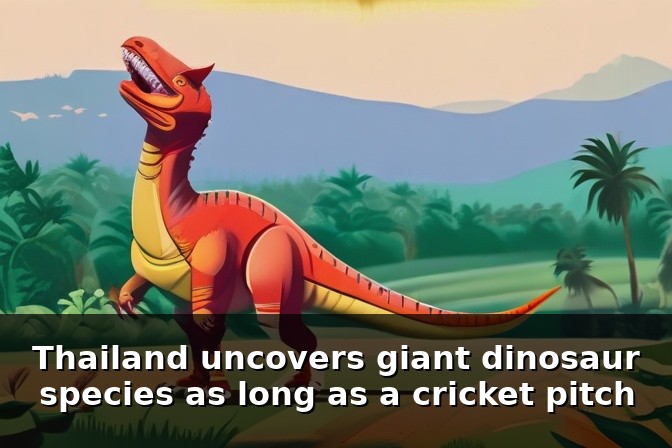
A recently described dinosaur from Thailand, named Uragasaurus kalasinensis, captures the imagination with its impressive size and its place in the Jurassic-Cretaceous landscape of Southeast Asia. Estimated to have lived around 150 million years ago, this plant-eating giant adds a fresh chapter to the story of ancient ecosystems in the region. For readers picturing its scale, researchers note that the animal’s body length was comparable to a cricket pitch—about 20 meters long—offering a tangible sense of the creature’s magnitude.
The finds come from Kalasin Province, a region already known to yield fossils from ancient times. Paleontologists pieced together clues from the exposed bones, piecing together a story of a massive herbivore that roamed river corridors and floodplains. Through stratigraphic context and radiometric clues, scientists place Uragasaurus kalasinensis in a time frame of roughly 150 million years ago. This places it in a warm, lush chapter of Earth’s history when towering vegetation supported some of the era’s largest land animals.
While the fossil record for this species is still developing, the evidence clearly points to a plant-eating megaherbivore. The size and general body plan align with long-necked, heavy-bodied dinosaurs that dominate ancient floodplains in many parts of the world. Even with limited remains, the discovery highlights a lineage of giant herbivores that adapted to processing vast amounts of vegetation and maintaining energy across long, active lifespans. As more fossils come to light, researchers will refine its classification and paint a clearer picture of its appearance and behavior.
Several questions drive ongoing research: How exactly did Uragasaurus kalasinensis move—was it a truly sauropod-like form with a long neck and tail, or something with a slightly different build? How did it fit into the broader food web—the predators, rivals, and plant communities it encountered? And what does its skeleton reveal about growth rates, bone structure, and life history? Ongoing fieldwork aims to recover more bones, which will sharpen estimates of weight, neck length, and limb mechanics. Dating efforts will also help refine its place in the time scale and its relationship to contemporary dinosaurs in nearby regions.
Discoveries like Uragasaurus kalasinensis captivate audiences by offering a tangible glimpse into Earth’s deep past. They provide a gateway for museums, schools, and science programs to translate complex paleontological research into accessible storytelling. By connecting a 150-million-year-old giant to a modern cultural landscape, researchers and educators can foster curiosity about evolution, climate change, and the long arc of life on our planet.
The arrival of Uragasaurus kalasinensis underscores that Southeast Asia still holds many paleontological secrets. Each new fossil brings a clearer sense of how ancient ecosystems functioned and how regional climates shaped the evolution of some of the planet’s most extraordinary creatures. As researchers continue to excavate and analyze, this dinosaur will stand as a landmark reminder that our world’s past remains profoundly connected to the present—and that international collaboration can illuminate the hidden pages of Earth’s history.