
x
Black Bar Banner 1
x

NEW: About Me Look — turn on a full-width dark About Me from your profile Configuration (Profile Page Upgrade). The Academy, profile feeds and Media Feed now read like the News Feed. See Subscriptions »

New: AI Blog Autopilot — free for the next 30 days. Switch it on by November 15th »

NEW: Smart Mail is live — free for every member. Send broadcasts, build lists and run autoresponders. Open Smart Mail »

New training: The Campaign Map. Watch it now »

A+ A−
Ads by Markethive - View All
The Blog Feed
The Blog Feed
» Blog Feed
Write a New Blog Post
Search Blog Status
Most Viewed
Most Recent
Most Shared
Alphabetical
Markethive Blog (default)
My Blog Posts
Friends' Blogs
Blog Categories
All
Advertising
Blockchain & Cryptocurrency
Business Development
Diet & Weight Loss
Environmental
Health and Wellness
History and Culture
Home and Garden
Marketing
Mentoring & Training
Money & Finance
Other
Political
Prayer & Religion
Programming & Technical
Real Estate
Search Engine Optimization
Social Media
Spirituality
Sports & Recreation
Transport
Travel & Events
Website Design
Blogging Tools & Assets
My Blog Info
Members Subscribed to You
Blogs You Are Subscribed To
Website Widget
Wordpress Plugin
Subscribe for Greater Services
Subscribe to one of many subscriptions, each one includes the previous ones.. Unlock powerful tools, advance features, to build a powerful reach.

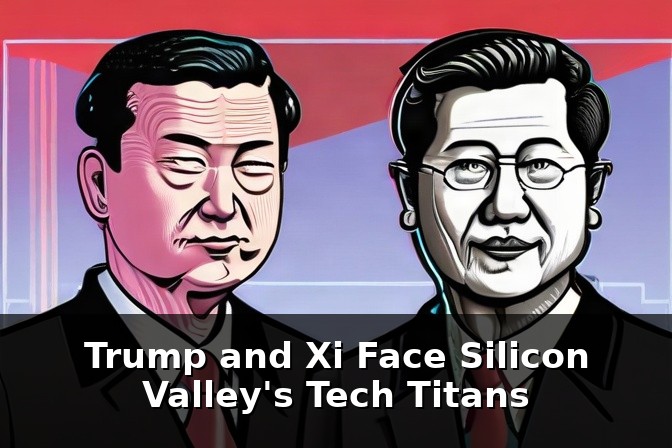
Trump and Xi Face Silicon Valley's Tech Titans

Posted by CEO Thomas Prendergast on September 28, 2026 - 12:15am


Trump and Xi Face Silicon Valley's Tech Titans

Trump, Xi and the Tech Moguls: Pomp, Policy, and the AI Conundrum

When Xi Jinping’s state visit drew global attention, the stage was set with culture, diplomacy, and ceremonial pomp that signaled China’s continued power on the world stage. Yet for the tech industry and the entrepreneurs who rely on clear policy signals, the visit felt light on substance—especially around artificial intelligence, semiconductors, and the governance frameworks that will shape innovation for years to come.

Pomp vs. substance: what really moved the needle

The optics of a state visit can project ambition and partnership, but policy requires specifics. In this cycle, the conversations produced high-profile declarations about collaboration and mutual interest, yet offered few binding commitments or measurable timelines on AI development, data governance, or cross-border tech collaboration. For tech leaders, this gap matters: commitments without enforcement provisions or concrete funding plans are hard to operationalize in a fast-moving sector where timing is everything.

Imagine the public-relations weight of joint statements, ceremonial signing ceremonies, and starched routines between national leaders and industry stewards. Now pair that with the absence of clear guidelines on AI safety standards, export controls for critical chips, or data localization norms. The contrast highlights a common pattern in high-stakes diplomacy: optics win headlines, while the real work—aligning standards, trust, and incentives—requires granular policy work that usually trails behind the photo ops.

AI as the real battleground

Artificial intelligence sits at the core of competitive advantage for nations and companies alike. On one side, the United States has sharpened its strategic posture—investing in domestic AI talent, safeguarding critical hardware supply chains, and refining export-control regimes. On the other, China emphasizes rapid deployment, massive data access, and government-backed R&D ecosystems to accelerate domestic AI capabilities. The tension isn’t just national; it’s entrepreneurial: who controls the data, who sets the benchmarks, and who reaps the benefits of next-gen AI tools?

For tech moguls, the implications are twofold. First, there’s a need to diversify risk: building AI capabilities in multiple regions, securing IP protections, and ensuring compliance with evolving rules. Second, there’s an incentive to partner with policymakers in a way that translates into practical pilots—think joint research programs, industry standards development, and sandboxed regulatory environments that allow responsible experimentation without compromising security or national interests.

The role of tech moguls in shaping strategy

  • Invest in adaptable AI research: broadening the geographic footprint of R&D to hedge against policy shocks.
  • Prioritize transparent governance: adopt clear data usage policies, model safety protocols, and explainability frameworks to build trust with regulators and users.
  • Strengthen cross-border collaboration with guardrails: pursue partnerships that respect IP, national security concerns, and antitrust considerations.
  • diversify supply chains: reduce exposure to single-source risk in semiconductors and critical components through multi-sourcing and local capability building.
  • Engage in standards ecosystems: contribute to or adopt international AI and data-privacy standards that facilitate global deployment while meeting local requirements.

What this means for entrepreneurs and markets

  • Policy clarity matters: entrepreneurs thrive when regulations are predictable, not opaque. Look for signals around data governance, cross-border data flows, and IP protections.
  • Global resilience is essential: diverse manufacturing, alternate sourcing, and regional R&D hubs help buffer against policy shifts and supply-chain disruption.
  • investment opportunities persist, with caution: while there’s room for growth in AI across industries, investors will favor ventures with clear compliance roadmaps and scalable business models.
  • Talent mobility and training: as AI accelerates, the ability to attract and retain global AI talent becomes a strategic differentiator, alongside strong regulatory guidance that protects innovation.

What to watch next

  • New benchmarks for AI safety and ethics: expect more dialogues on responsible AI frameworks that cross borders.
  • Export-control refinements: look for policy updates that affect chipmaking, software tools, and access to sensitive models.
  • Public-private pilots: anticipate sandbox-style programs where firms test AI in regulated environments with government collaboration.
  • IP and data governance agreements: potential bilateral or multilateral accords shaping how data and algorithms move internationally.

For Markethive entrepreneurs, the takeaway is clear: stay agile. The pomp can signal opportunity, but durable growth will hinge on concrete policy groundwork, practical partnerships, and resilient business models that can ride the next wave of AI while navigating the evolving geopolitics of tech. Build with versatility, transparency, and a readiness to adapt as global standards crystallize—and you’ll turn the uncertainty of high-stakes diplomacy into a measurable edge for your ventures.

Thomas Prendergast (clone)
By his direction