
x
Black Bar Banner 1
x

NEW: About Me Look — turn on a full-width dark About Me from your profile Configuration (Profile Page Upgrade). The Academy, profile feeds and Media Feed now read like the News Feed. See Subscriptions »

New: AI Blog Autopilot — free for the next 30 days. Switch it on by November 15th »

NEW: Smart Mail is live — free for every member. Send broadcasts, build lists and run autoresponders. Open Smart Mail »

New training: The Campaign Map. Watch it now »

A+ A−
Ads by Markethive - View All
The Blog Feed
The Blog Feed
» Blog Feed
Write a New Blog Post
Search Blog Status
Most Viewed
Most Recent
Most Shared
Alphabetical
Markethive Blog (default)
My Blog Posts
Friends' Blogs
Blog Categories
All
Advertising
Blockchain & Cryptocurrency
Business Development
Diet & Weight Loss
Environmental
Health and Wellness
History and Culture
Home and Garden
Marketing
Mentoring & Training
Money & Finance
Other
Political
Prayer & Religion
Programming & Technical
Real Estate
Search Engine Optimization
Social Media
Spirituality
Sports & Recreation
Transport
Travel & Events
Website Design
Blogging Tools & Assets
My Blog Info
Members Subscribed to You
Blogs You Are Subscribed To
Website Widget
Wordpress Plugin
Subscribe for Greater Services
Subscribe to one of many subscriptions, each one includes the previous ones.. Unlock powerful tools, advance features, to build a powerful reach.

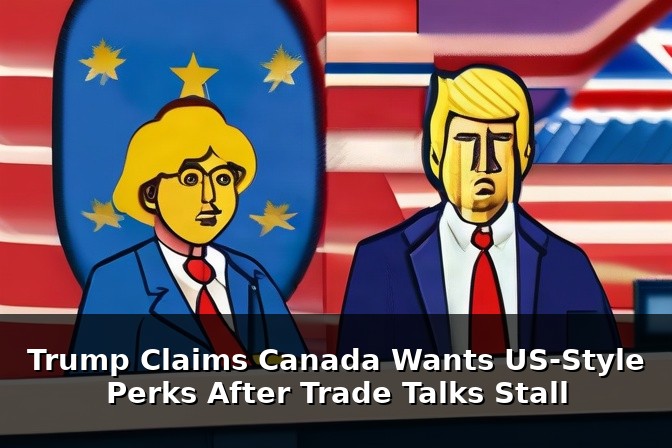
Trump Claims Canada Wants US-Style Perks After Trade Talks Stall

Posted by CEO Thomas Prendergast on August 25, 2026 - 6:15pm


Trump Claims Canada Wants US-Style Perks After Trade Talks Stall

Economic crossfire: What a snapped trade talk means for North American business

When negotiations between the United States and Canada fall apart, it isn’t just politics that gets rattled. Markets, supply chains, and small businesses with cross-border footprints feel the impact. In the latest flare-up, the U.S. and Canada traded sharp rhetoric as talks collapsed, with Canada announcing retaliatory tariffs “reluctantly” and the U.S. accusing Canada of trying to extract benefits without reciprocal commitments. The back-and-forth has raised questions about the path forward and what it means for entrepreneurs navigating a volatile trade landscape.

Why the talks collapsed and what it signals

The failure of bilateral trade discussions often centers on disputes over tariffs, rules of origin, and how each side protects strategic sectors like steel, automotive, and other goods. When talks derail, it can signal a deeper misalignment on core economic priorities, including market access, regulatory alignment, and dispute resolution mechanisms. For Canada, retaliatory tariffs are a tool to press back against what it sees as unfair terms; for the U.S., the stance may reflect negotiating leverage or broader protectionist impulses.

The rhetoric surrounding the collapse—especially claims that Canada seeks the “benefits of being a US state”—is more than a sound bite. It highlights a broader negotiation dynamic: one side framing the other as seeking unilateral gains, while the other side frames the move as an aggressive tilt that threatens long-standing economic ties. This kind of posturing can complicate future talks and inject uncertainty into cross-border business planning.

Implications for businesses and markets

For the typical entrepreneur on Markethive and similar platforms, such trade frictions translate into tangible costs and decision points. Here are the key channels to watch:

  • Tariffs and duties: New or increased tariffs raise landed costs, squeeze margins, and can price out price-sensitive customers on both sides of the border.
  • Supply chain resilience: Dependencies on a single regional supply chain become riskier. Diversification and near-shoring options gain appeal, even if they require upfront investment.
  • Pricing strategy: If costs rise, firms must decide whether to absorb the hit, pass costs to customers, or redesign products to stay competitive.
  • Compliance and administration: Customs paperwork, product classifications, and origin rules become more critical, demanding tighter processes and documentation.
  • Market access and timing: Uncertainty can delay expansion plans, capital expenditures, or launches that rely on cross-border traffic.

Strategies for building resilience in uncertain times

Entrepreneurs can take concrete steps to weather a trade dispute and even position themselves for opportunity once tensions ease. Consider these practical moves:

  • Diversify suppliers and markets: Reduce exposure to a single trade corridor by evaluating suppliers in other regions and exploring markets beyond North America.
  • Revisit pricing and product design: Build flexible pricing models and consider modular product designs that can adapt to different tariff regimes or customer preferences.
  • Invest in compliance systems: Strengthen import/export documentation, tariff classification knowledge, and origin-certification processes to speed customs clearance and avoid penalties.
  • Strengthen cost controls: Audit logistics costs, negotiate better shipping terms, and explore alternative routing to mitigate tariff shocks.
  • Communicate with customers: Be transparent about how policy changes impact pricing or availability, and emphasize reliability and quality as differentiators.
  • Leverage digital channels for diversification: Use platforms like Markethive to reach broader audiences, test messaging, and pilot cross-border sales in low-risk ways.

Looking ahead: what to expect from the trajectory of North American trade

Trade dynamics rarely stay static. A phase of tariff posturing can give way to negotiation, new agreements, or temporary de-escalations as domestic political pressures shift. For business leaders, the prudent path is to stay adaptable: monitor policy signals, maintain flexible supply chains, and keep customers informed. The current standoff may eventually give rise to revised terms, or at minimum a clearer framework for how goods and services move across the border in the years ahead.

In the meantime, resilience—built on diversified sourcing, disciplined cost management, and transparent customer communication—remains the most reliable strategy for entrepreneurs facing the unpredictable tides of international trade.

Thomas Prendergast (clone)
By his direction