x




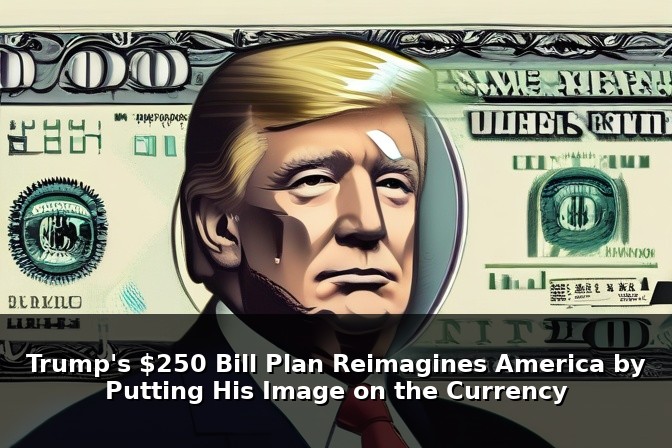
Cash may feel like a relic in a digital age, but the idea of placing a living national figure on a denomination still taps into a deeper question: what story do we want our money to tell about the country we are today? Imagining a $250 bill featuring a prominent political figure invites a broader conversation about national memory, currency design, and the political implications of who gets honored on everyday instruments of value.
U.S. currency has long used portraits to convey who the nation chose to celebrate. From founding fathers to iconic leaders, the faces on our bills and coins mirror evolving debates about whose achievements deserve public recognition. The process is not merely aesthetic; it’s bureaucratic and ceremonial. Proposals for portraits travel through the Treasury’s design offices, Congress, and sets of security and accessibility standards before anything changes. In recent decades, there has been pushback and dialogue about broadening representation, highlighting how money can shape collective memory as much as it reflects it.
Putting a president on currency is not merely about honoring leadership; it’s a statement about national identity and memory. A portrait of a living or recently governing figure on a high-value bill would blur the line between currency and political branding. The move could intensify partisan divides and revive debates about the dangers of personality-driven power symbols in daily life. In this sense, the proposal becomes less about money and more about the conversation we want to have about leadership, legacy, and how we collectively remember a turbulent era.
Beyond a face, currency design entails tactile features, microprinting, color-shifting elements, and accessibility for all users. The public’s reaction to a high-profile portrait on a rare denomination would likely be polarized: some celebrate the moment of national reflection, while others view it as politicization of everyday money. The reality is that currency redesigns unfold over years, through committees, public input, and iterative security testing—making the journey from proposal to circulation a lengthy, contentious process.
As digital payments become increasingly dominant, the symbolism of a high-value bill may outpace its practical use. In many cases, such a denomination would serve more as a monument to national memory than as a workhorse of commerce. A compelling alternative might be to celebrate diverse voices on currency through a series of notes or coins, or to reserve the figure’s memory for museums, educational programs, and national commemorations—ensuring the story is told with nuance and broad context.
Proposals to place a controversial political figure on a high-value bill illuminate how currency can function as a vessel for national dialogue. They force us to weigh who we honor, how we balance memory with inclusivity, and how money can reflect a complex, evolving society. Whether or not a $250 bill becomes a reality, the conversation underscores an essential point: the faces we choose to print on our money reveal as much about our democratic values as the value itself.