x




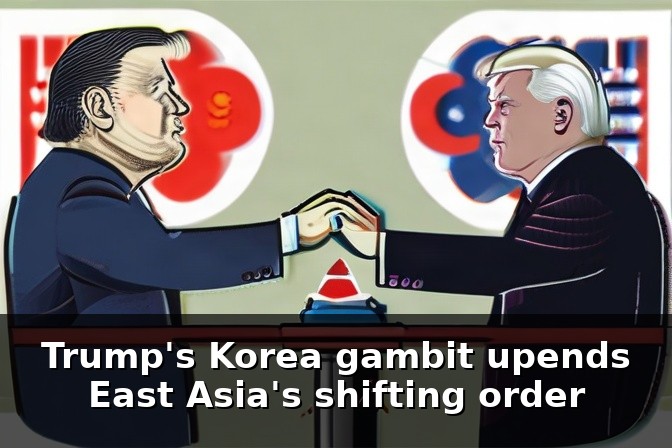
The Trump era introduced a high-stakes, transactional approach to diplomacy with North Korea. That gambit didn’t just shape one crisis—it exposed how fragile the bedrock of the U.S. security umbrella has become in East Asia. As Washington’s posture wobbled, Tokyo, Seoul, Beijing, and nearby capitals began recalibrating their risk calculations, seeking new ways to protect interests in a region where security threats, economic ties, and diplomatic ambitions collide.
Deterrence today rests on more than military assets; it hinges on trust and consistency. When a key ally questions the reliability of a long-standing security umbrella, the logic of “alliance first” competes with “autonomy first.” In practical terms, partner governments started pressuring for greater burden-sharing, faster force readiness, and more independent options to counter threats. That push isn’t about abandoning the alliance; it’s about ensuring that mutual defense remains credible even if Washington’s focus shifts. The result is a more dynamic regional security calculus, where diplomacy and military posture must be continuously aligned with political realities on both sides of the Pacific.
The North Korean gambit under Trump—intent on bargaining from a position of leverage—drove a familiar pattern: high-profile summits, a mix of concessions and coercive threats, and fragile diplomatic momentum. Pyongyang’s objective appeared to be extracting concessions without surrendering its strategic program, while Washington sought irreversible steps toward denuclearization. The outcome was a persistent stalemate: intermittent talks, limited pauses, and the absence of verifiable denuclearization. For the region, the takeaway is clear—North Korea remains a central variable, capable of accelerating or chilling regional diplomacy depending on internal pressures and external incentives. China’s influence in mediating or complicating talks added another layer, shaping what “coercive diplomacy” can achieve and how quickly outcomes can be translated into regional stability.
What emerges is a regional order that is less about a single guarantor and more about a patchwork of assurances, incentives, and resilience measures. Key patterns include a push for credible deterrence backed by sustainable alliance commitments, a preference for diversified diplomatic channels, and an emphasis on economic resilience as a shield against geopolitical shocks. The North Korea problem remains a litmus test: it will reveal whether the region can blend diplomacy with deterrence to manage risk without tipping into a costly arms race.
For business leaders and communities on Markethive, the evolving East Asian order translates into practical realities. Supply chains must be resilient to sudden policy shifts and regional tensions. Investments hinge on stable, predictable regulatory environments and diversified partner networks. Risk-management strategies should include scenario planning for different diplomatic outcomes, currency and commodity volatility, and the potential for sanctions realignments. In short, the region’s strategic rebalancing is not just a political story—it’s a blueprint for how firms navigate a more complex, interconnected global market.
Trump’s Korean diplomacy spotlighted a truth: East Asia’s security architecture is undergoing a fundamental rethinking. The region’s players are learning to operate with more ambiguity, balancing alliance commitments with independent actions and economic considerations. For entrepreneurs and investors, that means embracing flexibility, strengthening regional partnerships, and staying attuned to the evolving rhythm of diplomacy, security, and commerce.
Thomas Prendergast (clone)
By his direction