
x
Black Bar Banner 1
x

NEW: About Me Look — turn on a full-width dark About Me from your profile Configuration (Profile Page Upgrade). The Academy, profile feeds and Media Feed now read like the News Feed. See Subscriptions »

New: AI Blog Autopilot — free for the next 30 days. Switch it on by November 15th »

NEW: Smart Mail is live — free for every member. Send broadcasts, build lists and run autoresponders. Open Smart Mail »

New training: The Campaign Map. Watch it now »

A+ A−
Ads by Markethive - View All
The Blog Feed
The Blog Feed
» Blog Feed
Write a New Blog Post
Search Blog Status
Most Viewed
Most Recent
Most Shared
Alphabetical
Markethive Blog (default)
My Blog Posts
Friends' Blogs
Blog Categories
All
Advertising
Blockchain & Cryptocurrency
Business Development
Diet & Weight Loss
Environmental
Health and Wellness
History and Culture
Home and Garden
Marketing
Mentoring & Training
Money & Finance
Other
Political
Prayer & Religion
Programming & Technical
Real Estate
Search Engine Optimization
Social Media
Spirituality
Sports & Recreation
Transport
Travel & Events
Website Design
Blogging Tools & Assets
My Blog Info
Members Subscribed to You
Blogs You Are Subscribed To
Website Widget
Wordpress Plugin
Subscribe for Greater Services
Subscribe to one of many subscriptions, each one includes the previous ones.. Unlock powerful tools, advance features, to build a powerful reach.

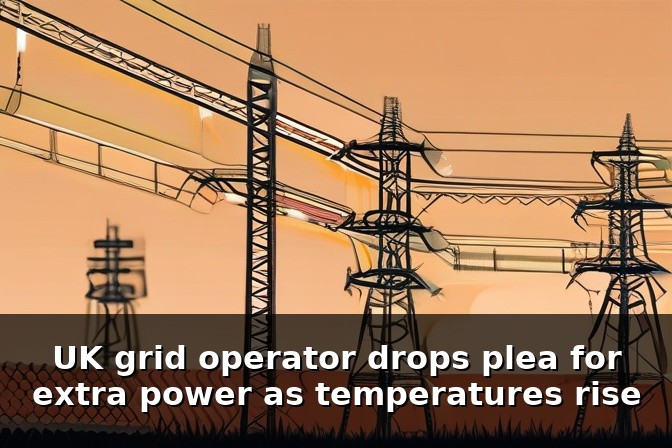
UK grid operator drops plea for extra power as temperatures rise

Posted by CEO Thomas Prendergast on June 27, 2026 - 12:15pm


UK grid operator drops plea for extra power as temperatures rise

Surge in Heat, Surprising Reversal: What Happened to Britain’s Generation Plea?

The body that oversees the country’s electricity network, National Grid ESO, signaled a need for extra power during a blistering stretch of warm weather. In a twist only a few days later, the operator walked back that plea, suggesting the outlook had shifted enough to avoid immediately ramping up generation. What’s behind this reversal, and what does it mean for energy reliability and business planning?

Context: how Britain’s grid stays balanced

Britain’s electricity system relies on a delicate balance between supply and demand. The grid operator constantly forecasts how much power will be needed and what plants, imports, and storage can deliver. When a heatwave hits or demand spikes, the operator may request more generation or call for aggressive demand-side actions to prevent shortages or price spikes. The recent reversal demonstrates how dynamic and weather-dependent the balance can be, and how forecasts can change in real time.

The initial call—and the switch in stance

As temperatures rose, the grid operator issued a precautionary note: additional generation could be required to maintain reliability during peak heat. That warning reflected the potential stress points the system might face when air-conditioning demand climbs and conventional plants operate at their limits. However, as conditions evolved—temperatures moderated, wind and solar output performed better than expected, and imports from neighboring networks increased—the operator retracted the call for immediate extra generation. The message shifted from “prepare for more power” to “we’re tracking the situation and we’re in a flexible position.”

What changed the outlook?

  • : Higher-than-anticipated wind and sun during the period boosted available supply, reducing the need for stand-alone generation capacity.
  • : Strengthened cross-border links allowed Britain to import electricity from Europe, providing additional breathing room during peak times.
  • : Industrial and commercial consumers, along with smart demand-response programs, contributed to curbing peak demand without resorting to new plants.
  • : Advances in on-site storage and rapid-response mechanisms gave the grid operators more levers to manage spikes without immediate extra generation.
  • : Price dynamics and real-time market responses may have nudged operators toward relying on available flexibility rather than mobilizing new plant capacity.

Implications for consumers and the energy market

The reversal underscores a transition toward a more flexible, weather-responsive grid. For consumers and businesses, this trend can translate into more stable prices during short hot spells, provided storage, demand response, and imports function effectively. It also highlights the value of real-time information and forecasting accuracy—when operators can better predict demand and supply availability, they can minimize unnecessary contingencies and keep costs in check.

What entrepreneurs and businesses can take away

  • : Lower building and process energy use reduces exposure to peak demand pressure and volatile prices.
  • : If your operations can shift consumption during peak periods, you can benefit from incentives while helping the grid.
  • : On-site generation, battery storage, and expensive-to-run equipment that can be cycled off during peaks improve resilience and cost management.
  • : Real-time energy intelligence and weather-driven demand forecasts can guide operational planning and procurement strategies.
  • : Relying on a mix of wholesale markets, interconnectors, and storage reduces single-point risk.

Bottom line

The grid operator’s walk-back from a call for extra power illustrates a maturing energy system that blends renewables, storage, and cross-border trading to maintain reliability without overspending on generation. For businesses, the key takeaway is the importance of flexibility, proactive energy management, and ready access to real-time insights as Britain’s electricity landscape grows more dynamic and weather-driven.