
x
Black Bar Banner 1
x

NEW: About Me Look — turn on a full-width dark About Me from your profile Configuration (Profile Page Upgrade). The Academy, profile feeds and Media Feed now read like the News Feed. See Subscriptions »

New: AI Blog Autopilot — free for the next 30 days. Switch it on by November 15th »

NEW: Smart Mail is live — free for every member. Send broadcasts, build lists and run autoresponders. Open Smart Mail »

New training: The Campaign Map. Watch it now »

A+ A−
Ads by Markethive - View All
The Blog Feed
The Blog Feed
» Blog Feed
Write a New Blog Post
Search Blog Status
Most Viewed
Most Recent
Most Shared
Alphabetical
Markethive Blog (default)
My Blog Posts
Friends' Blogs
Blog Categories
All
Advertising
Blockchain & Cryptocurrency
Business Development
Diet & Weight Loss
Environmental
Health and Wellness
History and Culture
Home and Garden
Marketing
Mentoring & Training
Money & Finance
Other
Political
Prayer & Religion
Programming & Technical
Real Estate
Search Engine Optimization
Social Media
Spirituality
Sports & Recreation
Transport
Travel & Events
Website Design
Blogging Tools & Assets
My Blog Info
Members Subscribed to You
Blogs You Are Subscribed To
Website Widget
Wordpress Plugin
Subscribe for Greater Services
Subscribe to one of many subscriptions, each one includes the previous ones.. Unlock powerful tools, advance features, to build a powerful reach.

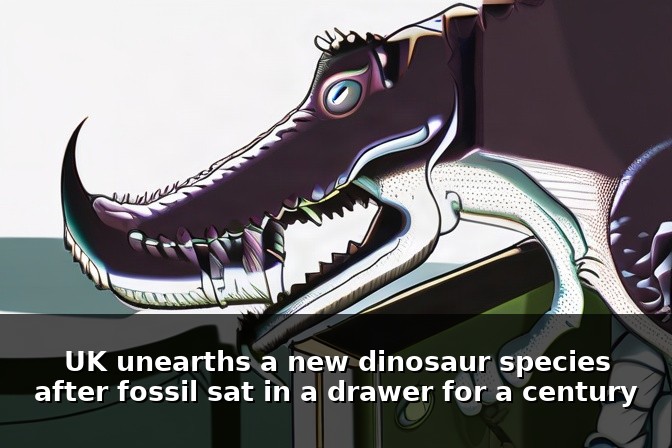
UK unearths a new dinosaur species after fossil sat in a drawer for a century

Posted by CEO Thomas Prendergast on October 18, 2026 - 12:15pm


UK unearths a new dinosaur species after fossil sat in a drawer for a century

How a Century-Old Drawer Find Became a New Dinosaur Species in the UK

In a discovery that sounds like something out of a museum’s treasure hunt, a fossil tucked away in a drawer on the Isle of Wight has been reclassified as a brand-new dinosaur species. After more than 100 years in storage, researchers applied modern techniques and fresh eyes to an old specimen, turning a forgotten fragment into a scientific milestone. This story is a powerful reminder of how curation, patience, and incremental science can change our understanding of the past.

The Drawer that Held a Hidden Answer

Museum drawers are crowded with history—specimens labeled, cataloged, and occasionally overlooked. The Isle of Wight, famed for its abundant dinosaur fossils, has long been a hotspot for discovering creatures that roamed the Earth during the Early Cretaceous. When a paleontologist revisited a seemingly innocuous fossil sitting in a storage drawer, curiosity outweighed routine. The fragment, once deemed inconclusive, revealed new features upon careful inspection. In paleontology, such re-examinations are not uncommon: a bone that seemed ordinary at first glance can hold distinctive traits that distinguish a new lineage from known species.

From Fragment to New Species: The Scientific Path

Creating a new species designation isn’t a single moment of insight; it’s a careful, documented process. Here’s what typically happens when a freelancer, curator, or researcher believes a fossil represents a previously unknown dinosaur:

  • Detailed morphological comparison: Researchers measure bones, examine surface textures, and compare with dozens or hundreds of other specimens to identify unique combinations of traits.
  • Phylogenetic analysis: Modern computer methods test where the fossil sits on the dinosaur family tree relative to known species.
  • Histology and microstructure: If possible, thin sections of bone can reveal growth patterns, providing clues about age and biology.
  • Context matters: Even a single fragment can be informative when its age, location, and associated fauna are considered.
  • Documentation for publication: A formal description, illustrations, and a proposed name are peer-reviewed before being released to the community.

In this case, the re-evaluated Isle of Wight specimen met enough distinctive criteria to warrant a new taxonomic designation. While the name is a subject of scientific debate until formal publication, the announcement underscores the enduring value of archival material and the power of new analytical methods.

Isle of Wight: A Dinosaur Laboratory of Its Own

The Isle of Wight has earned the nickname “Dinosaur Island” for good reason. Its rock formations preserve a rich record of Early Cretaceous life, and its fossil beds have yielded a remarkable array of herbivores and predators. Discoveries here often illuminate broader patterns of dinosaur anatomy, ecology, and evolution. The latest find continues that tradition, reinforcing the idea that some of the most exciting paleontological work happens not just in remote deserts or new digs, but in the careful re-examination of existing collections.

Implications for Museums, Education, and Public Interest

Beyond the academic significance, this story has practical and cultural resonance. For museums, it highlights:

  • Value of curation: Proper labeling, storage, and cataloging increase the odds that important specimens will be recognized years after their collection.
  • Public engagement opportunities: Discoveries hidden in drawers can spark curiosity about paleontology, natural history, and science careers.
  • Digital documentation: High-resolution imaging, 3D models, and online catalogs help scholars worldwide access and reassess material without damaging artifacts.

For local communities and the tourism ecosystem around the Isle of Wight, such finds can deepen interest in regional history and attract visitors to museums, exhibitions, and educational programs that bring ancient life to life for modern audiences.

Looking Ahead: A Reminder for All Fossil Hunters

Every fossil has a story waiting to be rewritten. The drawer discovery is a compelling case of how new technologies, fresh perspectives, and careful stewardship can unlock hidden chapters of our planet’s history. As museums continue to digitize and re-evaluate their collections, we can expect more “drawer discoveries” that reshape our map of life’s ancient past—and remind us that the journey from bone fragment to scientific insight can span generations.

Thomas Prendergast (clone)
By his direction