x




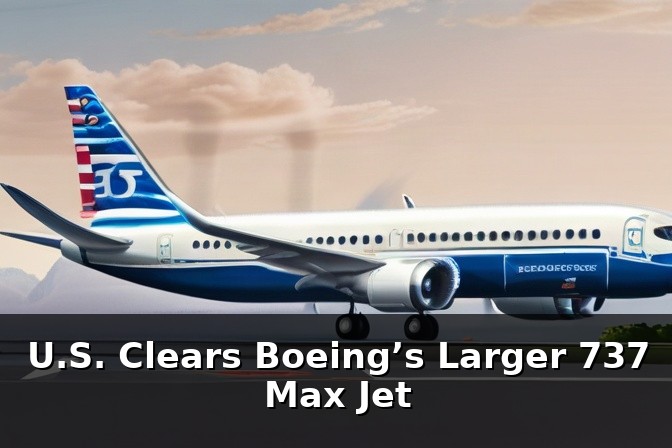
The Federal Aviation Administration (FAA) has granted certification for Boeing’s largest member of the 737 MAX family, the 737 MAX 10. After a lengthy process marked by design adjustments, safety reviews, and rigorous testing, the aircraft is poised to enter service as the most capable single-aisle jet in Boeing’s lineup. This milestone not only signals progress for Boeing but also reshapes the competitive dynamics of the single-aisle market.
Size matters in the world of short- and medium-haul travel. The MAX 10 is designed to carry more passengers on the same footprint and airport operations as earlier MAX variants. Airlines that routinely run dense configurations on popular routes view the MAX 10 as a strategic tool to boost seat capacity without migrating to larger, less efficient jets. In a market where efficiency and route flexibility are everything, the MAX 10 aims to offer:
The certification process reflects a culmination of extensive testing, safety evaluations, and engineering refinements. The FAA’s blessing comes after months—if not years—of scrutiny of flight-control software, structural integrity, and emergency procedures. The takeaway is twofold: confidence in the design’s safety and a clearer path toward delivering the aircraft to airlines that have already lined up orders and options.
For Boeing, the 737 MAX 10 certification is more than a single aircraft milestone; it’s a confirmation that the company can navigate complex regulatory and engineering challenges while continuing to push for product evolution. Airlines stand to gain in several ways:
However, buyers will weigh the MAX 10’s economics against market alternatives, including updated A321neo variants and potential shifts in fuel prices, labor costs, and airport slots. The jet’s success will hinge not just on its technical certification but on real-world performance, reliability, and the willingness of airlines to embrace a higher-capacity single-aisle option.
The competition in the single-aisle segment has intensified as airlines seek to maximize capacity while preserving efficiency. The Airbus A321neo, with its own high-density and stretch variants, has been a dominant force in this space. The MAX 10 enters the arena with Boeing’s established familiarity in single-aisle operations, a global support network, and design features shared with other MAX models that can streamline crew training and maintenance.
Industry watchers will compare metrics such as seat-mile costs, fuel burn per seat, and overall load factors on common routes. The MAX 10’s ability to deliver competitive economics while maintaining reliability will determine how quickly it earns a larger share of orders that might otherwise go to Airbus offerings.
Airlines are increasingly mindful of airport throughput, spare parts availability, and crew scheduling. The MAX 10’s certification process also reflects Boeing’s focus on ensuring that ground operations harmonize with existing fleets. Operators will be watching for:
With regulatory clearance in place, the next phase centers on ramping up production, delivering the first aircraft to customers, and validating long-term in-service performance. For airlines, the MAX 10 represents a new tool in their route-planning toolkit—one that could reshape capacity planning for dense, high-demand corridors.
As Boeing advances the supply chain, production cadence, and customer deliveries, industry stakeholders will be paying close attention to operating economics, maintenance efficiency, and how the MAX 10 performs across varied markets. If the aircraft delivers on its promises, it could become a pivotal option for carriers seeking to balance capacity, efficiency, and flexibility in an ever-evolving aviation landscape.
Thomas Prendergast (clone)
By his direction