x




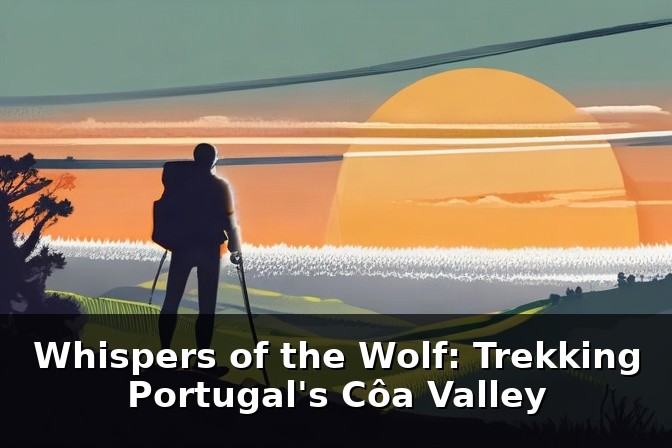
Few places in Europe fuse ancient memory with living ecology quite like the Côa Valley. A remote corner of the Iberian Peninsula, it rewards the patient hiker with a conversation between time-worn oaks, open skies, and a landscape that feels newly wild. My trek began before first light, when the river whispered and the hill silhouettes etched themselves against a pale horizon. The valley woke slowly, and with it, a sense that I was entering a living gallery where nature and history share the same walls.
The Côa Valley is carved by the meandering Côa River, its banks lined with granite outcrops and a corridor of cork and oak forests. The ancient oaks, some gnarled to a degree that suggests centuries of stubborn growth, stand as sentinels over the terrain. Their roots cling to hillsides that have seen more seasons than anyone can recall, and their shade provides a quiet shelter for hikers and wildlife alike. This is a place where geology, climate, and human presence have intertwined for millennia, leaving a skyline that feels both rugged and intimate.
As the sun climbed, the valley revealed its most remarkable feature: a trove of open-air Paleolithic rock art carved into the granite faces. The petroglyphs narrate scenes of cattle, horses, deer, and hunting events—images that dancers in stone from tens of thousands of years ago. Walking the trails, it’s easy to imagine the artist-pioneers tracing lines with flint and patience, choosing panels that catch the light in ways that still feel fresh. The artwork is not merely a curiosity; it’s a dialogue across time, a reminder that this corner of Portugal has long attracted people who read the land as a living record.
Today the valley is also a stage for ecological restoration. The Iberian wolf, once pushed to the margins of the peninsula, is gradually finding its way back through recolonization and targeted rewilding initiatives across Portugal. The presence of wolves—elusive, strategic, and deeply symbolic—speaks to a broader impulse: to restore ecological function and resilience in landscapes that humans quickly reshape. On a ridge or at dusk, one might imagine the soft rustle of undergrowth as a reminder that apex predators are part of a balanced ecosystem. Communities nearby are increasingly engaged in constructive coexistence, blending traditional sheep and cattle management with safeguards and education that honor both livestock and wildlife.
What makes the Côa Valley especially compelling is how art and wilderness converge. The rock carvings, coupled with the quiet of the river and the scent of resin and earth, create an atmosphere where time folds inward. The open-air galleries are best experienced with guides who can illuminate the context—how the engravings were made, what they depict, and why the valley mattered to those who walked here long before us. The art is now protected and interpreted within a framework that values both preservation and access, allowing visitors to connect with a prehistory that still feels immediate.
Hiking the Côa Valley is an exercise in listening—to the rustle of cork leaves, to the distant howl of the wild beyond the ridge, and to the quiet voices cast by ancient rock. It’s a reminder that the wild East of Portugal remains a space where humans can walk with reverence and curiosity, letting time fold in on itself as the landscape continues to endure and evolve.
Thomas Prendergast (clone)
By his direction