x




In 1938, at the tail end of the Great Depression, Harvard researchers embarked upon the most thorough and long-running investigation of aging ever. They followed more than 800 women and men from adolescence to old age to determine what makes us happiest and more likely to live longer. What they found was shocking. Aging well isn’t just about keeping your blood pressure and cholesterol levels in the normal range. Longevity depends upon far more nuanced dietary and lifestyle choices. The great news is that these choices are entirely in your control, which means healthy aging is up to you!
The Harvard Study of Adult Development narrowed happiness and longevity down to 6 determinants:
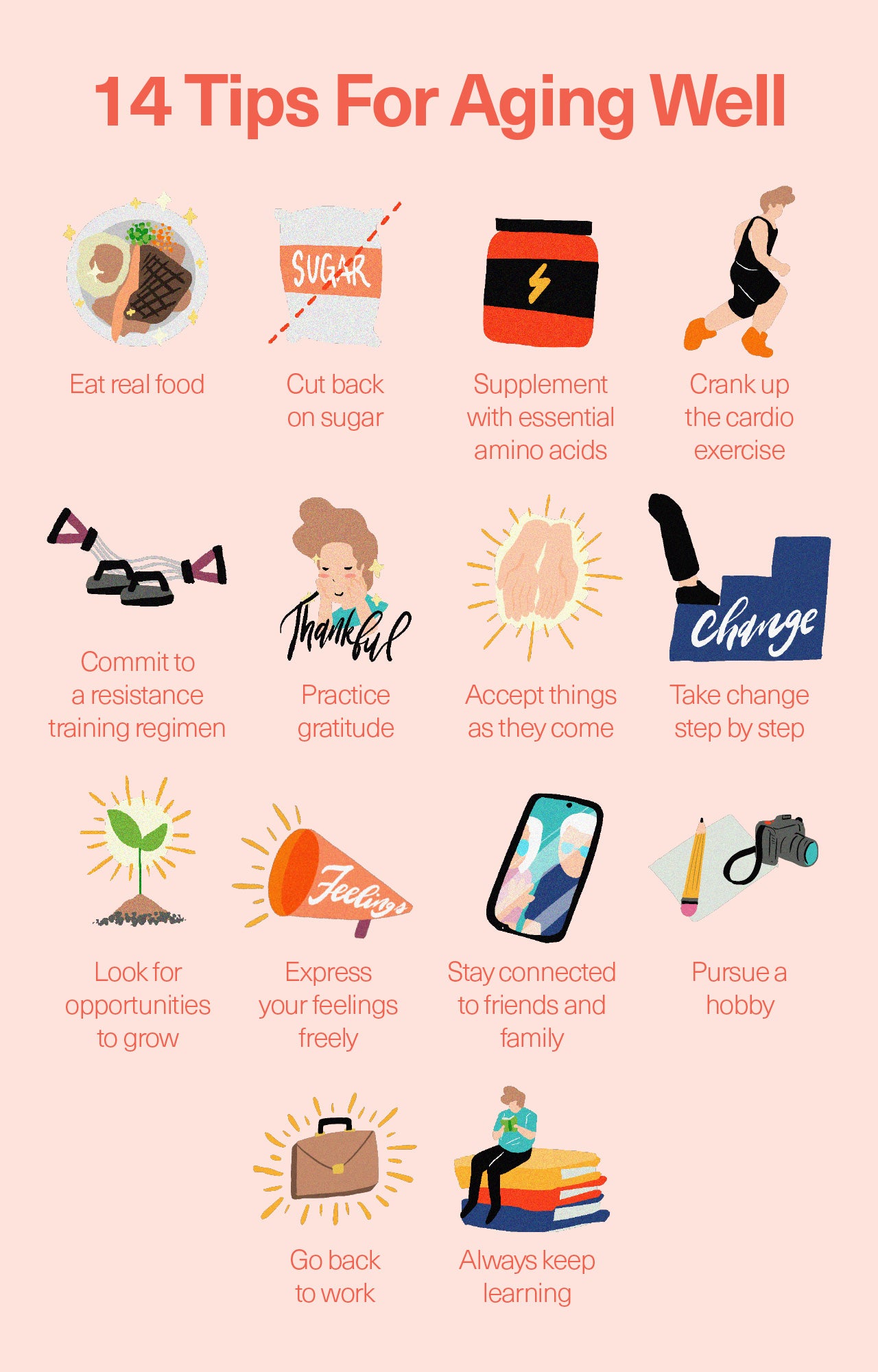
We’ve got feel-good tips below to help you succeed with each of these aging well recommendations. But first, let’s blast apart some aging myths that may be causing you unnecessary stress and fear as you transition from one life phase to another.
Disease and disability are not inevitable. More often than not, they are the result of misuse and neglect—not eating a proper diet, suffering from nutrient deficiencies, not being physically active enough, not managing stress, and not making the necessary changes when health markers signal an adjustment is in order. There are steps you can take to greatly increase your odds of living a disease-free and high-quality life well into your golden years.
The brain may slow down while it ages and take a bit longer to retrieve memories, but memory loss, such as that associated with Alzheimer’s disease and dementia, is not an aging given. In fact, research shows that the brain is capable of creating new neurons and neural networks at any age. You just need to feed it the right foods and give it the stimulation it needs. That means participating in new activities, taking on new challenges, and learning new things whether you’re 8 or 80!
We won’t spend much time on the first key to happiness and longevity—avoiding cigarettes—as the danger of cigarettes has been enumerated time and again, and if aging well is your desire, well, you already know that you’ve got to quit smoking.
Maintaining a healthy weight and exercising regularly aren’t groundbreaking recommendations either, but they can be hard habits to make when you’re older and already settled into a sedentary lifestyle and carrying surplus weight.
We’ve got some tips on how older adults can easily create new healthy habits. As you begin making these changes, keep in mind that it takes on average 66 days to form a new habit. That means in just 3 short months dietary and lifestyle changes that once seemed impossible will feel comfortable and familiar. You may even find you enjoy them, and we guarantee you will be feeling better and aging well!
If you’re looking to lose weight, there are many diet protocols to try, from the keto diet to the DASH diet and everything in between. Your specific goals, medical restrictions, and dietary preferences will dictate the weight-loss program you follow, but there are some universal tips for achieving and maintaining a healthy weight that everyone interested in aging well should follow.
That breakfast bar you put down with your coffee? Not real food. Neither is the frozen burrito you just heated up in the microwave. Or the chips waiting for you in your office. Or the bag of premade veggie risotto you plan to plop in a pan and heat up tonight for dinner. Not real food. Not really.
These prepackaged foods contain additives, preservatives, and other health-compromising ingredients. A 2019 study in the journal Nutrients reported that approximately 80% of an American’s diet comes from packaged foods and beverages. The study confirmed that these highly processed foods are laden with sugar, sodium, and unnecessary calories—a recipe for obesity and chronic disease, including heart disease, type 2 diabetes, and liver disease!
Time to clear out the pantry, fridge, and freezer of all items packaged, canned, and boxed and fill up your shelves with fresh foods:
When you fill up on sugars they turn into carbohydrates in the body. And all the excess that isn’t immediately burned for energy ends up becoming stored as fat in your fat cells, causing weight gain. In other words, that fat-free sugary soda you love turns into fat on your frame!
Sugar also shows up visibly on the skin. A high-sugar diet can harm collagen and elastin tissue and encourage sagging and wrinkles.
When we suggest cutting back on sugar, we’re not suggesting neglecting your sweet tooth. Natural sugars from real food like honey, fruits, and dark chocolate can be enjoyed in moderation as part of a healthy eating plan. But sugars in the form of beverages and packaged foods should be avoided. In fact, if you stopped eating these ultra-processed foods you’d likely cut out 90% of your sugar intake according to a study published in the journal Nutrition and Metabolism.
Boosting metabolism and losing weight go hand in hand, and there’s no better way to speed up your metabolism and your fat-burning capacity than to increase your muscle mass. The more muscle you have the more calories you burn.
A 10-kilogram difference in muscle mass, with all else staying constant, is around a 35,000-kilocalorie difference in energy expenditure over a year. There’s about 3,500 kilocalories in 1 pound of body fat, which means that over an entire year you’re losing 10 pounds of body fat… just by increasing your muscle mass!
To do that, you’ll need to start eating a heck of a lot more protein. And since most older people don’t get enough protein—you can check out this study from the Journal of Nutrition, Health, and Aging for the stats—taking a supplement made up of the building blocks of protein does more than just help build up your muscles in later life. It optimizes your overall health by boosting immunity and protecting the health of your heart, liver, kidneys, and other organs.
.png)