x





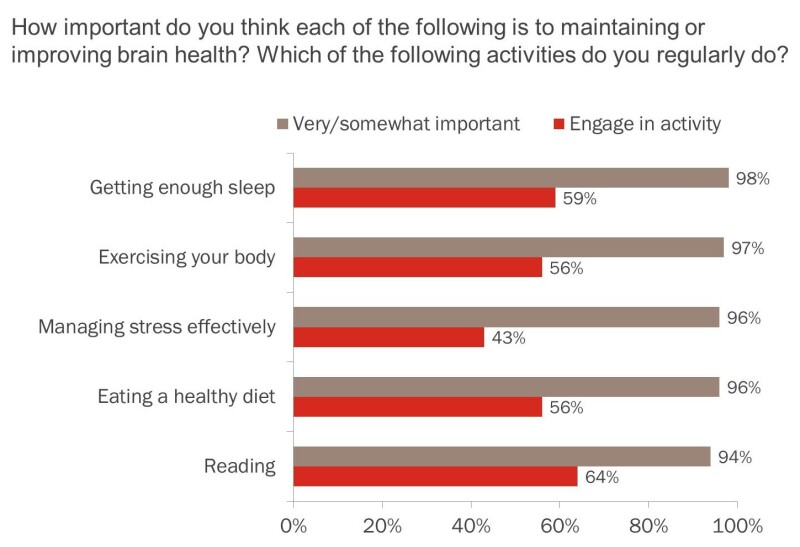
An AARP survey on brain health has found a significant gap between what people believe is good for their brains and what they actually do to preserve their cognitive function. The survey, of more than 1,500 adults over age 40, found that although 98 percent said maintaining and improving brain health was very or somewhat important, only about half are participating in activities — such as exercising, eating a healthy diet and reducing stress — that have been shown to protect cognitive health. Nearly 4 in 10 surveyed also said they have noticed a decline in their ability to remember things over the past five years.
To better inform people about maintaining and improving their cognitive health, AARP’s new Global Council on Brain Health has collaborated with Age UK to gather a leading group of scientists, doctors, scholars and policy experts from around the world to create white papers, scientific reviews and additional research that will provide evidenced-based information on maintaining and improving brain health. Members of the council include Ronald Petersen, M.D., of the Mayo Clinic; Miia Kivipelto, M.D., of the Karolinska Institute in Stockholm; Marilyn Albert, Ph.D., from Johns Hopkins University in Baltimore and Jason Karlawish, M.D., from the University of Pennsylvania.
“With so much conflicting information coming out of the news about what’s good for your brain, having trusted experts cut through the clutter to help us understand what we know and what we don’t know about brain health can help people make good choices,” said Sarah Lenz Lock, AARP senior vice president of policy, research and international affairs. “This new survey is showing that there are big gaps between what people think is important for their brains and what they are actually doing to maintain their brain health.”
Of those who say they are engaging in brain-healthy activities, 54 percent said they that were challenging their minds with games, puzzles or hobbies; 56 percent said they were eating a healthy diet; 56 percent said they were exercising; and 65 percent said they were socializing with friends. More than a quarter also said they believed their wisdom and knowledge had increased over the past five years. The gap between what those surveyed thought was important and what they were doing was widest in stress management, with 96 percent saying that reducing stress was very or somewhat important but 43 percent saying they were managing it effectively.
A recent Institute of Medicine report on cognitive aging noted that regular exercise and reducing stress are both associated with mental sharpness in old age.
Other highlights of the survey include:
Ethnic differences: