x




.png)
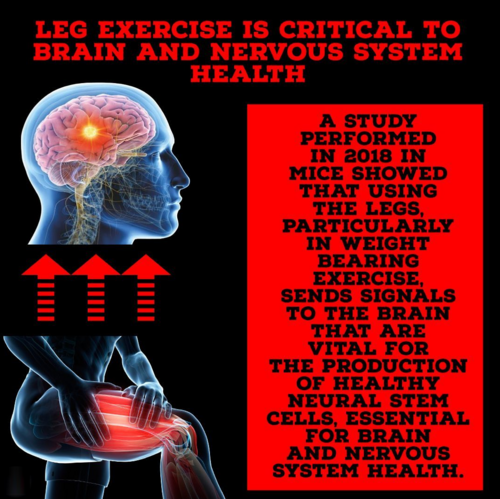
The study involved restricting mice from using their hind legs, but not their front legs, over a period of 28 days. The mice continued to eat and groom normally and did not exhibit stress. At the end of the trial, the researchers examined an area of the brain called the sub-ventricular zone, which in many mammals has the role of maintaining nerve cell health. It is also the area where neural stem cells produce new neurons.
Limiting physical activity decreased the number of neural stem cells by 70 percent compared to a control group of mice, which were allowed to roam. Furthermore, both neurons and oligodendrocytes — specialized cells that support and insulate nerve cells — didn’t fully mature when exercise was severely reduced.
The research shows that using the legs, particularly in weight-bearing exercise, sends signals to the brain that are vital for the production of healthy neural cells, essential for the brain and nervous system. Cutting back on exercise makes it difficult for the body to produce new nerve cells — some of the very building blocks that allow us to handle stress and adapt to challenge in our lives.
“It is no accident that we are meant to be active: to walk, run, crouch to sit, and use our leg muscles to lift things,” says Adami. “Neurological health is not a one-way street with the brain telling the muscles ‘lift,’ ‘walk,’ and so on.”