x




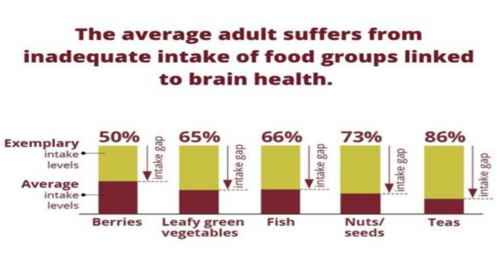
The average American adult chronically under-consumes nutrients that are important for maintaining proper structure and function of the brain. This means we aren’t eating enough of the food groups linked to brain health. Contemporary diets include refined and processed foods, red meats, and saturated fats due to their availability and convenience. These diets overlook foods that actually benefit the brain like fresh vegetables and fruits, whole grains, fish, and mono- and poly-unsaturated fats. In addition, many of us spend less time cooking meals at home due to busy lifestyles, which interferes with good dietary choices. A “brain poor” diet is associated with a higher risk of age-related neurodegenerative diseases, like Alzheimer’s and Parkinson’s disease.
Modifying our diet is one of the ways we can reduce our risk of these neurodegenerative diseases, by increasing our consumption of berries, leafy green vegetables, fish, grains, and tea we consume.
.png)