x




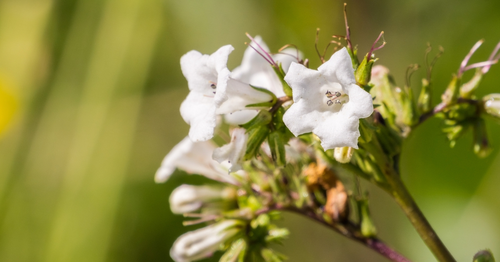
A plant that has been used for generations to treat a wide range of health conditions is now known to contain a powerful compound that protects the brain.
This remarkable plant chemical not only reduces inflammation in the brain, but also increases antioxidant activity, shields nerve cells from the build-up of toxic proteins, and protects against many factors that promote the death of brain cells.
The plant is Yerba santa, and the specific compound that’s generated all the buzz is a flavonoid called sterubin.
What can it do for you? Let’s see. . . . .
Yerba santa (Eriodictyon californicum) — also known as ‘holy herb’ or ‘holy weed’ — is described in a 1902 treatise on plants used by the native people of Mendocino County, California.
According to this guide, “No plant is more highly valued as a medicine by all the tribes” of that area.
The leaf is the only part used and is recommended “as a cure for colds and for asthma” as well as “rheumatism, consumption [TB] and catarrh.” Other indications are bruises, infections and pain, including headaches.
The herb was usually taken in the form of tea, but could also be chewed or smoked like tobacco or crushed and used as a poultice for treating wounds and sore muscles.
Since aging is a major risk factor for Alzheimer’s, researchers at the Salk Institute for Biological Sciences in La Jolla, California, decided to look at natural compounds that could protect against brain aging. Makes sense: Slow down aging and you reduce the risk of Alzheimer’s.
To do this they applied a screening technique on 400 plant extracts which reflected a wide range of neurotoxic pathways linked to aging. Their screen identified sterubin from Yerba santa as “a potent neuroprotective and anti-inflammatory compound.”
The scientists found this native remedy is a strong inducer of Nrf2, a protein that boosts antioxidant activity in the brain and elsewhere by upregulating glutathione and superoxide dismutase. Even under conditions of stress, it maintained glutathione levels, the body’s most important antioxidant.
Nrf2 also upregulates the production of detoxification enzymes that clear toxic waste from the brain.
Nrf2 was found to be critical to sterubin’s powerful anti-inflammatory activities, especially its beneficial impact on microglia, the brain’s most important immune cells. In aging, microglia can become inflamed, malfunction, and destroy brain tissue.
On top of these major protective effects, sterubin was also found to be an effective chelator of iron, latching on to it and carrying it away for elimination. Iron may be an essential nutrient, but if it’s not bound to proteins it can become destructive, generating free radicals that damage DNA and other cellular components in brain cells.
In fact, excess iron is a significant factor in both heart and brain disease. Sterubin appears to be a safe, effective way to reduce free iron levels.
The benefits don’t stop there. Sterubin was found to be effective at protecting nerve cells against the toxic build of amyloid beta, the brain plaques linked to Alzheimer’s. In addition, it promotes signaling pathways that support neuronal development and survival.
Overall, the scientists wrote, “…sterubin is effective against multiple inducers of cell death.”
According to lead author Pamela Maher, “Researchers are looking at ways to counter aging’s effects on the brain. Our identification of sterubin as a potent neuroprotective component of a native Californian plant…is a promising step in that direction.”
The scientists plan to follow up their work with animal models of Alzheimer’s, and if successful, to test sterubin in humans.
.jpg)