x




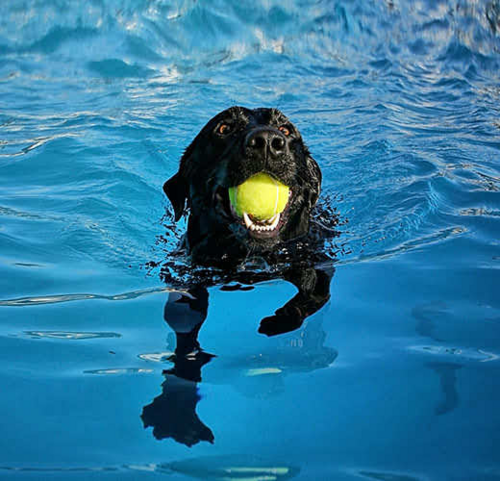
If you have a dog who loves water, good luck keeping them out of a swimming pool. But should you let them go for a swim? You might wonder how safe your pool is for your dog, especially if they like to sneak a drink on a hot day. Can dogs drink pool water, or will the chlorine harm them? Keep reading for the answers, as well as the lowdown on salt water pools and dogs.

It's inevitable that your dog will swallow some water while swimming and playing in the pool. If your pool is treated properly, the chlorine levels should be low enough that swallowing a little water here and there won't harm your pooch. The problems start when a dog decides that the pool is a giant drinking bowl.
If your pup starts lapping up chlorine pool water to quench their thirst, it can irritate their gastrointestinal tract and cause stomach discomfort and vomiting, as well as esophageal irritation and erosion, says The Spruce Pets. While this sounds bad, it's not as dangerous as what might happen if your dog were to swallow improperly treated water that's loaded with algae, bacteria, parasites and other illness-inducing microorganisms.
Be sure to keep plenty of fresh drinking water nearby for your pup, and redirect them if you notice them drinking from the pool. And if you chemically shock your pool, keep your dog away from it completely until all the chemical levels return to normal.
While salt water pools contain lower levels of chlorine than fresh water pools, some chlorine is typically still present and can still upset your dog's gastrointestinal tract if consumed in large amounts. But what's more dangerous is the amount of sodium your dog might ingest. While salt water pools contain less sodium than ocean water, too much of it can still be bad for your dog (and potentially give them salt water poisoning). As with chlorinated pools, swallowing a little while swimming won't hurt your pup, but they shouldn't be allowed to drink it. Whether you're at the pool or the beach, you should keep fresh drinking water on hand for when your dog gets thirsty.

If your dog consumes just a few mouthfuls of salt water, it's likely that the worst they'll experience is diarrhea, says American Kennel Club. However, ingesting much more than that could lead to serious complications and salt water toxicity, which could prove fatal. Drinking too much salt water can seriously dehydrate your dog and cause electrolyte imbalances that can result in vomiting, seizures, brain damage and kidney damage. Besides vomiting, diarrhea and seizures, other visible signs of salt water poisoning may include:
Keep a close eye on your dog if you suspect that they've consumed an unhealthy amount of pool or sea water. Generally, it's a good idea to contact your veterinarian as soon as you notice your pet showing signs or behaving abnormally. If your pooch is vomiting or showing signs of GI upset after drinking salt water they should be evaluated by your veterinarian to assess for any other signs of illness. If the signs appear to be limited to GI upset, your veterinarian may recommend transitioning them to a gut-friendly, highly-digestible commercial dog food for a few days as part of their treatment plan.
It's fine to allow your dog to enjoy your pool or to splash around in the waves at the beach, but do everything you can to prevent them from drinking more than a few swallows of the water. And remember that it's always best to contact your vet any time your dog shows signs of illness or starts acting strangely.