x




:max_bytes(150000):strip_icc():format(webp)/GettyImages-717167929-52452618e529474d92ae763177c3aa99.jpg)
Dogs can eat many “people foods,” but some foods are not safe for dogs to eat, so it pays to do some research before giving your dog any new food. Many mushrooms are safe and healthy for people to eat, but what about dogs? Are mushrooms safe to feed to dogs or are they toxic?
It’s no secret that dogs love meat, but dogs are technically omnivores. This means dogs can eat and digest nutrients from meat and non-meat sources. In fact, most commercial dog foods contain not only meat, but also plant ingredients, including grains like oats and corn, starches like sweet potatoes and tapioca, and many kinds of fruits and vegetables. Dogs can also eat and digest mushrooms, which are a fungus.
Not all mushrooms are safe to consume (neither for humans nor dogs). Many poisonous mushroom species grow in the wild. For this reason, you should never allow your dog to eat a mushroom growing in your yard or in the woods or a field. If your dog should happen to ingest a wild mushroom of an unknown species, consult your veterinarian immediately (if possible, take pictures of the mushroom and bring in samples) in case the mushroom is toxic.
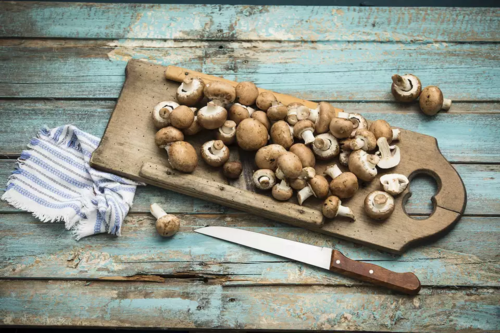
It’s important to note that there are different types of mushrooms. Some mushrooms, like button mushrooms, crimini mushrooms, oyster mushrooms and portobello mushrooms, are eaten as food. Other mushrooms are used not just as food, but for healing purposes by holistic veterinarians. Called medicinal mushrooms, these include many varieties, such as maitake mushrooms (hen of the woods) and shiitake mushrooms.
Many mushrooms are safe to feed dogs in moderation. Although not every dog will enjoy eating mushrooms, some might like them as a novel treat. Read on to learn more about the health benefits of mushrooms and how to safely include mushrooms in your dog’s diet.
Mushrooms contain many beneficial nutrients, which vary according to the mushroom species but may include amino acids, vitamin A, B vitamins, copper, enzymes, folate, iron, magnesium, manganese, niacin, pantothenic acid, potassium, riboflavin phosphorus, selenium, thiamin and zinc. Mushrooms are high in fiber and some mushrooms are high in protein. Mushrooms are also full of antioxidants, some of which are not destroyed by the cooking process.
As previously noted, some mushrooms are toxic, even deadly. Only feed your dog mushrooms that you would eat yourself. Always cook mushrooms before feeding them to your dog. Never feed your dog raw mushrooms. Raw mushrooms are not easily digested by dogs, and they can also make your dog sick, causing stomach upset (vomiting, diarrhea or both).
Dogs can eat any species of mushroom that people can. Choose mushrooms available for sale at your local large-chain grocery store. Any mushroom sold at your supermarket will be safe for consumption by either people or dogs. Always cook the mushrooms before giving them to your dog.
Wash mushrooms before cooking them for your dog. The best way to wash mushrooms is a quick rinse with cold water, followed by a good wipe with a dry paper towel if any visible dirt remains.
Chop or slice the mushrooms, then cook them in a pan on the stove using a small amount of a dog-safe cooking oil like olive oil. There is no need to add salt or any other seasonings, although you can try adding some low-sodium chicken broth or low-sodium beef broth to your pan of mushrooms near the end of cooking for extra flavor. Simply continue to sauté until the broth is absorbed into the mushrooms.
Cool and serve the mushrooms on their own, or mix them into your dog’s regular food. As with all treats you feed your dog, feed mushrooms in moderation. Feeding too many mushrooms (or any other food for that matter) can upset the balance of your dog’s regular dog food. All extra foods, including mushrooms, should make up less than 10 percent of your dog’s total diet (the remaining 90 percent should be his regular, complete-and-balanced food).
Medicinal mushrooms are available dried, as a powder or in capsule form. If you want to give your dog medicinal mushrooms for specific health conditions, work with your regular veterinarian or a holistic veterinarian to make sure you are giving the best mushroom in the correct dose.