x




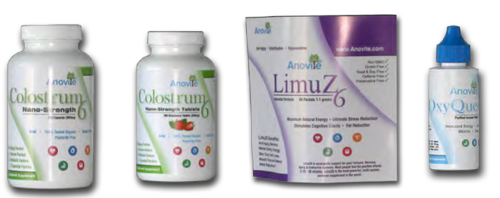
For centuries, colostrum, the first milk of all mammals, has been utilized for anti-aging and immune-support purposes. It is the immune
residue of the mother—with immunoglobulins, cytokines, leukocytes and other memory cells— that keeps her newborn calf healthy and protected
during the first few days of life when there is almost no host immunity.
Colostrum is highly regarded worldwide by public health experts as a safe and effective means of protection against bacterial and viral pathogens.
A considerable amount of colostrum research has been conducted in the area of viral infections, going all the way back to the eighteenth century,
when American colonists showed that vaccinations from dairy cows could prevent smallpox. So powerful is colostrum that a recent study showed it
worked as well as the influenza vaccination.
MEDICALLY PROVEN
In an April 2007 study in Clinical and Applied Thrombosis/Hemostasis (13;3:130-6), a two-month treatment with oral colostrum was compared with
anti-influenza vaccination in the prevention of flu episodes. The study took place in Italy. The researchers noted, “After three months of follow-up,
the number of days with flu was three times higher in the non-colostrum subjects. The colostrum group had 13 episodes versus 14 in the colostrumplus- vaccination group, 41 in the group without prophylaxis, and 57 in nontreated subjects.” Part 2 of the study had a similar protocol with 65
very high-risk cardiovascular subjects, all of whom had prophylaxis. “The incidence of complications and hospital admission was higher in the group that received only a vaccination compared with the colostrum groups,” the study said. “Colostrum, both in healthy subjects and high-risk cardiovascular
patients, is at least three times more effective than vaccination to prevent flu and is very cost-effective.”
Two additional recent studies shed light on how colostrum works. In another Italian study, published in the October 2007 issue of New Microbiology
(4:447-54), researchers said, “Human and bovine colostrum (BC) contain a remarkable amount of bioactive substances, including antibodies toward
many common pathogens of the intestinal and respiratory tract as well as growth factors, vitamins, cytokines and other proteic, lipidic and glucidic factors.”
In the study, researchers investigated whether BC had any immunomodulatory effect on human peripheral blood mononuclear cells (PBMCs) from healthy donors. (PBMC cells include natural killer cells, T cells and B cells, all critical to fighting intruders.) They found the colostrum stimulated
the production of interleukin-12 (IL-12) and interferon-gamma and messenger cells called cytokines required for a successful immune
response against pathogens such as bacteria and viruses. Bovine colostrum induced a dose-dependent production of IL-12. “BC could also represent an inexpensive therapeutic tool in prevention and treatment of several human microbial infections, including influenza,” the study added.
In March 2009 in Pol Merkur Lekarski (26;153:234-8), researchers from the Department of Internal Medicine, Pneumonology and Allergology,
Central Clinical Hospital of the Ministry of National Defense in Warsaw, Poland, noted, “The value of bovine colostrum is documented in clinical
observations and supported by a large database. An antibacterial effect and modulation of the immune response are accepted. The wide spectrum
of the activity of a lactoferrin or a proline-rich polypeptide complex was confirmed in experimental and clinical studies. Moreover, a high concentration
of immunoglobulins in bovine colostrum gives exceptional opportunity for use as a support in immunodeficiency treatment.”
Finally, a 1998 study conducted at the Laboratory of Virology, Institute of Immunology and Experimental Therapy, Polish Academy of Sciences in
Wroclaw, Poland, and published in Acta Virol (42;2:75-8) also showed the benefits of colostrum. The research found that when proline-rich polypeptide
isolated from bovine colostrum was added to the immune cells found in the membrane lining theabdominal cavity and viscera immediately after
virus adsorption or one day before or after viral infection, weakened cells were better able to inhibit virus replication.
So can colostrum help? Well, remember that colostrum is a food and not a drug. Yet, the information here is critically important, and we shouldn’t underestimate its significance. Immune cells found in the gastrointestinal tract produce about 75 percent of the antibodies in the body.
Since colostrum supports healthy immune cells in the gastrointestinal tract, it has great potential to support a strong protective immune function.
It is critical to realize that not all colostrum is the same. Some brands may call their products “colostrum” but may come from milkings other than
the very first milking within six to eight hours after birth. Some take the second and even third milkings, which is primarily “transitional milk.” Any dairy
farmer or even nursing mother can tell you there is a huge difference from the substance produced at the first milking and the milk produced over the next few days. That initial colostrum is essential in protecting the newborn. testing and scrutiny to assure that all our colostrum comes from the first milking. This testing is required to achieve the coveted Anovite certification found only on a handful of high-quality brands. Dr. Don
Lein, Professor Emeritus at Cornell University’s Endocrinology and Veterinary Diagnostic Laboratory has performed numerous tests that substantiate
significant differences between first-milking colostrum and transitional milk claiming to be colostrum. His tests verified that Anovite certified
colostrum met all the scientific criteria for a true colostrum while others did not. Look for the Anovite certification seal to assure that you are
receiving all of the benefits of a true first-milking colostrum.
.png)