x





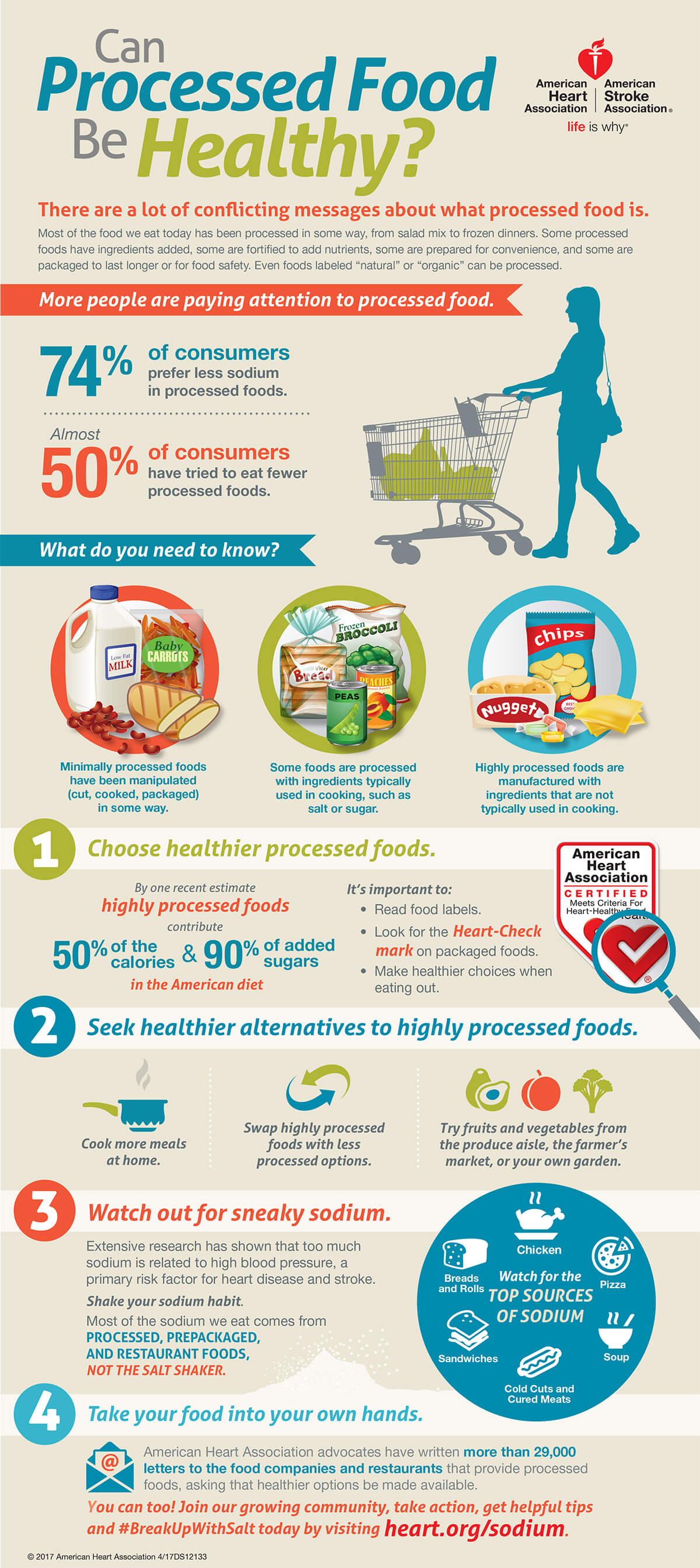
Most of the food we eat today has been processed in some way, from salad mix to frozen dinners. Some processed foods have ingredients added, some are fortified to add nutrients, some are prepared for convenience, and some are packaged to last longer or for food safety. Even foods labeled “natural” or “organic” can be processed.
More people are paying attention to processed food.
74% of consumers prefer less sodium in processed foods.
Almost 50% of consumers have tried to eat fewer processed foods.
Minimally processed foods have been manipulated (cut, cooked, packaged) in some way.
Some foods are processed with ingredients typically used in cooking, such as salt or sugar.
Highly processed foods are manufactured with ingredients that are not typically used in cooking.
1. Choose healthier processed foods. By one recent estimate, highly processed foods contribute 50% of the calories and 90% of added sugars in the American diet.
2. Seek healthier alternatives to some highly processed foods.
3. Watch out for sneaky sodium.
Extensive research has shown that too much sodium is related to high blood pressure, a primary risk factor for heart disease and stroke.
Shake your sodium habit. Most of the sodium we eat comes from processed, prepackaged, and restaurant foods, not the salt shaker.
Watch for the top sources of sodium: breads and rolls, cold cuts & cured meats, sandwiches, pizza, soup and chicken.
.png)