x



Circadian rhythm is a an innate biologic feature of living organisms that relates to time and life functions. Generally, this rhythm is based on a 24-hour period.
Circadian Rhythm Sleep Disorders refer to disruptions in the timing of sleep and wake and the consequences that result form the disruption. We all have an internal clock that regulates certain biological functions over a 24-hour period. That clock is referred to as your circadian rhythm..
As with many body functions, your circadian rhythm can get out of alignment for a variety of reasons. For example, the demands of a job, newborn baby or travel can disrupt your body clock. When your internal rhythm is off, it can affect your sleep as well as your wake time.
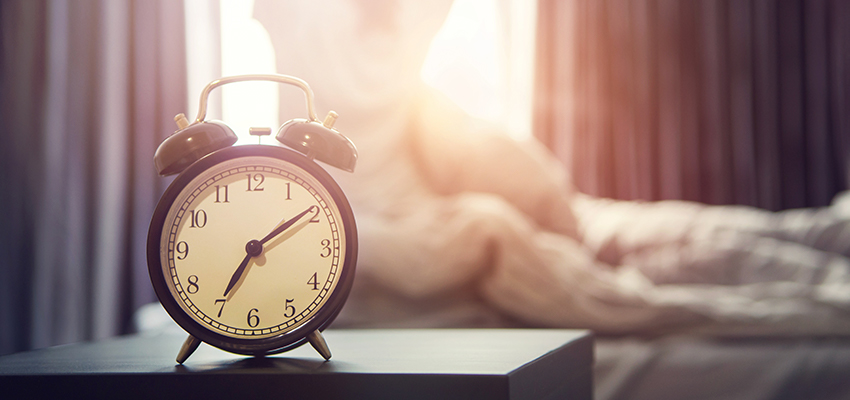
We all have an internal clock that regulates certain biological functions over a 24-hour period. That clock is referred to as your circadian rhythm. Patterns of hormone production, appetite, and cell regeneration are associated with a person’s circadian rhythm, and circadian rhythm disorders can play a significant role in disrupting your sleep-wake cycle.
People have a circadian rhythm that involves being awake during the daytime and sleeping at night. Certain factors affect your circadian rhythm including melatonin production. Melatonin is a hormone in the body that helps regulate sleep. Melatonin production is affected by sunlight. When you’re exposed to light, melatonin levels are low. But when light decreases, such as in the evening, your body makes more melatonin, which in turn makes you sleepy.
Keep in mind; there are individual variations in a person’s internal clock. For example, you might feel you are naturally a morning person, or maybe you consider yourself a night owl.
Symptoms of circadian rhythm disorders may vary in severity. Some people only experience problems, such as jet lag when traveling. In other cases, the disorder may be chronic and affect daily living. Circadian rhythm disorders often cause decreased quality of sleep, which can lead to sleep deprivation.
Treatment for circadian rhythm disorders may vary based on the severity of symptoms and the specific disorder. In most cases, one of the treatment approaches listed below is recommended.
Lifestyle and Behavioral Changes: In some instances, certain behavior and lifestyle changes may be all that is needed to treat a circadian rhythm disorder. Behavioral changes may include avoiding naps, caffeine and nicotine a few hours before bed. Adjusting exposure to light may also help. For example, if you have delayed sleep phase disorder, avoiding light exposure in the evening including light from cell phones and computers may be useful. Maintaining consistent bedtimes even on the weekends can also be helpful.

There’s a continuum of chronic types among people with healthy circadian clocks, ranging from ‘morning’ people (larks) who prefer to go to sleep early and awaken early, to ‘evening’ or ‘night’ people (owls), who prefer to go to sleep late at night and awaken late in the morning. Regardless of whether people are larks or owls, those with normal circadian systems can –
In one lot of research, volunteers were placed in special apartments or caves for several weeks, with no clocks or other time cues. Interestingly, without time cues, these volunteers went to bed roughly an hour later and awoke roughly an hour later each day. The results of these experiments appeared to show that humans have a free-running circadian rhythm of approximately 25 hours.
However, because these volunteers were able to control artificial lighting and the evening light caused a phase delay, more research was carried out. This new research showed that all adults free-run at an average of just over 24 hours (24 hours and 11 minutes, to be precise!). Our biological clock requires regular environmental time-cues in order to maintain a 24-hour day/night cycle. These time-cues, also known as zeitgebers, include our daily routine, and sunset and sunrise. We need time-cues to keep our normal human circadian clock aligned with the rest of the world.