


x
Black Bar Banner 1
x

Alert!  New Secured Wallets are installed! new Blog system with AI  power and auto blog curation coming soon  Alert! 

A+ A−
Ads by Markethive - View All
Blogs
The Blog Feed
Write a New Blog Post
Search Blog Status
Most Viewed
Most Recent
Most Shared
Alphabetical
Blog Main Menu
Markethive Blog (default)
All Blogs
My Blog Posts
Friends' Blogs
Blog Categories
All
Advertising
Blockchain & Cryptocurrency
Business Development
Diet & Weight Loss
Environmental
Health and Wellness
History and Culture
Home and Garden
Marketing
Mentoring & Training
Money & Finance
Other
Political
Prayer & Religion
Programming & Technical
Real Estate
Search Engine Optimization
Social Media
Spirituality
Sports & Recreation
Transport
Travel & Events
Website Design
Blogging Tools & Assets
My Blog Info
Members Subscribed to You
Blogs You Are Subscribed To
Website Widget
Wordpress Plugin
Subscribe for Greater Services
Subscribe to one of many subscriptions, each one includes the previous ones.. Unlock powerful tools, advance features, to build a powerful reach.

Circadian Rhythm Disruptions

Posted by Bobby Brown on May 14, 2022 - 6:07pm Edited 5/14 at 6:07pm


Circadian rhythm refers to your body’s internal clock pendulum. It controls all the changes that occur in our bodies within 24 hours, according to the internal sleep-wake clock. These changes may be of physical and psychological nature and are triggered by light exposure, eating, movement, sleep, darkness, and more.

Many modern lifestyle factors can disrupt your circadian rhythm, such as artificial light and lack of sun exposure.

Sunlight is the leading factor in the circadian rhythm. However, the amount of daily obligations and job duties prevent us from getting enough sun exposure. This, of course, directly influences one’s circadian rhythm. 

Sunlight is the main source of blue light. This form is a longer wavelength, and it inhibits the production of melatonin and makes us feel alert and awake. 
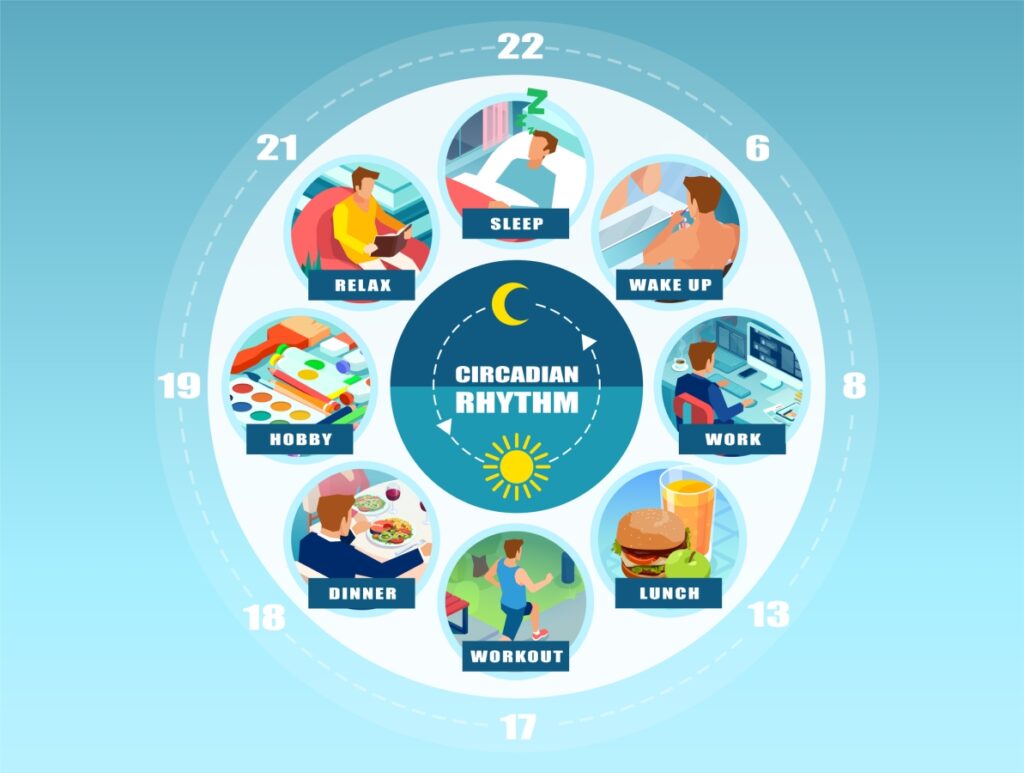
the circadian rhythm diagram

Additionally, exposure to blue light is rising during the night. Our TVs, smartphones, and LED lights are all sources of unhealthy blue light. Shorter wavelengths of blue light classify as harmful as they can cause eye strain and retinal damage. These can confuse your body’s clock, which can accelerate brain aging and be bad for your cognitive performance over time.

Many people with an unhealthy circadian rhythm and sleep try to make up for lack of sleep with caffeine, but coffee cannot replace sleep. It only blocks your ability to feel tired or fall asleep.

Here are some tips on how to improve your sleep and circadian rhythm:

  • Limit the unhealthy blue light exposure, especially before bed and through the night. Avoid watching lots of TV or videos on your phone before bed. If you limit the exposure to light, melatonin is secreted. This will regulate your circadian rhythm and tell your body that it’s time to sleep.
  • You can also use blue blocker glasses. These will reduce eye strain and negative effects of unhealthy blue light. 
  • Increase the exposure to healthy blue light in the morning. In contrast, sunlight or light alarms will send a signal to your body that it’s time to wake up.











