x




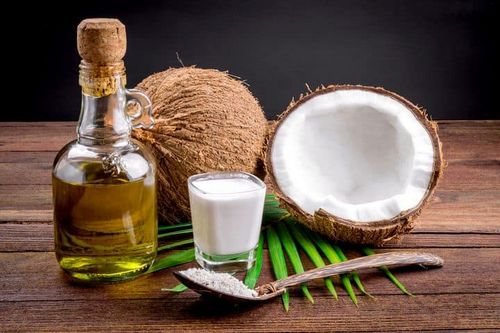
Coconut oil is another excellent brain food.
However, in the past, it has been demonized for its high saturated fat content.
In reality, people who consume coconut oil as part of their traditional diet are extremely healthy and heart disease is almost unheard of.
People of the South Pacific Islands so highly regard coconut as both food and medicine that they call the coconut palm tree the “tree of life.”
The main reason coconut oil is considered a brain food is its high concentration of medium-chain triglycerides (MCTs).
MCTs are found in human breast milk and are added to baby formula since they’re essential for babies’ developing brains.
Your brain’s usual source of fuel is glucose, but the MCTs in coconut oil get broken down into ketones which feed the brain directly, bypassing glucose metabolism.
It’s this property that makes coconut oil a promising treatment for Alzheimer’s, which some experts consider a third form of diabetes — a “diabetes of the brain.”
Neurologist David Perlmutter, MD, author of the bestseller Grain Brain, includes coconut oil as part of his “anti-Alzheimer’s trio,” along with avocados and omega-3-rich grass-fed beef.
PET scans show that the areas of the brain affected by Alzheimer’s can no longer absorb glucose, but will readily use ketones.
Coconut oil has also been found to reduce the beta-amyloid plaques associated with this disease.
In one promising study, adults with mild cognitive impairment showed significant improvement in memory recall within 90 minutes of taking a single dose of MCT oil.
But everyone can benefit from the inclusion of this brain-healthy cooking oil in their diet.
Coconut oil exhibits anti-stress and antidepressant properties, and can delay brain aging.
RECOMMENDED: Mary T. Newport, MD, a neonatal physician who pioneered the use of coconut oil to treat Alzheimer’s, recommends starting with 1 teaspoon of coconut oil, 2 or 3 times a day. If you are using coconut oil therapeutically for any neurological disorder, you can download a free copy of her Coconut Oil Dietary Guidelines.
Coconut oil melts at room temperature (76 degrees F), so sometimes it’s liquid and sometimes it’s solid.
Don’t keep it in the refrigerator — it will turn rock-hard.
You can use coconut oil anywhere you normally use other vegetable oils, butter, or nut butters.
You can cook, fry or bake with it, spread it, or add a dollop in soups, rice, or smoothies.
The only caution is not to make salad dressing with it since it solidifies when the dressing is poured on cool vegetables.
Note that most coconut oils taste and smell like coconut.
If this puts you off, don’t give up on using coconut oil.
Refined coconut oil retains the benefits of MCTs that you want, but with none of coconut’s distinctive taste.
Buying organic is optional since coconut oil generally is pesticide-free.