x




.png)
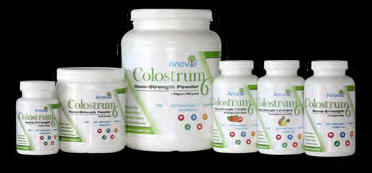
first-milking colostrum is a powerful dietary aid for promoting great health. This quality first-milking colostrum product helps quench your appetite, promotes energy, improves immune health, and enhances overall sense of well being.
To date, over 80 different components have been isolated from first-milking colostrum products, such as Anovite. These work together synergistically to produce the profound healing, health maintenance and rejuvenation support that only first-milking colostrum can provide.
The biologically active components in complete first-milking colostrum can be divided into categories based upon the health aspect where they exert their greatest influence.
As we go through the discussion of what these substances do, you will see that in some cases the functions of these components can be clearly separated into such categories, while, in many cases, the dividing line is not as clear.
The major categories are the immune factors (immune helpers),growth factors (tissue repair helpers), and metabolic factors. Let’s look at each to gain a greater understanding of the diverse benefits to be received from a quality first-milking colostrum product.
Many people know that first-milking colostrum is great for their immune health. Many different types of immune helpers are present in first-milking colostrum. These include the following:
Immunoglobulins, also called antibodies, neutralize pathogens in the lymphatic and circulatory systems. Many people take colostrum for the immunoglobulins (Ig) in an effort to receive immunity for a wide range of pathogens. Thanks to its immunoglobulins, first-milking colostrum consistently has an effect on pathogens that may invade the intestinal tract causing diarrhea and gastrointestinal illness.
Lactoferrin is an iron-binding protein that aids the body in utilizing iron. The ability of lactoferrin to bind iron is important in keeping invading bacteria in check since they require iron to multiply.
Many other functions have been attributed to lactoferrin, including antimicrobial and antiviral activities, immune regulation and cell-growth regulation. Lactoferrin enhances phagocytosis (the engulfing of harmful organisms by white blood cells) and plays a powerful role in reducing the inflammation that accompanies many health problems.
Transferrin is yet another mineral-binding carrier protein that attaches to available iron and can act independently or in concert with lactoferrin to impede the growth of certain aerobic bacteria, particularly in the gut.
Lysozyme is an enzyme that can break down the outer cell wall of certain bacterial organisms, thus inhibiting their reproduction and making them vulnerable to attack by other immune factors. It is found in saliva, tears and in other mucous membranes. Lysozume plays a key role in the first line of defense against bacteria and is so important that it has recently been added to some baby formulas.
Peroxidase is an enzyme that generates the release of hydrogen peroxide to “burn” bacteria. This is the basis for the use of hydrogen peroxide as an alternative therapy.
Proline-rich polypeptide (PRP) is a hormone that helps regulate the immune system, keeping it in balance between under- and over-activity. This is extremely important for those persons with autoimmune disease. Proline-rich polypeptide has a balancing effect on the immune response and can suppress an overactive immune system in cases where it has begun to attack the tissues of the body. It is also a powerful anti-inflammatory agent that may help relieve pain.
Cytokines are messenger proteins that mediate many immune functions. They are involved in the production of T-cells, lymph activity, and in regulating the force and duration of the body’s immune response. One cytokine, known as interleukin-10, is highly anti-inflammatory and is a key helper to relieve discomfort among persons with arthritis-related joint pain.
Lymphokines are hormone-like peptides. They are released by activated white blood cells. They help to regulate the immune response.
Oligosaccharides and glycoconjugates bind to the surfaces of the intestines, preventing the attachment of pathogens there. Evidence is also available that these components act as growth promoters for the beneficial flora in the gastrointestinal tract.
Thymosin is a hormone composed of two protein-based chains, known as alpha or beta chains, which are separately present in bovine colostrum. The chains act on the thymus gland independently or in concert with each other to stimulate activation, development and maintenance of the immune system.
Transfer factors are small proteins produced in response to the body’s exposure to certain types of microorganisms, particularly those that reside in deep tissues for a long period of time, like the bacterium that causes tuberculosis. They are specific for a particular microorganism and are carried inside certain types of specialized white blood cells. Transfer factors work in concert with various white blood cells and other factors in an attempt to keep pathogenic microorganisms under control.
Nucleotides and nucleosides are important for metabolic functions. They enhance antibody responses and contribute to iron absorption during digestion.
Xanthine oxidase is an enzyme that can attach to the cell walls of certain bacteria, and interfere with the ability of the bacteria to replicate themselves.
Tissue Repair Helpers
The tissue repair helpers in first-milking colostrum are responsible for helping us to fight premature aging. Among these are the following:
Growth hormone (GH) is the single most abundant hormone produced by the body, affecting almost every cell. GH levels are highest during teenage years and they fall rapidly thereafter. GH increases metabolism, reduces fat and increases muscle mass. It is involved in the regeneration of heart, lung and liver tissue, as well as many other organs and tissues throughout the body. GH stimulates protein synthesis, which is critical for the renewal of skin and bones. It is also considered to be an immune stimulant because it helps the body produce antibodies, T-cells and white blood cells. GH even affects neurotransmitters in the brain, improving moods and mental acuity.
Insulin-like growth factors (IGF) I and II belong to a whole family of hormones contained in colostrum, called the IGF superfamily. IGF-I is considered to be the most potent of these. It functions like the captain of a ship, triggering the events that activate cell growth and reproduction, protein synthesis, and the release of energy (glucose metabolism). Because it is involved in so many major functions, IGF-I is found in association with almost all the cells in the body. It improves the function of GH to build muscle and burn fat. It is also recognized for its ability to regenerate and repair cartilage. As we age, the cells in our body do not reproduce themselves as well, and, since IGF-I is a primary factor in the ability of cells to grow and reproduce, it is highly desirable for its many antiaging and regenerative effects.
Epithelial growth factor stimulates normal skin growth. Transforming growth factors A and B are helpful in healing wounds and in the synthesis and repair of RNA and DNA. Fibroblast growth factor stimulates the growth of new blood vessels and contributes to tissue development and wound healing. Platelet-derived growth factor is involved in the healing of vascular wounds. It is released in conjunction with blood clotting during the healing process. Trypsin inhibitors and other protease inhibitors help prevent the destruction of immune factors and growth factors by enzymes in the gastrointestinal tract. They also prevent the ulcer-causing bacteria, H. pylori, from attaching to the walls of the stomach. In this way, they are instrumental in the healing of gastric ulcers.
Metabolic Factors
The metabolic factors in colostrum aid our utilization of carbohydrates and play a role in normalizing weight problems.
Leptin is a small hormone-like protein that can suppress appetite and lead to body weight reduction. Mature fat cells (adipocytes) release leptin in the presence of insulin, which is also found in colostrum. Insulin-producing pancreatic beta-cells have binding sites for leptin and it is believed that the size of fat cells may be a major factor in determining the amount of leptin released. Therefore, leptin deficiency may be associated with obesity, particularly in diabetic individuals.
Insulin is a hormone required for the effective utilization of glucose (blood sugar) in the body. Insulin binds to specific sites on cells, facilitating their interaction with IGF-I and, thus, initiating the conversion of glucose to glycogen, a high-energy source carbohydrate.
Vitamin-binding proteins act as carriers to deliver B-complex vitamins to the body.
Mineral-binding proteins, especially lactoferrin and transferrin, not only interfere with the replication of certain pathogenic microorganisms; they also serve to capture iron from the ingested food and present it in a form that can readily be absorbed by the body.
Lactoferrin can also bind copper and deliver it in a form suitable for absorption by the body. In addition, two carrier proteins are present in colostrum. These assist in calcium absorption.
Casein, which is also an abundant source of amino acids to build new protein molecules, is the first; alpha-lactalbumin, which is present in appreciable quantities only in first-milking colostrum, is the other protein carrier.
Cyclic adenosine monophosphate (CAMP) is a phosphorylated nucleotide in a very specialized form that transfers the chemical energy necessary to drive metabolic reactions to form new protein, carbohydrate, and fat molecules.
Enzyme inhibitors, also known as “permeability factors,” are actually small proteins that slow down or inhibit the enzymatic breakdown of proteins. They provide protection to the immune, growth and metabolic factors as they pass through the digestive tract.
There are many other substances present in colostrum, many present in minute quantities and they also provide benefits to first milking humans who ingest colostrum routinely as a dietary supplement. However, there are two substances, in addition, to those described above that may provide significant benefits. They are the hormone melatonin, which has a direct effect on the establishment of biological rhythms and proper sleep patterns; and relaxin, a hormone known to directly affect contracted muscles.
The Doctors’ Prescription
First-milking colostrum such as Anovite is a rich source of many health-promoting compounds. Only unadulterated, first-milking products without their fat removed are likely to be rich in these immune, growth and metabolic factors. Some companies de-fat their colostrum products, not being sensitive to the fact that fat is not only a carrier of many of the most biologically active components in colostrum but also that fat protects these compounds during processing. Anovite is true first-milking colostrum—a whole food that is only minimally processed. We have found health-conscious consumers get great results from this product. While adults can use colostrum as both a capsule, powder or pineapple lozenge, children tend to love the strawberry chewable.