x




There’s a reason diet and exercise are two of the most popular New Year’s resolutions. Between Thanksgiving and New Year’s, the average person gains a pound or two from all the stress and excess. After a full month of overindulgence, many people swing to the opposite end of the spectrum out of guilt. But instead of punishing yourself come 2021, there could be a simpler solution: stay hydrated. It keeps your gut running smoothly, and as a plus, it can prevent holiday hangover, too!
It’s easy to write off dehydration because we so often associate it with advanced symptoms like dizziness, fainting spells, and muscle cramps. In reality, early signs of dehydration can be as benign as a headache or difficulty focusing on your work. All it takes is a 2% drop in body water levels to feel the effects. In fact, 75% of Americans are going about their day in a state of chronic dehydration.

Dehydration probably isn’t top of mind come winter, when in actuality, that is the time to be careful. When temperatures change, how we consume and use water changes as well, both physiologically and psychologically. In the summer, when the sun is shining, temperatures are high, and we’re more active, we rely on water to keep ourselves cool. But a cool glass of water is a little less refreshing when it’s snowing out, even though we’re still sweating under our winter jackets. The heat/thirst association is one of the major reasons people consume less water in the winter.
During the summer, when there’s more moisture in the air, sweat takes longer to dry, so it’s more likely that we can feel it on our skin. In the winter—especially when it’s freezing out—humidity dips and sweat dries a little faster. But sweat isn’t the only way that water leaves our bodies. Have you ever exhaled on a chilly day and watched your breath come out in little cloud puffs? That’s respiratory water loss in action.
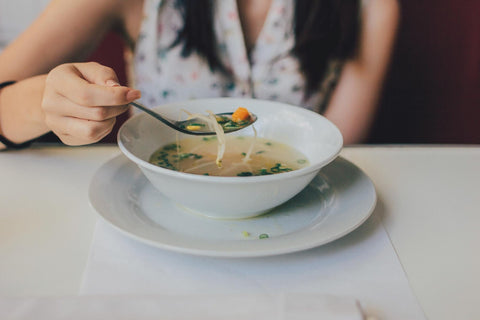
Besides the water that we drink, approximately 30% of our fluid intake comes from food, especially produce like watermelon and cucumber. Water helps dissolve nutrients like vitamins and minerals and moves food from the stomach to the intestines. And foods high in water content exit the gastric system faster than more solid foods like starches. Having a moist internal environment ensures fluidity and movement.
In your microbiome, water plays a large role in the texture of mucus. Your intestines are protected by two mucosal layers. The first layer is thick and distinct, creating an antimicrobial buffer between the walls and the canal of the intestines. The second layer is thinner, and this is where your microbiome lives. Here, the bacteria interact with dietary material to produce metabolites like vitamins and short-chain fatty acids. These metabolites exchange through the mucosal layers to the intestinal walls and into the bloodstream for transport to other parts of the body.
When we’re dehydrated, that process is a little less efficient. While the organisms of your microbiome are generally considered beneficial to human health, some present a threat. The composition of the microbiota can affect the properties and functionality of mucus. Bacteroides thetaiotaomicron, for example, can bind and metabolize mucin glycans as an energy source. Breakdown of the mucin layer leads to decreased protection against harmful bacteria, which then leads to inflammation, infection, and increased gut permeability. So now, not only are there more harmful bacteria in your gut, but it’s easy for said bacteria to travel to other parts of the body.
While no one expects you to abstain from eating and drinking everything that the holiday season offers, taking care of your body’s basic needs can help ensure that you bounce back quickly. If the thought of a glass of cold water turns you off, remember to pack a thermos of tea. Down some water with every steaming mug of mulled wine or eggnog. This simple act can prevent inflammation and keep your gut running smoothly.
.png)