x




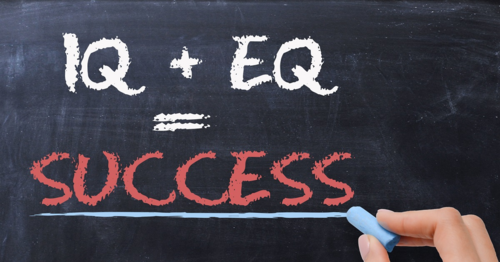
Maintaining your brain’s intellectual abilities is important for coping with today’s complicated world – and keeping your mind and memory sharp into your senior years.
But there’s another kind of intelligence that’s crucial for improving your cognitive performance and your overall satisfaction in life.
I’m talking about emotional intelligence.
Emotional intelligence is the ability to rein in your emotions, understand how other people are feeling and, with that knowledge and control, make better decisions in your daily life.
If that’s not enough to interest you in your own emotional intelligence, researchers have found an unexpected benefit to increasing it – folks with more emotional moxie tend to enjoy higher incomes, too!
So how do you measure your emotional intelligence? What’s more, how do you increase it? Let’s take a look…
The latest science shows that people who are well-versed in understanding the emotions of the people around them, as well as their own spectrum of feelings, have a higher EQ—or emotional quotient.
EQ is usually measured by examining a series of behavioral factors, such as emotional literacy, intrinsic motivation, pursuit of noble goals and optimism. One such test is called the Six Seconds Emotional Intelligence Assessment (SEI™).
Studies show that students with a higher EQ—specifically a higher ability to grasp and manage their emotions—perform better in school.
Researcher Carolyn MacCann at the University of Sydney reported, “Although we know that high intelligence and a conscientious personality are the most important psychological traits necessary for academic success, our research highlights a third factor, emotional intelligence, that may also help students succeed. Students must also be able to understand and manage their emotions to succeed at school.”
Dr. MacCann’s research, which reviewed a group of studies involving 42,000 students, shows that when you can manage negative emotions like boredom and anxiety, and form better relationships with your family and teachers, it leads to a higher level of academic achievement.1
An added benefit to having more emotional intelligence is having a higher income. Which is not really surprising. If you’re good at reading other people’s emotions and understanding how to influence them, then you probably have the tools to be a better sales person or more talent for managing the work of others.
For this study, researchers in Germany measured people’s ability to interpret the emotions on other people’s faces. Those who scored highest did, in fact, tend to make more money than folks who scored poorly.
According to researcher Blickle Gerhard of the University of Bonn, the subjects in the study with increased emotional intelligence “are considered more socially and politically skilled than others by their colleagues. Their supervisors also attribute better social and political skills to these people. And, most notably, their income is significantly higher.”2
If you want to develop a higher level of emotional intelligence, one tool is to spend less time online and avoid being mentally consumed by the digital distractions of cyberspace.
Again, this finding shouldn’t be a surprise.
An investigation by American and Canadian scientists shows that those of us who excessively use our phones and are forever engaged with social media are emotionally more distant from our friends and relatives and display less sensitivity to their feelings.3
These researchers won’t commit to definitively concluding that our online obsessions lower emotional intelligence, but they believe it’s probably the case. As researcher Sara Konrath says, “Perhaps frequently using social media can impair empathy and emotional intelligence. We cannot determine causality with this study. We need more research to better understand how online digital technology affects people, for better or for worse.”
We can see the likely bad effects of digital tools in the tone of emails, social posts, and comments on websites. Many of us have observed that people say things in these media they would not say if they had to look at the other person’s face. The level of frankness and outright rudeness can be shocking.
Ways to improve your emotional intelligence include:
It’s also helpful to ensure you’re getting enough rest. Studies show that sleep can reset your emotional intelligence to a higher level.
When researchers at the Walter Reed Army Institute of Research kept study subjects awake for about two days without any sleep, they found that their emotional perceptions went kaput.7That’s not news to me. Anybody who’s ever pulled an all-nighter knows how sleeplessness affects attention to detail, mental recall, as well as your ability to communicate kindly and patiently with others.
.png)