x





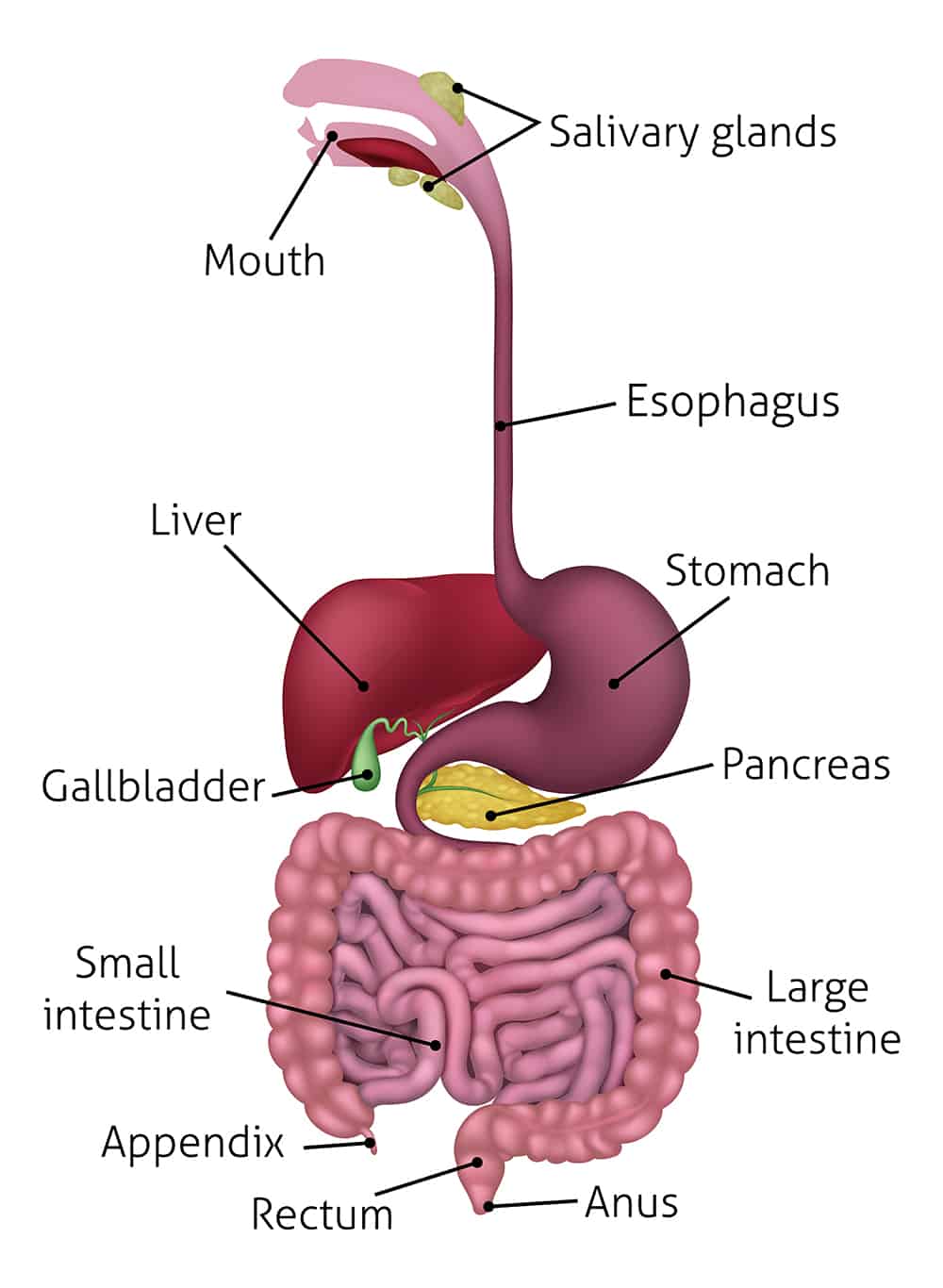
A few minutes after food enters the stomach the muscles within the stomach wall start to tighten (contract). This creates gentle waves in the stomach contents. This helps to mix the food with gastric juice. Using its muscles, the stomach then pushes small amounts of food (now known as chyme) into the duodenum. The stomach has two sphincters, one at the bottom and one at the top. Sphincters are bands of muscles that form a ring. When they contract the opening, the control closes. This stops chyme going into the duodenum before it is ready. Digestion of food is controlled by your brain, nervous system, and various hormones released in the gut.
Even before you begin eating, signals from your brain travel via nerves to your stomach. This causes gastric juice to be released in preparation for food arriving. Once food reaches the stomach, special cells that detect changes in the body (receptors) send their own signals. These signals cause the release of more gastric juice and more muscular contractions. When food starts to enter the duodenum this sets off different receptors. These receptors send signals that slow down the muscular movements and reduce the amount of gastric juice made by the stomach. This helps to stop the duodenum from being overloaded with chyme.
.png)