x





Located in Chukotka in the Russian Far East, Cape Kuyveveem is a massive granite outcrop protruding into the Bering Sea. It’s a place where true wilderness exists. Rugged cliffs tower into a grumbling, foggy sky. Gloomy cotton-wool clouds sit weightily across jagged peaks. The distinctive scent of kelp lingers in the air, and the taste of salt on the lips is unmistakable. In some places, weathered igneous rock has given way to volcanic basalt dikes. Overhangs, arches and deep corridors form habitats for nesting seabirds. The bird cliffs at Cape Kuyveveem are the most impressive I’ve ever seen.
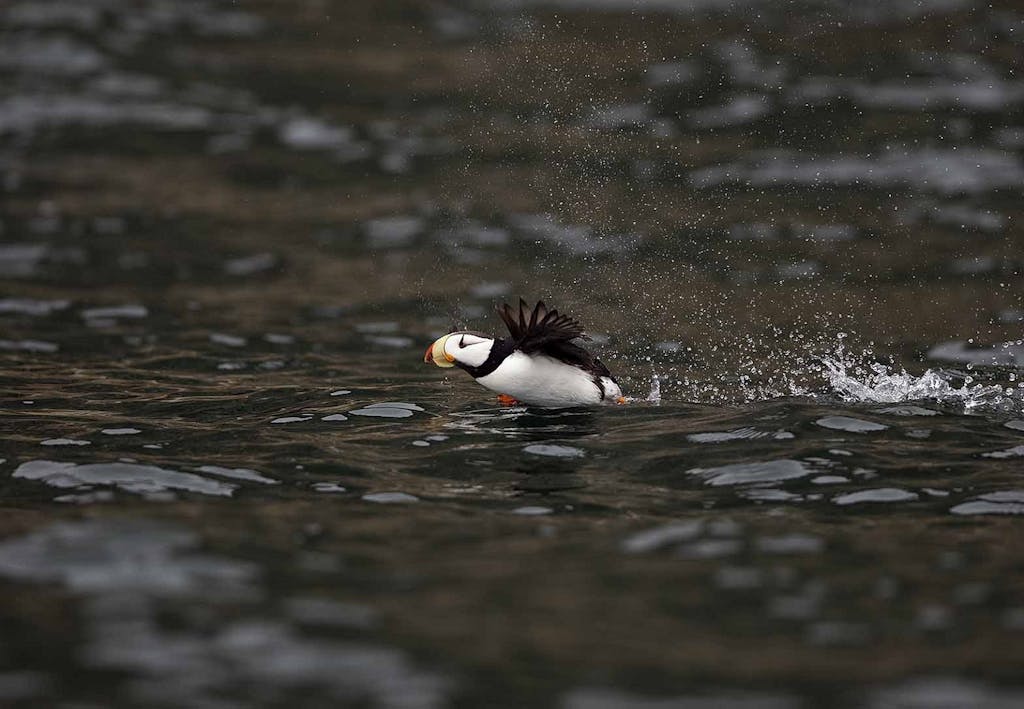
The echoes of thousands of bird calls bounce between the rock walls, creating a far-from-harmonious melody of varied species that even a whirring wind can’t hide. Tufted and Horned Puffins, Black-legged Kittiwakes, Glaucous Gulls, Crested Auklets, Pelagic Cormorants and Common Murres, among others, call Cape Kuyveveem home. And it’s no wonder. Currents stir these nutrient-rich waters, consistently bringing food to the surface. There is certainly plenty for the birds—and often crustaceans—to eat. On the odd occasion, walrus and even gray and humpback whales are spotted feeding here.
Cape Kuyveveem is one of the geological highlights of the Chukotka region. It’s a wilderness that truly takes your breath away, evoking the same sensations as those of a David Attenborough documentary. The looming granite cliffs form impossibly-tall fortress walls into the clouds. The Zodiac gets us close to Cape Kuyveveem’s rough cliff faces, enough to see the lichen patterns growing among the sandy-colored base. Little nooks and corridors have formed through years of weathering and erosion.
If the sea and weather conditions permit, we take a more in-depth look at the seabirds nesting in those darker caverns. Perhaps the most incredible sights are the deep cuts into the granite filled by the dark basalt dikes. Formed millions of years ago, these would have taken shape deep beneath the earth when seismic activity and tectonic movement caused huge cracks. Molten rock poured in to fill those cracks, producing the bar-code style rock pattern we see today.
Chukotka’s climate is influenced dramatically by the Bering, East Siberian and Chukchi Seas. The blistering cold weather snaps from the north and can quickly transform into warmer, wet weather from the south. As a result, moss and lichen dot the worn rock surfaces. Yes, this is a wilderness like no other. Raw, desolate and sparsely inhabited—it’s a true explorer’s dream destination.
Surprisingly, considering the consistently drizzly weather, the Chukotka coast does not receive much rain. Just an estimated 400 to 500 milliliters fall on average each year. When it does rain, however, the water collects in natural basins and pools above the precipices. Then it falls, cascading down the rugged cliff face. Then what’s the effect? As the Zodiac ventures closer, the water droplets gently land on the faces of those looking up with marvel. It’s wise to pull hoods up at this point.
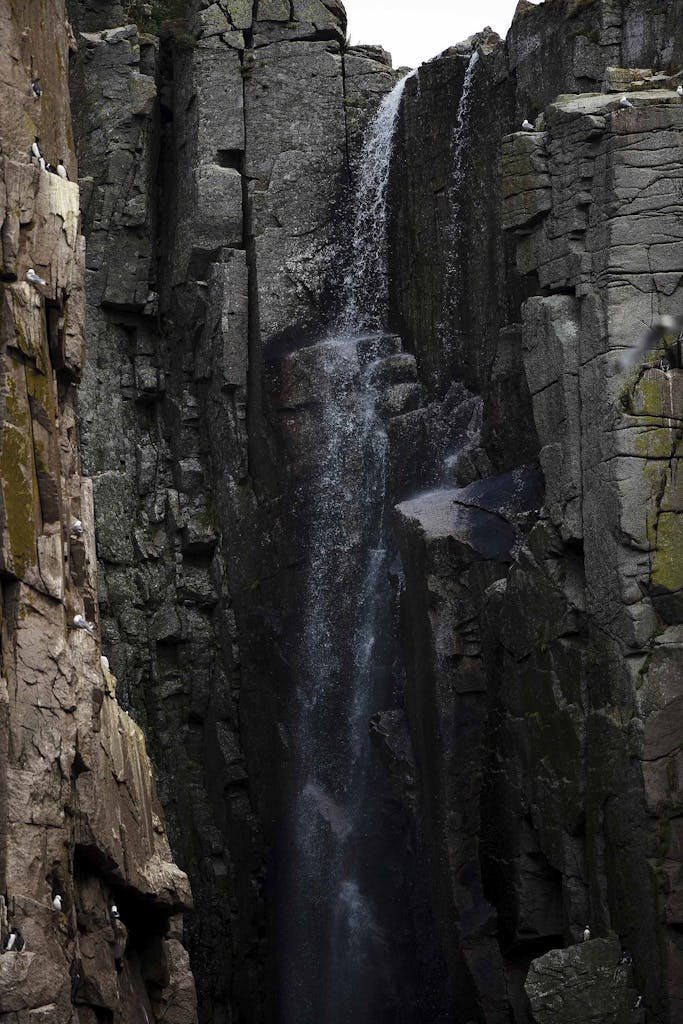
When it rains on Cape Kuyveveem, water collects in natural basins and pools above the precipices, cascading down the cliffs./Lucia Griggi
The air is thick with the smell of an aviary and full of various calls and shrieks. Look up, and you will see thousands of seabirds, each flitting between their homing rock surfaces and the sea, where a fresh catch awaits. Silhouetted wings dart and dive in every direction, immersing you in a wild and magnificent madness.
The European summer is the breeding season for this gull species, and the cute fluffy white chick is the ultimate sighting. I noticed one that was waiting patiently, neck stretched and chirping, hoping to be fed by its parent. It’s not unusual to see two chicks in a nest, clambering and jostling for a regurgitated treat from dad or mum.

Kittiwakes nest on the cliffs of Cape Kuyveveem/Lucia Griggi
There is no mistaking a thousand-strong kittiwake colony when you come across one. Their gatherings are loud and shrill. This noise is where kittiwakes get their name—from their high-pitched “kitee-w-aake kitee-w-aake” call. The noise awakes every sense in your body.
by Andy Shuman


Cruising The World