x




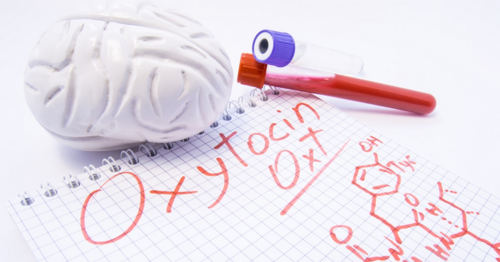
A new study from Japan is the first to show that oxytocin can reverse some of the damage caused by the build-up of brain plaques that form in Alzheimer’s disease.
Oxytocin, sometimes referred to as the love hormone because it can induce feelings of love and happiness, is released into the body through positive physical touch such as through a hug, sexual intercourse, or in women, throughout childbirth and breastfeeding.
More recently, researchers found oxytocin is also important to maintaining a strong, sharp memory. Now one researcher is hopeful that oxytocin could result in a breakthrough in the treatment of Alzheimer’s disease.
Scientists have been debating for many years whether the accumulation of amyloid beta plaques is the cause of Alzheimer’s or whether it’s an effect of the disease.
Whatever the answer, these toxic proteins build up in the brain and form clusters around neurons. As a result, amyloid plaque may interrupt activity of these neurons, and promote neurodegeneration and memory loss.
In animal models amyloid beta plaque build-up in the brain’s main memory and learning center, called the hippocampus, affects the ability of neurons to transmit signals properly. In particular, it hinders an important process called synaptic plasticity.
The synapses of neurons are the points where signals are exchanged. These signals increase and decrease at different times. Synaptic plasticity refers to the ability of the neurons to adapt to the different rates of signaling over time. This adaptability is critical to learning and memory retention in the hippocampus.
A team of scientists from Japan set out to discover whether oxytocin could protect synaptic plasticity against the build-up of brain plaques in laboratory mice.
They began by conducting an experiment to confirm that amyloid beta does in fact impair synaptic plasticity, which it did. Then, they added oxytocin to the brain and watched to see what would happen. The oxytocin reversed the impairment of the synapses.
To make sure the hormone was responsible, they blocked oxytocin receptors on brain cells. Unable to bind to its receptors, the hormone was no longer able to reverse damage to synaptic plasticity.
In the final part of the study they turned their attention to calcium.
This mineral plays a role in neuronal signaling and memory and can be suppressed by amyloid beta plaques. Oxytocin is known to facilitate the influx of calcium ions into cells.
When the scientists blocked the cell’s ability to absorb calcium ions, oxytocin couldn’t reverse the damage caused by amyloid beta. So, the researchers theorized that the hormone might protect synapses by stimulating calcium flow into brain cells.
Professor AkiyoshiSaitoh, who led the study, said, “This is the first study in the world that has shown that oxytocin can reverse amyloid beta-induced impairments in the mouse hippocampus.
“Our study puts forth the interesting possibility that oxytocin could be a novel therapeutic modality for the treatment of memory loss associated with cognitive disorders such as Alzheimer’s disease.
“We expect that our findings will open up a new pathway to the creation of new drugs for the treatment of dementia caused by Alzheimer’s disease.”
You know how I feel about the current state of drug treatment for Alzheimer’s disease. I suppose there’s always hope. However, I’d prefer not to wait and to instead look to natural ways to support your brain’s oxytocin levels.
Apart from touch, sexual stimulation and falling in love, there are other ways to help oxytocin production. There is at least one human study to support each of the following:
Also, be sure to enjoy the sunshine, because oxytocin is activated by vitamin D. I advise supplementing with vitamin D as well, since most people can’t get enough from the sun due to age and a host of other reasons.
.png)