x




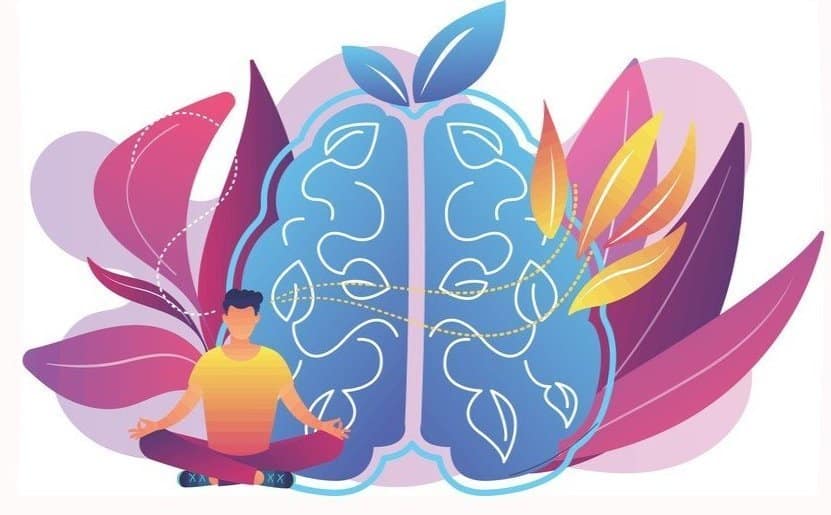
Like a hamster frantically running round and round on its wheel, a mad fury of thoughts go whizzing through your head, demanding your attention, and leaving inner peace nowhere to be found most of the time. Fearful thoughts, anxious thoughts, worrisome thoughts, regretful thoughts — it’s a pesky crowd of all-too-familiar intruders, barging their way rudely into your home and head, wreaking havoc.
You have no idea how to stop the incessant mental chatter and feel powerless and frustrated. It’s like you’re a helpless victim caught in a crossfire — just hoping your mind will ease up and take a break for a little while. At times like these, peace can seem a distant illusion. Then, to make things worse, you beat yourself up for having these kinds of thoughts in the first place.
What on earth is wrong with me?
Normal people don’t think like this.
When will it ever end?
I’m so messed up.”
Sound familiar?
The Buddhists use the expression, “second arrow” to describe the additional layer of suffering we habitually create for ourselves by judging the thoughts that appear in our heads. As we shall see later, understanding this is one of the keys to experiencing peace — even with a head full of unruly guests.
It’s natural to believe that you need to fix or change your troublesome thoughts in order to experience peace. However, think about that for a minute. You don’t resist or feel that you have to fix or do anything with the pleasant thoughts that come into your head. Why, then, do you have to do anything with the not-so-pleasant ones? The answer is simply that you don’t.
Trying to change all your unwanted thoughts into more palatable ones would be an impossible, exhausting task, which would require a huge amount of your attention. You probably wouldn’t be able to get much else accomplished. What if there were a far simpler, more immediate approach to finding inner peace? A way that doesn’t require that you change the content of your mind at all?
There is.
I invite you to try this simple exercise. Close your eyes for a minute and watch closely for your next thought. When it arrives, open your eyes. Did you know in advance which thought would appear? I’m guessing that you didn’t. You don’t have control over which thoughts pop up. You have no more control over the thoughts that appear in your head than you do over the weather conditions outside.
Thoughts are generated by your subconscious mind. The material in your subconscious is filled with impressions from your childhood, cultural influences, and your unique life experiences. It’s mostly negative and made up of past emotional wounds and traumatic and fearful memories. Your brain holds onto this material to try to protect you from the same types of things in the future. This is called your brain’s negativity bias.
It’s your brain just doing its job trying to protect you. You are not your thoughts. They are not a reflection of who you are as a person. You don’t have to believe everything you think or criticize yourself for having negative thoughts.
You are not your thoughts.
When you turn your attention and energy to those pesky thoughts and try to change them, you actually reinforce and encourage them to continue. In your brain, because of neuroplasticity, what you repetitively focus on alters your brain causing neuronal pathways to form and strengthen. And the more you focus on them, the more firmly the thoughts get wired into your brain. It’s a feedback loop.
To actively do something with the negative thoughts — for which you will probably judge yourself harshly when you can’t do it successfully — asks you to wish for reality to be different than it is. This kind of thinking always causes struggle and pain. It’s the opposite of acceptance and mindfully working with “what is.”
Left alone, thoughts are just neutral events passing through your field of awareness. They have no inherent power to affect your peace. As one of my teachers puts it: “We suffer because we are open for business.” It can be quite liberating to realize that engaging with your thoughts is not mandatory. We can choose to leave them alone.
Don’t be concerned about the thoughts that come and go. Leave them alone and they will leave you alone. Leave the mind in peace to do its dance, and it will leave you in peace to do yours. Don’t touch it at all, and you will remain untouched by it.”
– from the book Kick The Thinking Habit

When pleasant thoughts appear, we are perfectly happy to have them around — to invite them in to stay a while. The moment an undesirable guest shows up, however – a fearful, angry, sad, or anxious thought — our defenses go up. We want to get rid of them. We want them out of the house right away. To the reactive mind, fearful thoughts are bad., anxious thoughts are uncomfortable, and angry thoughts are wrong. We slap an ‘unwanted’ label on them and, in doing so, start a battle with and judge ourselves.
So, what to do instead?
What do you think might happen if you were to drop your resistance and welcome all thoughts with open arms? What might you experience if you were to roll out the red carpet and invite them all in — the good, the bad and the ugly? Since they are there anyway, wouldn’t it be better to turn towards them rather than spending your energy fighting against them ? You don’t have to resist your thoughts, make them go away, or do anything with them at all. Just let them be. Accept them and don’t give them any more of your attention than necessary.
You have no control over the stream of thoughts that flows through your head. Everyone’s mind is pretty much a mess. It’s part of our shared human experience. But it’s not a problem unless you label it as one. Leave the front and back door of your mind open and let the thoughts pass through unimpeded. Don’t touch them, and you will remain untouched by them.
Leave the mind in peace to do its dance, and it will leave you in peace to do yours.
Trying to subdue an angry bull through tying him up or confining him in a small pen doesn’t work. It only makes him more angry and upset. The best way to calm a mad bull down is to set him free — to give him a huge, open space to run around in. Meeting with no resistance, his anger will quickly run its course, and he will soon run out of steam.
The same is true for your mind. The more you try to constrain it, the more trouble it will cause you. Let it do its crazy dance. There is nothing bad — nothing inherently wrong happening. It will soon run out of steam if you withdraw your attention and energy from it. The only power it has is the power you give to it. Stop feeding it.
If you wish to make peace with your mind, you have to start by bringing more awareness to your old, reactive patterns. If you begin to notice the tendency to become enmeshed in the downward spiral of negative thoughts producing a judgemental response which in turn leads to more negative thoughts you can change it.
You can learn to respond rather than react. This simple three-step method can help you step out of the reactive cycle and into the peace of present moment awareness.
Stop – Notice that you have become caught up in an old thinking pattern.
Breathe – Take a long, deep breath and, as you breathe out, relax and consciously let go of any tension you may be holding in your body.
Allow – Give whatever thoughts, feelings or emotions that are present permission to be there. Take another long, deep breath. Whatever thoughts appear, give them space. Embrace them with an attitude of non-judgemental acceptance.
Give more attention to the sensation of the breath moving in and out than you do to the thoughts that come and go. Notice how you can choose where you put your attention. By redirecting your attention, you can rewire your brain. This is the basic practice of mindfulness.
An unruly and out of control mind can grind you down and leave you feeling exhausted, powerless and plain beat up. But it needn’t be that way. The mind is not your enemy. It is a powerful ally you can learn to befriend. You now have some powerful tools for peace in your arsenal.
The next time you notice yourself getting dragged into a bare-knuckle fight with your thoughts, remember to STOP. BREATHE. ALLOW. Your mind is just doing what every mind does. There is nothing wrong with yours. How you respond is entirely up to you. It’s the power you have to change your experience and brain. Your mind only has as much power as you choose to give it. And it IS a choice. You hold all the cards.
How liberating and empowering is that?
Imagine the next time you have a stampede of negative thoughts galloping through your head and you don’t mind them being there at all. That is true peace!