x




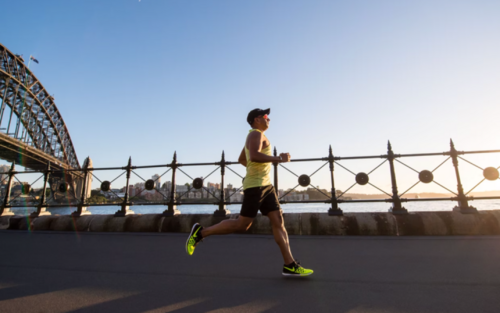
When Joan MacDonald turned 70, she stood 5 feet 3 inches tall and weighed 198 pounds. “I was on medication for high blood pressure and acid reflux,” she says. “I had terrible edema in my ankles, my arthritis was extremely painful, and I had difficulty walking up and down stairs. I was tired, I was emotional — and I was in desperate need of a change.”
Joan had seen her own mother’s health decline while she was living in a nursing home. A second wake-up call followed when her daughter Michelle came to her on the verge of tears.
“She said that I had to make a choice — that if I continued on the path I was on I would end up in a hospital even worse off, needing a lot of care, and probably on even more medication,” Joan explains.
Michelle — a strength-and-conditioning specialist, yoga practitioner, chef, and transformation coach — offered to guide her mom through what became a journey. Joan remembers: “She said, ‘You can do this: You can make yourself better. And I’ll be there for you all the way.’”
Michelle advised her mom on nutritious whole-food meals, meditation, and an exercise program, starting slowly and building. “In my first session at the gym,” Joan recalls, “I felt like a fish out of water.”
Within two years — at an age when doctors are often recommending a daily walk for exercise — Joan was doing weighted pull-ups. Now, at 75, the retired driver’s-license examiner from Cobourg, Ontario, is working alongside her daughter as a fitness influencer for other women.
Simply put, she’s one ripped grandma.
“Exercise and nutrition saved my life,” Joan says. “You can’t turn back the clock — but you can wind it up again.”
One of the greatest, most pervasive fitness misconceptions is that you reach your peak when you’re young. By the time you celebrate 60 candles, the myth goes, you’re too old to exercise and it’s all downhill from there.
The reality is that age is just one factor in a much broader formula determining fitness — and you’re never too old to get moving.
As Joan says, “We are limitless.”
Getting ripped doesn’t have to be the goal. Neither does competing in the National Senior Games (but then again, why not?).
Instead, it could simply be about playing on the floor with your grandchildren, gardening backache-free, going for a walk without joint pain, or getting out of bed each morning without accompanying groans. The rewards of movement come every day, in physical and mental health, quality of life, and, yes, outlook on life.
“I still have arthritis and I get some aches and pains,” explains Joan, “but I have found by eating well and exercising that the aches and pains are not what they used to be. My mobility and flexibility have improved as well.
“Do what you can in regard to your health: You want to be in a place where you can actually live your life versus just enduring it.”
Movement is key to ensuring — and enhancing — quality of life as we age, says Ramesh Sairam, MD, geriatric psychiatrist at United Hospital in St. Paul, Minn., and a teacher at Common Ground Meditation Center in Minneapolis. Activity aids cognitive preservation, he explains, as do social and intellectual stimuli, such as solving puzzles or joining a book club.
“Retirement is not like it was 30 years ago,” Sairam says, explaining that longer life expectancies — averaging 15 years beyond retirement age — emphasize the need to consider your future. “Retirement has to have a reasonable amount of structure so that you don’t go from an ordered work routine to one devoid of any. A daily routine of one physical, one intellectual, one social, and one spiritual, religious, or contemplative activity is a good guide.”
In fact, the benefits of moving are so obvious that doctors are now prescribing exercise as medicine.
“You can expect an improvement in almost every facet of your life,” says physiologist and researcher Anoop T. Balachandran, PhD, assistant professor at the City University of New York’s Queens College. “Exercising reduces the risk of chronic diseases, diabetes, heart disease, and eight of the most common types of cancer, such as breast, colon, and lung. Other benefits include lowering the risk of dementia and Alzheimer’s, and improving cognition.”
He also notes that for many ailments, exercise may be as effective as prescribed treatments or approved drugs — or even more so. Movement helps ward off osteoporosis; it’s a relief for anxiety and depression; and it’s a common therapy in Parkinson’s disease.
Exercise actually improves your health at any age, from your head to your toes, keeping bones, muscles, and joints functioning, as well as supporting your immune system and microbiome. (For more on the many benefits of activity, see “Made to Move“.)
“I can keep going — and there could be hundreds of benefits that we researchers haven’t discovered yet,” Balachandran says. “Exercise is just as important as brushing your teeth every day.”“In fact,” he explains, “the older one gets, the more important exercise is.”
Research psychologist and Stanford University lecturer Kelly McGonigal, PhD, highlights its spiritual effects. Recent analysis pinpoints the release of a muscle-derived protein called irisin that appears to inspire hope.
In studies of mice deprived of irisin, the rodents “appeared to ‘lose hope,’ as evidenced by their decreased survival efforts,” according to a 2016 multi-study review in Oxford University’s Physical Therapy Journal.
“During physical activity, muscles secrete [irisin] into your bloodstream that makes your brain more resilient to stress,” McGonigal writes in The Joy of Movement. “Scientists call them ‘hope molecules.’”
You hear it often — and perhaps you’ve said it yourself: “I ache all over — I guess I’m just getting old.” But new research is finding that that age-old excuse simply isn’t true.
“Much of the deterioration attributed to aging is instead now linked to physical inactivity,” explains pioneering exercise researcher David C. Nieman, DrPH, FACSM, director of the Human Performance Laboratory at North Carolina’s Appalachian State University.
In fact, getting moving is so important to our health and well-being that in 2010 the World Health Organization issued recommendations that all adults, regardless of age, get at least 150 minutes of “moderate-intensity aerobic physical activity” per week. The Centers for Disease Control and Prevention breaks down the recommendation into bite-sized bits: 30 minutes a day, five days a week — or even smaller chunks throughout your days.
“Movement is medicine, and exercise is life. Keep paddling!” sums up legendary waterman Gerry Lopez, 72, whose days revolve around the activities he loves. He has surfed for more than 60 years and practiced yoga for more than 50 — and he’s not stopping now.
“One is never ‘too old’ to exercise. Age has nothing to do with it,” says elite triathlon and cycling coach Joe Friel, author of more than a dozen books, including Fast After 50 and the Training Bible series.
“In fact,” he explains, “the older one gets, the more important exercise is.”
“The aging process is real,” says David C. Nieman, DrPH, FACSM. “And several changes in the body are linked to age-related decline.”
In our “middle years,” we go through hormonal changes. Many people are anticipating retirement, and experiencing aches and pains from the physical wear and tear that comes with several decades on the planet. Well-meaning loved ones and total strangers may advise you to slow down and take it easy. But our experts advise the opposite: Get active.
“To many, getting older means a gradual ease into a more sedentary way of life, simply because you cannot do what you were once able to. But that couldn’t be further from the truth, because our idea of aging is completely wrong,” says Colin Milner of the International Council on Active Aging.
Coach Joe Friel outlines what he terms the Facts of Aging.
Sarcopenia, or loss of muscle, typically starts around age 40. The result is a decrease in overall strength. At the same time, we lose bone density, metabolism slows, and our joint range diminishes.
As we age, “we all experience a significant change in body composition,” Friel says. By their late 60s, most men lose about 26 pounds of lean mass — mostly muscle. Women lose about 11 pounds. Combined with hormonal changes and slowing metabolism, the result is typically higher body-fat levels.
Over the years, your maximal heart rate reduces and the volume of blood pumped with each heartbeat decreases, Friel notes. The result is that you simply aren’t capable of delivering as much oxygen to your working muscles as when you were younger.
“Here’s the good news,” Friel says. “With consistent exercise and healthy lifestyle habits, we can minimize or reverse these symptoms of aging and remain fit and active well into our 50s, 60s, 70s, and beyond.”
“The goal is to push back frailty to a very small part of the life experience,” Nieman summarizes. “Or as anthropologist Ashley Montagu suggested, ‘The goal of life is to die young — as late as possible!’”
The Mental Hurdle
Some people are active or play sports well into middle age, so continuing past age 60 is simply staying the course. But for others, inspiration to get moving is the first hurdle. Our experts offer the following ideas.
Discover The Latest In Neuro Technology with the Super Patch