x




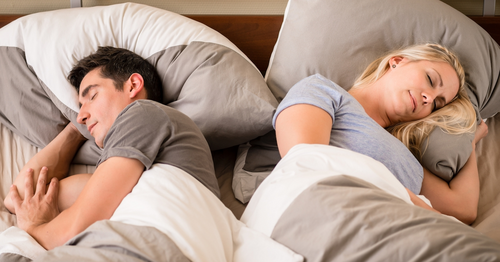
Did you know the position you sleep in may have a significant effect on how well your brain cleans itself out at night, and thereby protects your neurological health?
We’ve talked in these pages about how removing excess waste products in your brain is critical for health. When this doesn’t happen, waste buildup can contribute to neurologic diseases such as Alzheimer’s and Parkinson’s. This process mostly occurs while you sleep.
Researchers say, depending on your sleep position, more (or less) of these waste products are eliminated. And if this posture isn’t your normal ‘go to sleep position,’ maybe it’s worth training your body to learn to love it.
While you sleep, your brain is working hard. It’s cleaning out the waste it collects during the day by rinsing it into your glymphatic system.1
It’s similar to how a filter works in a fish tank – by removing the sludge and slime before it has time to build up and stick to the walls of the tank and kill the fish.
Excessive buildup of this waste – consisting mostly of beta-amyloid and tau proteins — is harmful to the brain and is associated with Alzheimer’s disease. However, during sleep this debris is washed away as large amounts of cerebrospinal fluid (CSF) flood the brain.2
The CSF flooding only occurs during unconsciousness because that’s when the fluid-filled spaces around the brain cells, called interstitial spaces, expand in size by up to 60 percent to allow this ‘washing’ to take place.
A study performed at Stony Brook University in New York and published in The Journal of Neuroscience investigated how body posture during sleep affects brain waste removal in mice.3
The researchers used MRI scans to image the brains with the animals in all three sleeping positions – supine (lying on the back), prone (lying on the stomach) and lateral (lying on the side). (I didn’t know a mouse could sleep on its side, but let’s take the scientists’ word for it.)
The results showed the waste washed away through the glymphatic system most efficiently when the mice were in the right lateral (side) position compared to the supine or prone positions.
In fact, the brains of the animals in the lateral position cleaned out 77 percent and 66 percent better than those in the prone and supine positions. What’s more, the mice lying in the prone and supine positions retained 58 percent and 62 percent of the ‘sludge’ in their brains.4
“These findings will come as good news to most sleepers, since the lateral position is the most common sleeping position people use,” said the principal investigator, Helene Benveniste, a medical doctor and a professor at Stony Brook.
While so far this testing has only been conducted on animals, the researchers speculate the same benefits of lateral (side) sleeping would apply to people, although they say further studies are needed to confirm this. Amen to that. The anatomies of mice and humans are so different I wouldn’t jump to a conclusion just yet.
“Many types of dementia are linked to sleep disturbances, including difficulties in falling asleep,” said Maiken Nedergaard, a co-author of the research.
“Our finding brings new insight into this topic by showing it is also important what position you sleep in.”5 Prof. Nedergaard, of the University of Cophenhagen, is the woman who actually discovered the glymphatic system, the waste clearance system that is unique to the nervous system.
.jpg)