x




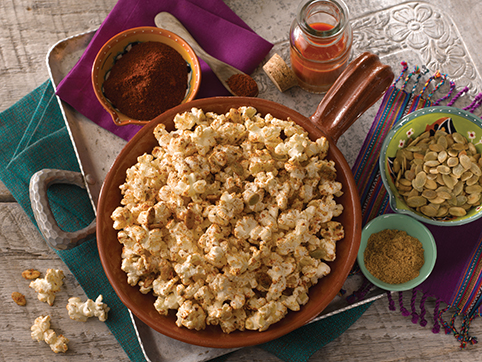
Snacks can be the downfall to any diet but popcorn can be the light and healthy alternative to crackers and chips. Who can resist popcorn at a movie theater. Just hold the buckets of butter and you will have a healthy snack. Popcorn is not new to the food scene. What is new is the variety of toppings and flavors being created today from garden fresh herbs to the hot, spicy flavors riding the wave of the hot pepper trend.
America can claim to be the birthplace of popcorn. It was discovered here thousands of years ago and has been loved by people ever since. Through the ages, popcorn has remained relatively unchanged. Popcorn is a seed which just happens to do some nifty things when heated.
The Popcorn Board (yes, there is one!) tells us that the early Native Americans believed a spirit lived inside each kernel of popcorn. When heated, the spirit grew angry, burst out of its home, and fled into the air as a disgruntled puff of steam. A less charming but more scientific explanation exists for why popcorn pops.
In the late 19th century and early 20th century, popcorn was enjoyed for breakfast like cereal is today. In fact, it very well may have been the forerunner to corn flakes.
Popcorn is a whole grain. It is made up of three components: the germ, endosperm, and pericarp (also known as hull). Of the 4 most common types of corn—sweet, dent, flint, and popcorn—only popcorn pops. Popcorn differs from other types of corn in that its hull has just the right thickness to allow it to (eventually) burst open.
At the heart of this endearing little kernel is a healthful whole-grain, naturally low in fat and calories, gluten-free, and non-GMO.