x




“You are what you eat” is a phrase that has been thrown around for decades. However, roughly 80% of people believe information about healthy foods is conflicting. Nearly 60% say that this conflicting info makes them unsure which foods might actually help their bodies thrive. Such uncertainty can lead to poor food choices, which could cause serious difficulties in maintaining proper gut health.
Gut health, or digestive health, is an extremely complex and important part of overall physical and mental well-being. Recent research shows that gut health has connections to mental health, endocrine disorders, the immune system, cancer, skin diseases and more. A system that was once considered simple among health experts has become a major focus in the push to improve overall health, happiness and longevity.
The gut microbiome includes hundreds of species of bacteria that live inside the small and large intestines. Some of these bacteria are considered necessary for maintaining a healthy body while others may be more harmful. Understanding common problems associated with gut health and how to address them is essential to living a balanced life.
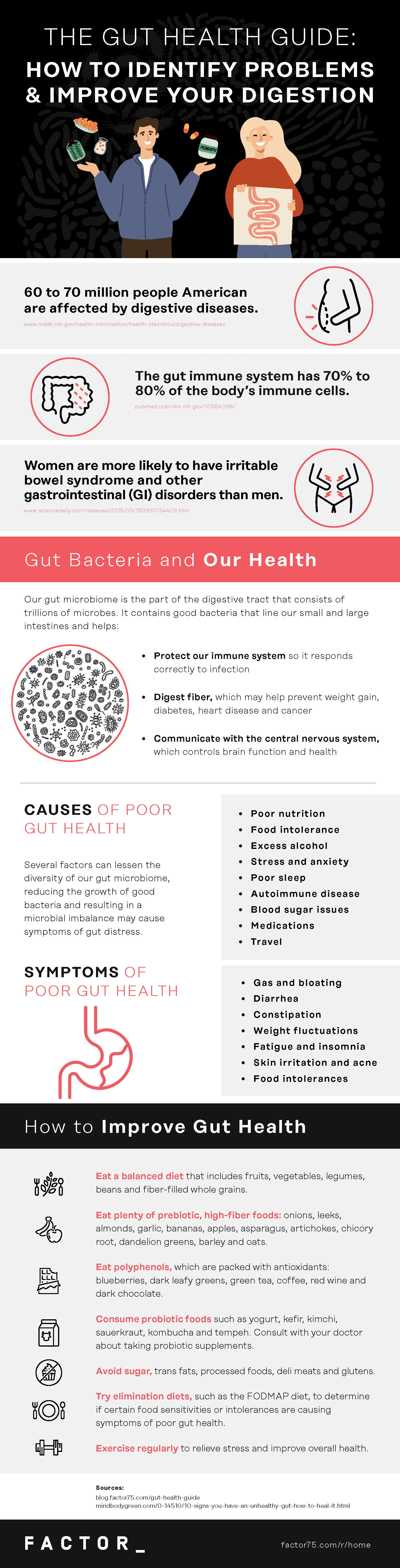
It’s possible that you may be experiencing health issues associated with your gut without knowing. Most gut concerns can be identified by a number of symptoms, including:
You might also suffer from gut health problems if you have food intolerances, stress, anxiety and/or depression. Identifying the symptoms is an essential first step to finding relief.
Poor gut health is often caused by having too much or too little of a certain bacterium in the microbiome. Digestive problems are often preventable and associated with common circumstances, such as:
Improving digestive health involves increasing the good bacteria in your microbiome to keep bad bacteria under control. There are several lifestyle choices that can be made to create a natural balance of bacteria in the gut. This equilibrium is what can help squash health problems associated with poor gut health and improve your overall mental and physical well-being.
The following are several changes you can make to improve gut health.
Regular exercise provides numerous mental and physical benefits, including higher production of short-chain fatty acids. These fatty acids help protect the immune system, boosting your overall health.
A healthy microbiome is largely based on a balanced diet. Consume plenty of fruits, vegetables and whole grains full of fiber to feed the good types of gut bacteria.
Probiotics are bacteria living along the intestinal wall that support gut health. They can be consumed in supplement form or through foods such as kombucha, kefir and yogurt.
Strive for seven to eight hours of quality sleep per night, as inadequate sleep could be harmful to digestive health.
Extreme amounts of stress often cause numerous health issues. Stress-reducing activities — such as exercising, meditation, receiving a massage and yoga — can help improve your gut health and overall well-being.
Eliminate Harmful Foods
You may have a food intolerance that’s causing harm to your gut. An elimination diet might help identify the foods that are causing acid reflux, bloating, fatigue, rashes or other symptoms.
There’s no need to deal with the discomfort associated with poor gut health. Simply put, the path to better digestive health involves eating a balanced diet, exercising often, sleeping well and eliminating habits that cause uncomfortable symptoms. The journey to superior gut health begins today.