x




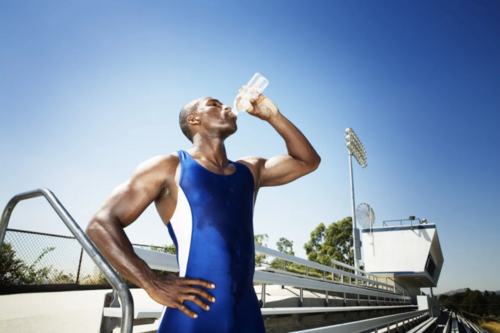
Whether you’re an elite athlete, weekend warrior, or simply trying to improve your health, you’ve likely been told to make sure to drink enough water. There are two schools of thought on the important topic of hydration: those who believe in pre-hydrating and those who assert you should only drink when thirsty. While hydration is critical, it’s important not to over hydrate and even to know when your body needs more than just water to function properly. It’s a complicated topic, so what’s the best strategy?
The Body is Made Up of Water
Water makes up 55 to 65 percent of adult bodies, muscles and kidneys contain 79 percent water, and bones and the brain are close behind at 73 percent. That’s why hydration is essential for peak performance. Water is lost through breathing, sweating and urinating. Remarkably, it just takes a 2 percent loss in weight due to water loss to cause dehydration, and dehydration can reduce strength by 2 percent, power by 3 percent and endurance in athletes by 10 percent. According to the National Academy of Sports Medicine, dehydration can affect cognition, coordination, response time, tracking, short-term memory, attention, focus and fatigue.
It’s About Absorption
The American College of Sports Medicine recommends that endurance athletes consume 5 to 7 ml water per kilogram bodyweight in the four hours before exercise. This translates to approximately 340 to 477 ml for a 150-pound female and 455 to 636 ml for a 200-pound male. The general recommendation is to drink until your urine is clear. However, sometimes it’s not that straightforward.
Just because you drink water doesn’t mean you’re actually absorbing the water. The composition of the water largely determines how much you absorb. If you drink distilled water with no salt, you won’t absorb the water and you’ll begin to deplete your blood sodium levels leading to hyponatremia. Common symptoms of hyponatremia include nausea, muscle weakness, and disorientation, which can be easily confused with symptoms of dehydration. The problem becomes dangerous if you give a person suffering from hyponatremia more water, as it further dilutes their blood sodium levels.
New Thinking — Drink to Thirst
When a Boston marathoner died of hyponatremia in 2002 the wheels were put into motion to find the answers behind what hydration strategy is safest for all athletes. This led to a “drink to thirst” stance on hydration and a new set of recommendations. As far back as the early 1990s, a Dr Tim Noakes Ph.D. published a groundbreaking study regarding the potential danger of overconsuming water during exercise. Contrary to popular belief, they found drinking too much water was far more dangerous than not drinking enough. The body’s inherent mechanism to maintain hydration balance has since been shown to be more than enough to maintain hydration and prevent the catastrophic effects of hyponatremia. This has led to changes in recent recommendations for endurance athletes to simply “drink to thirst.”
The average exerciser likely does not sweat enough to warrant the ingestion of large amounts of water. For elite runners and other endurance athletes, a useful strategy to determine your hydration plan is to weigh yourself before and after your run. If you’ve gained weight, then you’re definitely over-consuming and you need to dial back your water intake. If you lose more than 2% of your bodyweight, you need to bump up your intake.
Don’t drink too much water, but don’t drink too little. How can athletes know what is the safe amount? The American College of Sports Medicine (ACSM) makes the following recommendations:
Before exercise:
During exercise:
After exercise:
The best rule of thumb is to listen to your body and pay attention to a few key metrics, including body weight and urine color, to ensure you’re optimally hydrated to look, feel, and perform your best!