x



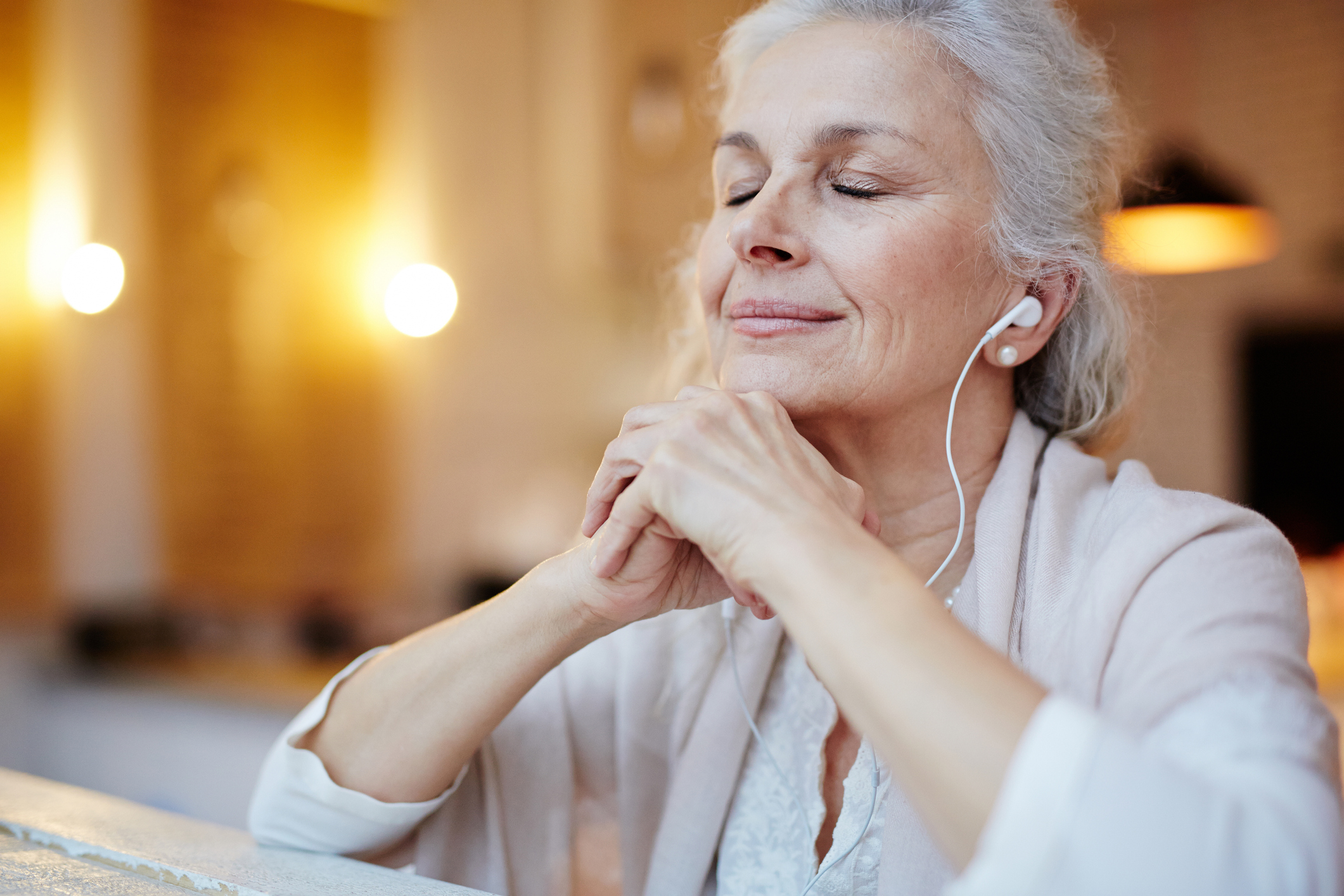
Music has been defined as “the science or art of ordering tones or sounds in succession.” When you hear a song from your past, you aren’t thinking about this definition, but you may remember when you first heard the song, who you were with at the time, and the wonderful emotions you felt.
Music touches us, inspires us, and sometimes heals us. This is particularly true for senior adults, who may be dealing with isolation, depression, pain, cognitive decline, or grief. Can music really help seniors through the many challenges of growing older?
The answer is a resounding yes.
Music and the Brain
According to the National Institute of Health, music is capable of evoking strong positive emotions, and elevating the mood of individuals. Music can lower the body’s level of cortisol, a hormone that can contribute to feelings of stress and anxiety. It can also trigger other chemical reactions in the brain, stimulating positive feelings.
. “This is especially important for dementia patients,” Linda says. “When they are singing, they don’t dwell on other anxieties.”
Music and Emotions
Music, along with a standard care regiment, has demonstrated that it can produce a significant reduction in depression among seniors.
When music is shared in a group setting, loneliness is set aside as seniors enjoy the session together. Listening to music or creating it with others is a relaxing and fun activity that can build relationships between seniors.
Studies suggest active music participation by seniors contributes to psychological wellbeing, and mental health during the transitional years of retirement and beyond. Further, through music participation, seniors can express themselves creatively and participate in experiences that are rewarding and interesting.
Music and the Body
If music inspires seniors to dance or move, not only are their spirits lifted, their bodies benefit from the physical activity as well.
Linda notes that the body has its own rhythms, such as heartbeat and respiration. Due to the pandemic, she currently is prevented from conducting group music therapy sessions, but she explains a method she uses in therapy called the “iso principle.” “If someone is very anxious, we can match where they are at physically with the tempo of a song,” she says. “Then, gradually, we can slow the tempo and calm the person into more relaxed body rhythms.”
Music and Dementia
According to the Mayo Clinic, research suggests that listening to or singing songs can provide emotional and behavioral benefits for people with Alzheimer’s disease and other forms of dementia.
Linda’s focus is to meet each person where they are. “For some, that might mean just making eye contact with me,” she says. “With others, maybe the goal is getting them to sing the last word of a musical phrase. I just want them to be engaged at their ability level.”
She has witnessed music trigger deep memories in dementia patients. “I remember a couple where the husband had advanced dementia and seldom spoke. He and his wife’s favorite song was Sweet Caroline. I played it for them on my computer and he reached over and took her hand. She was startled and then realized he still remembered her and what the song meant to them,” she says.
Family caregivers can participate as well — find music selections their loved ones respond to, and play the music or sing during mealtime or during a morning routine. Turning off competing noise (like a TV) and playing music that is not interrupted by commercial breaks is also advised. Also, encourage movement if the senior is so inclined.
Music and Hospice
The effect of music is so deeply embedded in most people that it still serves to comfort those near the end of life
Julie Strassman, Volunteer Coordinator at Bethesda Hospice Care, recalled a patient who could barely speak. “When our volunteer played a song for her, she could still sing every word,” she says.
Music and the Heart
The German poet Heinrich Heine once said, “When words leave off, music begins.”
Music does touch, inspire, comfort, calm and heal us. We feel its power, regardless of our age.
THE HOTTEST WEARABLE TECHNOLOGY FOR SENIORS: WWW.LIFESTYLEWEARABLE.COM
.png)