x






We commonly hear that environmental factors like toxins and chemicals are the biggest disruptors to our gut health, but one of the worst things for the microbiome is stress. You’ve probably heard someone say something like I’m so stressed my stomach hurts. Feeling like your stomach is in knots when you’re stressed goes much deeper than just a little belly pain. That’s your gut telling you it’s out of whack. Stress can impact your gut health. Here’s why and what you can do about it.
Let’s start with the why. How can stressing out over running late to work, not having enough money to pay your bills, or worrying about whether you’re going to get everything done on your to-do list have any effect on your gut health?
To understand the answer to this question, we must first understand what stress is. Our ancestors depended on stress responses to get out of life-threatening situations. When enemies or wild animals came chasing after them to attack, our ancestors needed stress to focus less on the other parts of the body, like the nervous, reproductive, and immune systems, so that they could focus on running away and protecting themselves. Who needs a working gut when you’re running for your life, right?
Fast forward to today, and we still have the same response to stressful situations. We subconsciously put the weight of life or death onto every scenario that makes us stressed. So you’re stressed out about showing up five minutes late and making a bad impression? Your body doesn’t know that you’ll survive even if you show up late. All your body hears is that it needs to go into survival mode. Unfortunately, today we stress about far more than we should, and we trick our bodies into survival mode far too often.
Simply put, when the body is stressed out, digestion can slow to address the life-threatening situation at hand. But more often than not, the things we stress about are not life threatening. Throughout the day our bodies pump the brakes on digestion to cope with every little thing that stresses us out.
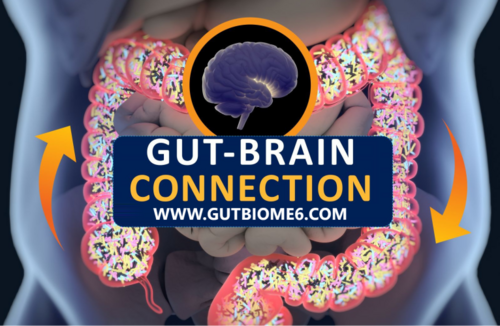
The nervous system and immune system can also be affected when your body goes into fight-or-flight mode. The gut is largely connected to the nervous system—this is why the gut is often coined as “the second brain.” The intestinal lining is infiltrated by the myenteric plexus—the myen-what?—basically a network of nerve fibers and neuron cell bodies that receive signals from the brain. Brain signals travel directly to the gut (Source: Chris Kresser).
When the immune system is running smoothly, it digests food, supports mental clarity, promotes nutrient absorption, balances hormones, and performs other functions. (Source: Thrive Global). We don’t want our immune systems to be affected by stress.
Research on mice has shown that exposure to stress reduced helpful microbial diversity in the large intestine.
It’s clear stress negatively impacts your gut health, but there is a solution for minimizing stress and restoring your gut flora. One of the easiest ways you can better manage stress is to breathe more. We are usually unaware of how much we hold our breath. We also tend to breathe more through our mouths than our noses. To instantly relax your entire body, try this simple breathing exercise. Breathe in for two counts and exhale for four. After practicing this technique, try exhaling for six counts. Do this anytime you feel stress coming—you can consider this technique the quick fix.
To become a less stressed person overall, try meditating twice a day. Start small and work your way up, using apps or guided videos to help you get started. Meditate once in the morning before you’ve checked your phone or had your coffee or breakfast. Find a therapy that helps you rejuvenate, whether it’s acupuncture, massage therapy, or something else. Keep a gratitude journal, play with your pet, and plan time in your schedule for doing nothing. Treat this time as if it’s a very important meeting.
Now for optimizing your gut health, we’ve got you covered with Gutbiome6