x




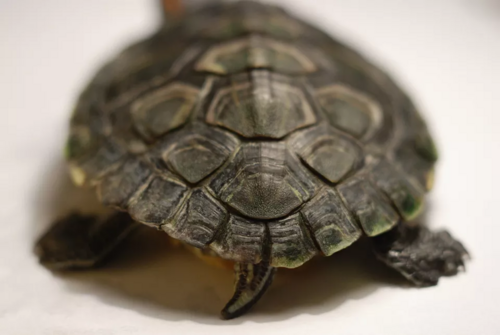
How to Tell the Gender of a Turtle

It is often difficult to determine the gender f a pet turtle, especially if you did not purchase it from a breeder that hatched them from controlled temperature environments. The temperature during egg incubation is what determines whether an embryo will become a male or female; cooler incubation temperatures produce males and females develop in warmer temperatures.
Thankfully there are some types of turtles that make it easier than others to distinguish a male from a female without knowing their incubation temperature. Red-eared sliders, for example, demonstrate sexual dimorphism and have distinct differences in size and appearance between the sexes.
Using Shell Size and Shape to Determine Gender
The size differences between most male and female turtles may not be obvious until the turtles reach sexual maturity (and the diet can also play a role in the size of a turtle). For male red-eared sliders, sexual maturity is about the time they reach 4 inches in length (and at about two to five years old). Females are sexually mature when they reach 6 to 7 inches in length (which may take five to seven years). Females will grow larger than males in red-eared sliders and many other turtle species, but the size difference between males and females varies by species. For example, in sulcata tortoises the females can reach 100 pounds and the males can grow to 200 pounds or more. In sea turtles, the male and females can both grow to the same size. To reliably use shell size as a factor in determining the gender of a turtle, the turtle must have reached its adult size.
The bottom of a turtle's shell (called the plastron) is also used as an indicator for determining gender in turtles. Male turtles have a concave (curved in) plastron while females have a flat one. These shapes enable male turtles to more easily mount a female during mating, and they give females more room to hold eggs internally.
Using Claw Length to Determine Gender
Female turtles often have claws on their front feet that are short and stubby. Males (and specifically red-eared sliders and other aquatic turtles) have much longer claws on their front feet than females. This is because males utilize their claws when they are attempting to woo females to breed. During mating, the males will also grab the female's upper shells by using their long claws.
Using Tails to Determine Gender
The most common way to determine gender in a turtle is to look at the length of its tail. Female turtles have short and skinny tails while males sport long, thick tails, with their vent (cloaca) positioned closer to the end of the tail when compared to a female. It is, of course, easiest to determine the gender of a turtle when looking at its tail length if you have multiple turtles of both sexes to compare.
Using Markings and Coloration to Determine Gender
All red-eared sliders have predominantly green bodies suffused with bright yellow streaking, which won't help distinguish males from females. But other color indicators may. The plastron is yellow with uneven, dark markings that are paired while the tail, legs, and head are green with thick yellow stripes. As red-eared sliders get older, many turn to a dark, almost black color and may obscure some or all of their yellow markings. This darker coloration is more common in male red-eared sliders.
Ornate box turtles are another kind of turtle that is sexually dimorphic. Mature male ornate box turtles have red eyes while female eyes are brown or yellow. The males also have greenish colored heads with red or orange leg scales and females have brown heads with yellow leg scales.