x




Whether you're considering investing in a franchise or thinking about starting an independent restaurant, the types of risks and the potential rewards will vary. While one is not proven to be more successful than another, there are a few factors to consider before deciding which type of ownership is best for you. These include the initial start-up responsibilities, the amount of control and decision making you desire to have, the money needed to start either business, and how much previous experience you should have. Keep reading below to learn more about each factor and what needs to be considered when making your final decision.
The possibility of failure when opening a restaurant is prevalent whether you choose to become a franchisee or operate independently. But considering which type of restaurant ownership may work best for you can help improve your chances for success. The first risk factor to consider is the amount of responsibility you’ll have when both opening your restaurant and once it's fully operational.

In general, all responsibilities fall on you when you’re an independent owner. While this can be a profitable and rewarding factor in the long run, it means you must be thorough with all of your initial responsibilities.
Buying into a restaurant franchise means you’re being handed a concept that’s proven to work. With almost any franchise, the branding and reputation-building has already been done for you. Most franchises have a clear marketing strategy and business concept, which means an average consumer can easily recognize your business before you even open.
Conversely, the immense branding power of a nationally recognized chain brings the potential for negative publicity. If a different franchisee in a different state, for example, has a foodborne illness outbreak, customers across the country could become wary of any location within that franchise. Additionally, corporate scandals or a customer’s bad experience at a different location could cause consumers to avoid your restaurant altogether.
In almost any case, independent ownership will give you more creative control over your restaurant than becoming a restaurant franchisee. This doesn’t always mean, however, that one is better than the other. Below are a few considerations to understand as you get closer to making your decision.

For many, having total control over your business is a large part of the appeal of independent ownership. You can have a say in your food offerings, menu changes, employment structure, and ambiance.
When working with a restaurant franchise, business and menu guidelines have already been developed. Because franchises are built on tried and true methods, you’re handed everything from individual food items to customer service rules and regulations that have already been proven successful.
Alternatively, operating as a franchisee leaves you with very little creative control over things like menu items and decor. And along with the expectation that you won’t change a brand’s menu or aesthetics, many franchises will regularly audit locations to ensure the brand is being represented properly.
While the initial startup costs are typically lower for opening a franchise location than an independent restaurant, the comparisons don’t end there. Both the methods of financing and division of funds can differ greatly, making money an important factor when it comes to deciding which business is right for you.

One of the biggest upsides to owning your own restaurant is that you keep all the profits. Nothing gets passed along to a larger corporation and there are no monthly fees or dues. With that in mind, it may take more money for an independent owner to start their business. However, for those who may be working with a tight budget, there is more wiggle room to make and change budgeting decisions. For example, you can decide to forgo certain decorative decisions or alter your renovation plans.
In order to open up a chain restaurant, potential candidates must meet the franchise’s initial financial requirements. This typically includes liquidity, which means that you, as the franchisee, have the funds available to help keep your company afloat during the first few months, and meeting the company’s minimum net worth requirements to prove that you have the money to invest in the business.
On top of these requirements, you must secure a location for the franchise and pay an initial franchising fee which can range from a thousand to several hundred thousand dollars. Once you have opened the franchise, royalties and national advertising campaign fees are often involved.
As a pro towards operating as a franchisee, franchisers will often work with investors to help secure financing for your business. Additionally, lenders are often more open to supporting franchise businesses because of their proven success rate. And, being a franchisee can come with the buying power to purchase food in bulk at a cheaper price.
While previous restaurant experience is always recommended, those with less experience may do better with operating a franchised restaurant. This is because franchises will provide you with the structure, resources, and training needed to help you succeed. Conversely, if you have an extensive background in the food service industry, you may thrive through independent ownership.

If you have worked in food service for years, but now you want to see your restaurant vision come to life, you are not alone. Many former chefs, kitchen managers, and other restaurant veterans share this dream.
If you have this type of significant knowledge and experience in the industry, it is much more likely that you will feel more comfortable with being in charge of creating and executing your business's plan rather than acting under someone else's choices.
In its simplest form, a franchise is a successful business model. Consequently, entrepreneurs or former corporate executives may be the best candidates for buying a chain restaurant. If your previous work experience has provided you with a strong understanding of how to market to a demographic and retain customers' business, then you may fit the mold for successful franchise owners. These types of individuals often have made a small fortune in the business sector and have the spendable income needed to buy into a franchise.
This chart highlights each of the risk factors mentioned above as well as where a franchisee operator and independent owner stand on the scale:
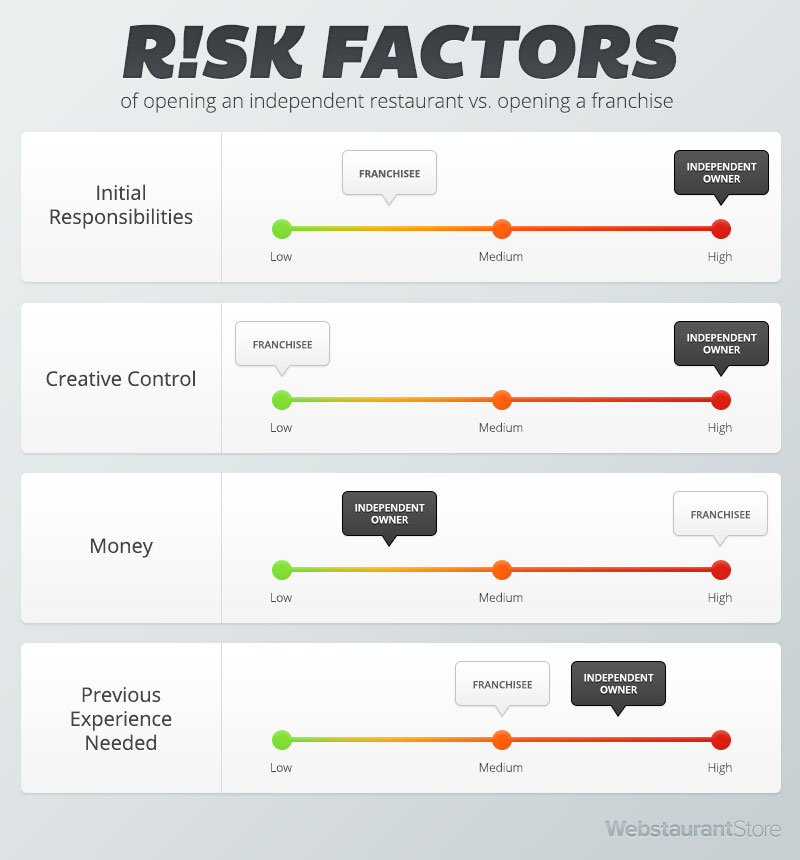
Take these risk factors described above and consider each one carefully. With so many successful franchises as well as independent restaurants across the country, either option can provide you with a profitable and rewarding business endeavor. As a future business owner, your strengths and limitations are unique. Consider your goals and the pros and cons of the four factors to determine if independent ownership or becoming a franchisee is best for you.
.jpg)