x




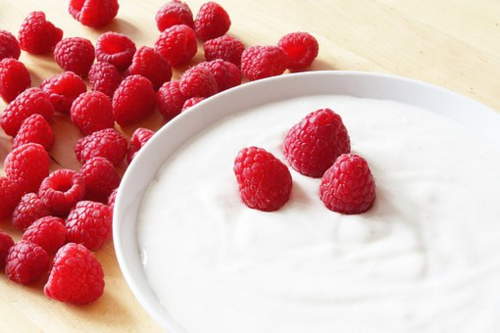

It seems men and women are different in more ways than the obvious.
Yogurt changes microbes; that we know. But now new research shows that probiotics in yogurt may alter them depending on gender.
A team from various medical facilities in Japan led by Yoshio Suzuki has produced some interesting data on how yogurt impacts microbiota in healthy young adults. The work appears in Frontiers in Microbiology May 11, 2017 titled Association between Yogurt Consumption and Intestinal Microbiota in Healthy Young Adults Differs by Host Gender.
When it comes to colonies in your intestines, influencers are many: age, environment, location, income and education levels, gender and diet. Much of the research zeroes in how diet influences, without always controlling for other factors.
Gender-dependent differences in the human intestinal microbiota have been reported but the impact of diet was not clear. To tease out more accurate data, the researchers limited some of those differences by enlisting college freshman.
And in a sign that the times, they are a-changing, the authors wrote: “It is not uncommon for college students to participate in gut microbiota-related studies.”
Students enrolled at Juntendo University and living in the same dormitory reported yogurt consumption and also provided stool specimens over a 2 month period.
A total of 293 (212 male and 81 female) were included.
Note that many factors were not controlled such as prebiotic content in the diet, history of illness or drug use, exercise, early exposure via birth method or breastfeeding and other items which could confound results.
The findings are hypothesis-generating and continue to reveal the complex dynamics of the human intestinal microbiota, and hence should prove to be informative and important for prospective studies exploring the intricate triangle of diet, microbiota and health.
One takeaway: not all product claims may or should be equal for each yogurt buyer with a willing spoon. Think of how hair dye will vary dramatically on two different people, depending on all sorts of starter strands. This research adds to that premise.
.png)