x




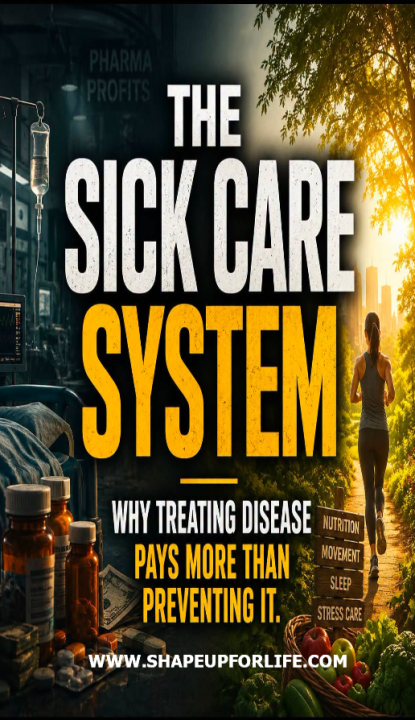
Here is a question that sounds simple but contains one of the most important truths in modern medicine.
If a pharmaceutical company developed a pill that permanently cured type 2 diabetes in a single dose — would it be more or less profitable than the current situation, in which tens of millions of people take multiple medications every day for the rest of their lives?
The answer is obvious. A cure is a one-time transaction. A chronic disease managed but never resolved is a lifetime revenue stream.
This is not a conspiracy theory. It is not an accusation that doctors are malicious or that researchers are corrupt. It is a structural observation about the economic logic embedded in the institutions that determine what medicine gets funded, what treatments get developed, what gets taught in medical school, what gets reimbursed by insurance, and what your doctor has time to discuss with you in a twelve-minute appointment.
The system we call healthcare is not, in any meaningful sense, a health care system.
It is a sick care system — extraordinarily sophisticated at managing acute illness and crisis intervention, genuinely impressive in its technical capacity to keep people alive through emergencies, and structurally, economically, and institutionally oriented away from the prevention, root cause resolution, and terrain restoration that would reduce the demand for its services.
Understanding why this is — the specific economic mechanisms, the institutional incentives, the historical decisions that created this system — is not an exercise in cynicism. It is the beginning of the most important form of health literacy available. Because the person who understands the system is no longer entirely subject to it.
𝗛𝗢𝗪 𝗪𝗘 𝗚𝗢𝗧 𝗛𝗘𝗥𝗘 — 𝗧𝗛𝗘 𝗛𝗜𝗦𝗧𝗢𝗥𝗜𝗖𝗔𝗟 𝗗𝗘𝗖𝗜𝗦𝗜𝗢𝗡𝗦 𝗧𝗛𝗔𝗧 𝗦𝗛𝗔𝗣𝗘𝗗 𝗠𝗢𝗗𝗘𝗥𝗡 𝗠𝗘𝗗𝗜𝗖𝗜𝗡𝗘
The system did not emerge fully formed. It was built — through specific historical decisions, specific funding choices, and specific power dynamics — in ways that embedded certain values and excluded others.
𝗧𝗵𝗲 𝗙𝗹𝗲𝘅𝗻𝗲𝗿 𝗥𝗲𝗽𝗼𝗿𝘁 — 𝘁𝗵𝗲 𝗳𝗼𝘂𝗻𝗱𝗶𝗻𝗴 𝗱𝗼𝗰𝘂𝗺𝗲𝗻𝘁 𝗼𝗳 𝗺𝗼𝗱𝗲𝗿𝗻 𝗺𝗲𝗱𝗶𝗰𝗮𝗹 𝗲𝗱𝘂𝗰𝗮𝘁𝗶𝗼𝗻
In 1910, an educator named Abraham Flexner — working under the sponsorship of the Carnegie Foundation, with significant financial support from the Rockefeller philanthropic networks — published a report evaluating medical education across North America. The Flexner Report concluded that most existing medical schools were inadequate and recommended restructuring all of medical education around pharmaceutical pharmacology and the germ theory of disease — the idea that specific pathogens cause specific diseases and specific drugs target them.
The consequences of this single document shaped medicine for the following century. Within two decades, more than half of all medical schools in the United States had closed — from 155 schools in 1910 to 31 by 1935. The schools that closed disproportionately included those that admitted women, those that admitted Black students, and those that taught herbal medicine, nutrition, and other non-pharmaceutical approaches. The surviving schools — funded substantially by Rockefeller philanthropy and later by pharmaceutical industry interests — oriented their curricula around pharmaceutical intervention as the primary treatment modality.
Nutrition was marginalised from the outset. A century after the Flexner Report, the average medical school in the United States still provides fewer than 25 hours of nutrition education across a four-year curriculum. Many provide fewer than ten. The germ theory framework — extraordinarily powerful for infectious disease — became the dominant model for all disease, while the metabolic, immune, and dietary terrain in which disease either develops or does not was progressively sidelined in favour of the search for the specific agent and the specific drug to target it.
A document funded by interests that would directly benefit from a pharmaceutical-oriented medical system created the architecture of Western medicine for a century. That is worth sitting with.
𝗧𝗵𝗲 𝗽𝗵𝗮𝗿𝗺𝗮𝗰𝗲𝘂𝘁𝗶𝗰𝗮𝗹 𝗶𝗻𝗱𝘂𝘀𝘁𝗿𝘆'𝘀 𝗮𝘀𝗰𝗲𝗻𝘁
The pharmaceutical industry grew from a relatively modest chemical manufacturing sector in the early twentieth century into one of the most profitable and politically powerful industries in human history over the course of about seventy years. The genuine miracles of sulfonamide antibiotics in the 1930s and penicillin in the 1940s — which saved millions of lives and transformed infectious disease — created the template and the credibility for the pharmaceutical model of disease treatment. The success of antibiotics demonstrated beyond question that pharmaceutical compounds could transform medicine. What followed was the extrapolation of that model to chronic diseases for which it was far less suited.
Key structural decisions compounded this. A 1980 law in the United States allowed universities to patent discoveries made with public research funding and license them to private companies — dramatically increasing the financial entanglement between academic research and pharmaceutical industry. The incentive to discover patentable pharmaceutical solutions to biological problems became baked into university research economics. When direct-to-consumer pharmaceutical advertising was legalised in the United States in 1997 — one of only two countries in the world to permit it — pharmaceutical companies became major media advertisers, and the normalisation of pharmaceutical solutions to health problems was embedded in the daily information environment of hundreds of millions of people.
𝗧𝗵𝗲 𝗻𝘂𝘁𝗿𝗶𝘁𝗶𝗼𝗻 𝗿𝗲𝘀𝗲𝗮𝗿𝗰𝗵 𝗱𝗲𝗳𝗶𝗰𝗶𝘁
Nutritional interventions and lifestyle medicine cannot be patented. There is no intellectual property in broccoli. No patent on exercise. No proprietary claim on sleep quality.
The consequence is structural: there is no commercial incentive to fund the large, expensive clinical trials that would establish the evidence base for nutritional and lifestyle medicine at the level of rigour applied to pharmaceutical treatments. When those large trials are not conducted, the evidence base is thin. When the evidence base is thin, clinical guidelines do not include these interventions. When guidelines do not include them, physicians do not recommend them. And the clinical inertia continues — not because nutrition and lifestyle are unimportant, but because they are not profitable enough to study comprehensively.
The standard response to this observation — that nutrition lacks good evidence — misses the circularity of the argument. Nutrition lacks large clinical trials primarily because there is no commercial incentive to fund them. Concluding that nutrition therefore lacks clinical relevance is like concluding that a country road lacks traffic because it has no streetlights, without asking why the streetlights were never installed.
𝗧𝗛𝗘 𝗘𝗖𝗢𝗡𝗢𝗠𝗜𝗖 𝗟𝗢𝗚𝗜𝗖 — 𝗛𝗢𝗪 𝗧𝗥𝗘𝗔𝗧𝗠𝗘𝗡𝗧 𝗕𝗘𝗔𝗧𝗦 𝗣𝗥𝗘𝗩𝗘𝗡𝗧𝗜𝗢𝗡 𝗜𝗡 𝗘𝗩𝗘𝗥𝗬 𝗙𝗜𝗡𝗔𝗡𝗖𝗜𝗔𝗟 𝗖𝗔𝗟𝗖𝗨𝗟𝗔𝗧𝗜𝗢𝗡
𝗧𝗵𝗲 𝗽𝗿𝗼𝗳𝗶𝘁 𝘀𝘁𝗿𝘂𝗰𝘁𝘂𝗿𝗲 𝗼𝗳 𝗰𝗵𝗿𝗼𝗻𝗶𝗰 𝗱𝗶𝘀𝗲𝗮𝘀𝗲
Consider what a single person with type 2 diabetes generates economically for the healthcare system. They take metformin, possibly additional glucose-lowering agents, often a statin for cardiovascular risk, often a blood pressure medication. They have regular blood tests, regular specialist appointments, retinal screening, podiatry visits. They may eventually need dialysis for kidney failure, cardiac intervention, or limb amputation from circulatory complications. The lifetime revenue generated across pharmaceuticals, specialist care, diagnostics, and eventual complications management runs into hundreds of thousands of dollars or pounds per person.
A person whose type 2 diabetes is reversed through dietary change and exercise — and this is genuinely achievable in most cases, as the consistent evidence from low-carbohydrate dietary intervention trials demonstrates — generates essentially none of this revenue.
The system is not designed to prevent this person from developing diabetes or to reverse it when they do — because there is no profitable product at the prevention or reversal stage. The profitable products are at the management stage. This is not a malicious design. It is the natural result of a system built around commercial products rather than health outcomes.
𝗥𝗲𝗶𝗺𝗯𝘂𝗿𝘀𝗲𝗺𝗲𝗻𝘁 — 𝘄𝗵𝗮𝘁 𝗴𝗲𝘁𝘀 𝗽𝗮𝗶𝗱 𝗳𝗼𝗿 𝗱𝗲𝘁𝗲𝗿𝗺𝗶𝗻𝗲𝘀 𝘄𝗵𝗮𝘁 𝗴𝗲𝘁𝘀 𝗱𝗼𝗻𝗲
Insurance reimbursement structures — whether private insurance or state health systems — pay for procedures, prescriptions, and interventions. They rarely pay meaningfully for prevention, lifestyle medicine, nutritional counselling, or the extended conversations required to understand and address the root causes of chronic disease.
A cardiologist who spends forty-five minutes with a patient discussing dietary change, sleep quality, stress management, and exercise is reimbursed at the rate of a standard consultation. A cardiologist who performs a stent procedure is reimbursed at dramatically higher rates for a shorter time investment. The economic logic for the individual physician does not require any conscious decision to prioritise intervention over prevention. The reimbursement structure makes that calculation automatically. And the career financial incentives of the medical profession point consistently in the same direction — the highest-paid specialties are predominantly procedural; general practitioners, who are best positioned to do prevention work, are among the lowest-paid physicians in most Western health systems.
𝗧𝗵𝗲 𝘁𝘄𝗲𝗹𝘃𝗲-𝗺𝗶𝗻𝘂𝘁𝗲 𝗮𝗽𝗽𝗼𝗶𝗻𝘁𝗺𝗲𝗻𝘁 — 𝘀𝘁𝗿𝘂𝗰𝘁𝘂𝗿𝗮𝗹 𝗽𝗿𝗲𝘃𝗲𝗻𝘁𝗶𝗼𝗻 𝗼𝗳 𝗽𝗿𝗲𝘃𝗲𝗻𝘁𝗶𝘃𝗲 𝗺𝗲𝗱𝗶𝗰𝗶𝗻𝗲
The average primary care appointment in the United States is approximately fifteen to seventeen minutes. In the United Kingdom, approximately ten to twelve minutes. In twelve minutes, a physician can prescribe a medication, renew existing prescriptions, address an acute complaint, and order routine tests. They cannot meaningfully explore the dietary, sleep, stress, environmental, and lifestyle factors that are the actual terrain of chronic disease.
This is not an accident. It reflects the economics of a health system oriented around throughput and a reimbursement structure that pays per appointment rather than per health outcome. A physician who genuinely wanted to practice prevention-oriented medicine within the current system would need to see far fewer patients per day — generating far less revenue for themselves or their employing institution — while achieving health outcomes that are diffuse, long-term, and not captured in the metrics that determine their professional performance assessments. The system structurally prevents the medicine that would most reduce the burden of chronic disease.
𝗠𝗲𝗱𝗶𝗰𝗮𝗹 𝗲𝗱𝘂𝗰𝗮𝘁𝗶𝗼𝗻 — 𝘁𝗿𝗮𝗶𝗻𝗶𝗻𝗴 𝗽𝗵𝘆𝘀𝗶𝗰𝗶𝗮𝗻𝘀 𝗳𝗼𝗿 𝘀𝗶𝗰𝗸 𝗰𝗮𝗿𝗲
Medical school curricula are oriented around diagnosing and treating established disease — because that is what examinations test, what hospital training develops, and what professional life requires. Pharmaceutical pharmacology receives extensive curriculum time. Nutrition receives fewer than 25 hours across four years. Lifestyle medicine — exercise prescription, sleep medicine, stress management — receives similar margins.
The continuing medical education that keeps practising physicians updated is substantially funded by pharmaceutical industry sponsorship. The content of industry-sponsored education consistently emphasises pharmaceutical solutions to clinical problems. The physician keeping their knowledge current is continuously immersed in industry-shaped educational content — not because of individual corruption but because the industry funds what it is commercially interested in funding.
𝗧𝗵𝗲 𝗷𝗼𝘂𝗿𝗻𝗮𝗹𝘀 𝗮𝗻𝗱 𝘁𝗵𝗲 𝗿𝗲𝘀𝗲𝗮𝗿𝗰𝗵
The most prestigious medical journals — the New England Journal of Medicine, JAMA, The Lancet, the BMJ — set the evidentiary standard for clinical practice. What they publish becomes what physicians know and do. These journals are substantially funded by pharmaceutical advertising, in some cases approximately 50% of revenue. Richard Smith — editor of the BMJ for thirteen years — wrote after his retirement that medical journals have become "an extension of the marketing arm of pharmaceutical companies." This is not a fringe outsider observation. It is a damning assessment from someone who spent his career at the centre of the institution he was describing.
Publication bias compounds this. Journals are more likely to publish pharmaceutical trial results that are positive than those that are negative. Pharmaceutical companies selectively publish positive trials and have been documented suppressing negative ones. The published evidence base for many drugs is therefore systematically more positive than the full body of evidence would support — and the unpublished negative trials are largely invisible to the physicians making prescribing decisions.
𝗥𝗲𝗴𝘂𝗹𝗮𝘁𝗼𝗿𝘆 𝗿𝗲𝗹𝗮𝘁𝗶𝗼𝗻𝘀𝗵𝗶𝗽𝘀
The agencies responsible for approving and regulating pharmaceutical products — the FDA in the United States, the EMA in Europe — are substantially funded by the pharmaceutical industry through user fees. The FDA receives approximately 45% of its drug review budget from industry fees. The movement of personnel between regulatory agencies and the companies they regulate — sometimes called the revolving door — means the people making regulatory decisions have often previously worked for, or will subsequently work for, the companies whose products they regulate.
The consequence is not necessarily explicit corruption. It is the subtler effect of shared professional assumptions, professional relationships, and career incentives that orient regulatory culture toward facilitating pharmaceutical development rather than rigorously challenging it. The dietary guidelines setting what constitutes healthy eating have shown a parallel pattern — committees including members with financial ties to food industry interests producing guidelines that have documented those interests' influence.
𝗪𝗛𝗔𝗧 𝗧𝗛𝗘 𝗦𝗬𝗦𝗧𝗘𝗠 𝗔𝗖𝗧𝗨𝗔𝗟𝗟𝗬 𝗣𝗥𝗢𝗗𝗨𝗖𝗘𝗦
It is important to be honest about both dimensions of this picture.
The genuine achievements of modern medicine are extraordinary. Antibiotics and vaccines have essentially eliminated most of the infectious diseases that killed the majority of humans throughout history. Emergency medicine, trauma surgery, cardiac intervention, intensive care, and neurosurgery save lives that would have been lost in any previous era. Cancer treatment, though often toxic, has produced genuine long-term survival in conditions once universally fatal — childhood leukaemia survival has gone from essentially zero to over 90% in sixty years. Diagnostic precision through imaging, pathology, and genetic testing has never been greater.
The system at its best, for the purposes it was designed for, is genuinely remarkable.
The systemic failures are equally real. Despite the most expensive healthcare system in history, chronic disease rates in Western populations have risen continuously. Obesity, type 2 diabetes, cardiovascular disease, autoimmune conditions, mental illness, and many cancers are all increasing in populations with access to the best medical technology ever developed. The United States — which spends approximately twice as much per capita on healthcare as other wealthy nations — ranks last or near-last among comparable countries on most population health metrics including life expectancy, infant mortality, and chronic disease burden. Expense and health outcomes have been almost completely decoupled.
Iatrogenic disease — illness caused by medical treatment itself — is one of the leading causes of death in Western countries. Adverse drug reactions, hospital-acquired infections, surgical complications, and the cumulative effects of taking many medications simultaneously represent a massive disease burden generated by the healthcare system itself. Estimates suggest iatrogenic causes may be the third leading cause of death in the United States.
Polypharmacy in older adults is one of the most significant and least discussed harms in the current system. Older people in Western countries are frequently taking five, eight, ten or more simultaneous medications. The drug-drug interactions, the adverse effects from medications prescribed to manage the side effects of other medications, and the cumulative metabolic burden of polypharmacy represent suffering that is largely preventable and largely uncounted in the metrics that evaluate the healthcare system's performance.
𝗧𝗵𝗲 𝗽𝗿𝗲𝘃𝗲𝗻𝘁𝗶𝗼𝗻 𝗽𝗮𝗿𝗮𝗱𝗼𝘅
Here is one of the deepest ironies in the entire structure. Prevention is dramatically more cost-effective than treatment at the population level. The economics of preventing type 2 diabetes through lifestyle intervention versus managing it medically for a lifetime are not remotely comparable — prevention is far cheaper across a population. The landmark Diabetes Prevention Program trial demonstrated that intensive lifestyle intervention reduced type 2 diabetes incidence by 58%, which was more effective than the drug metformin and dramatically cheaper over a lifetime.
But prevention is economically irrational for every individual actor in the current system. The pharmaceutical company has no product to sell. The hospital has no procedures to perform. The insurance company — particularly in the United States where people change insurers frequently — invests in prevention for a patient who may be insured by a competitor by the time the prevented disease would have developed. The physician has no reimbursement for the time required for genuine prevention counselling. Every individual institutional actor making rational financial decisions within the current system produces, collectively, a sick care system that is irrational at the population level. Individual rationality producing collective catastrophe.
𝗪𝗛𝗔𝗧 𝗚𝗘𝗡𝗨𝗜𝗡𝗘 𝗘𝗠𝗣𝗢𝗪𝗘𝗥𝗠𝗘𝗡𝗧 𝗔𝗖𝗧𝗨𝗔𝗟𝗟𝗬 𝗟𝗢𝗢𝗞𝗦 𝗟𝗜𝗞𝗘
Understanding the system's failures is not an endpoint. It is the beginning of a different relationship with your own health. The person who understands the system is significantly more empowered than the person who approaches medicine with uncritical trust — because they understand what the system does well and what it systematically underdelivers, and can navigate accordingly.
𝗧𝗵𝗲 𝗺𝗼𝘀𝘁 𝗶𝗺𝗽𝗼𝗿𝘁𝗮𝗻𝘁 𝗺𝗶𝗻𝗱𝘀𝗲𝘁 𝘀𝗵𝗶𝗳𝘁
The system treats health as something that happens to you — managed by experts in clinical settings using products and procedures. The terrain medicine framework treats health as something you actively create — through the daily decisions about food, sleep, movement, stress, relationships, and environment that determine the biological terrain in which disease either develops or does not.
Your doctor, your specialist, the hospital — these are resources you use when you need them, and you genuinely need them for acute illness, diagnostic precision, and crisis intervention. They are not the primary determinants of your health. You are. This is not anti-medicine. It is a realistic assessment of what medicine is for — and a reclaiming of responsibility for what medicine cannot do for you within its current structure.
𝗨𝘀𝗶𝗻𝗴 𝘁𝗵𝗲 𝘀𝘆𝘀𝘁𝗲𝗺 𝗳𝗼𝗿 𝘄𝗵𝗮𝘁 𝗶𝘁 𝗱𝗼𝗲𝘀 𝘄𝗲𝗹𝗹
Use the system without hesitation for acute illness and emergencies — infections, injuries, cardiac events, strokes, surgical emergencies. This is where it is genuinely extraordinary and where delayed use can cost lives. Use its diagnostic capability fully — blood tests, imaging, pathology, genetic testing. Understanding your own biology clearly is powerful, and the diagnostic tools available through modern medicine are remarkable. Use specialist expertise for complex conditions. Use pharmaceutical treatment when genuinely indicated — some conditions have pharmaceutical treatments that are the most effective available option, and dismissing pharmaceutical medicine wholesale is as mistaken as accepting it uncritically.
𝗕𝘂𝗶𝗹𝗱𝗶𝗻𝗴 𝗲𝘃𝗶𝗱𝗲𝗻𝗰𝗲 𝗹𝗶𝘁𝗲𝗿𝗮𝗰𝘆
Learning to read medical evidence critically — not to become a physician but to become a sophisticated consumer of medical information — is one of the most valuable health skills available.
The most important thing to understand about medical statistics is the difference between relative risk reduction and absolute risk reduction. A drug that reduces your risk of a heart attack by 50% sounds transformative. If your baseline risk is 2% and the drug reduces it to 1%, the absolute benefit is 1% — meaning 100 people need to take the drug for one person to benefit. The relative figure sounds dramatic. The absolute figure tells you the clinical reality. Most pharmaceutical advertising and much clinical discussion uses relative figures. Asking for absolute figures changes the conversation.
Related to this is the concept of number needed to treat — how many people need to take a drug for one person to benefit — and number needed to harm — how many need to take it for one person to experience a significant adverse effect. When a treatment has a number needed to treat of 100 and a number needed to harm of 50, the arithmetic of who is actually being helped versus harmed becomes visible in a way that statistical significance and relative risk figures conceal.
The most important distinction between a surrogate endpoint and a clinical endpoint is similarly crucial. A drug that improves a laboratory marker — cholesterol level, bone density score, blood pressure number — is not the same as a drug demonstrated to reduce the actual clinical events that matter: heart attacks, fractures, strokes. Many drugs have strong evidence for improving surrogate markers and weaker or absent evidence for reducing the clinical outcomes that actually determine health and longevity. Knowing the difference allows genuinely informed decision-making.
𝗔𝘀𝗸𝗶𝗻𝗴 𝗯𝗲𝘁𝘁𝗲𝗿 𝗾𝘂𝗲𝘀𝘁𝗶𝗼𝗻𝘀
The twelve-minute appointment can be used more effectively when you know what to ask. Writing questions down before appointments prevents the cognitive load of a clinical encounter from making you forget what you wanted to know. Bringing a companion to important appointments means a second person is retaining information and asking different questions. Requesting copies of all test results — you have a legal right to your own medical records in most countries — means you can understand your own numbers rather than simply receiving verbal summaries.
The questions worth asking consistently include: What is the root cause of this condition, not just the name of the symptom? What lifestyle, dietary, and non-pharmaceutical approaches have evidence for this? What are the absolute risk reduction figures for this treatment, not relative figures? What is the natural history of this condition without treatment — what happens if we monitor rather than immediately intervene? Are there nutritional deficiencies or dietary factors that might be contributing? What does success look like and how will we measure it?
Seeking a second opinion for significant diagnoses is not disloyalty to your physician. Evidence shows second opinions change management recommendations in a meaningful proportion of cases. It is appropriate due diligence for decisions that significantly affect your life.
𝗧𝗵𝗲 𝗺𝗼𝘀𝘁 𝗶𝗺𝗽𝗼𝗿𝘁𝗮𝗻𝘁 𝗵𝗲𝗮𝗹𝘁𝗵 𝗺𝗲𝘁𝗿𝗶𝗰𝘀 𝗮𝗿𝗲 𝗻𝗼𝘁 𝗿𝗼𝘂𝘁𝗶𝗻𝗲𝗹𝘆 𝘁𝗲𝘀𝘁𝗲𝗱
Chronic disease does not begin at diagnosis. It begins with years or decades of deteriorating biological terrain that conventional medicine does not assess or address until clinical thresholds are crossed. By the time a diagnosis is made, the underlying dysfunction has often been developing for a long time.
The tests that reveal developing chronic disease earliest — fasting insulin rather than just fasting glucose, high-sensitivity CRP for systemic inflammation, homocysteine, 25-OH vitamin D, ferritin, omega-3 index, and a comprehensive thyroid panel including free T3 and thyroid antibodies rather than just TSH — give far more actionable information about the developing terrain than the standard annual blood panel. Understanding and requesting these tests gives you visibility into your biology that the routine system does not provide.
𝗙𝗶𝗻𝗱𝗶𝗻𝗴 𝗮𝗹𝗹𝗶𝗲𝘀 𝗶𝗻 𝘁𝗵𝗲 𝘀𝘆𝘀𝘁𝗲𝗺
The sick care system contains physicians, nurses, dietitians, and other practitioners who are deeply frustrated with its limitations and who practise differently within or alongside it. Integrative medicine physicians, functional medicine practitioners, and lifestyle medicine specialists offer a clinical experience that addresses what the standard system misses. The growing direct primary care movement — physicians who charge a monthly membership fee and see far fewer patients for much longer appointments, operating outside insurance reimbursement structures — represents one structural response to the twelve-minute appointment problem. These physicians can actually practise prevention medicine because their economics allow it.
Not all functional medicine practitioners are equal — the field has its own problems with overclaiming and insufficient evidence standards — but the best integrative practitioners are worth finding. They exist in every country.
𝗧𝗵𝗲 𝗵𝗲𝗮𝗹𝘁𝗵 𝘁𝗵𝗮𝘁 𝗺𝗼𝗻𝗲𝘆 𝗰𝗮𝗻𝗻𝗼𝘁 𝗯𝘂𝘆
The blue zone populations that live longest and healthiest are not distinguished primarily by their diets or exercise routines — though both matter. They are distinguished by strong social connection, a clear sense of purpose, and belonging to communities larger than themselves. Social isolation is as powerful a risk factor for premature death as smoking. The epidemiology is robust. Loneliness kills through the same inflammatory, cardiovascular, and immune pathways as other major risk factors.
The sick care system has no product for belonging, no prescription for purpose, no reimbursable intervention for community. These are the dimensions of human health that the system's commercial logic is most completely unable to see. Building genuine community — contributing to something larger than personal health optimisation — may be the single most powerful terrain intervention available. And it is entirely outside any commercial system's ability to sell or control.
𝗧𝗛𝗘 𝗗𝗘𝗘𝗣𝗘𝗥 𝗧𝗥𝗨𝗧𝗛
The sick care system is not evil. It contains hundreds of thousands of genuinely dedicated, genuinely compassionate people who went into medicine to help — and who work within a system whose incentive structures systematically undermine their ability to do what they went there to do.
The problem is not individual malice. It is institutional architecture — the accumulated result of historical decisions, funding structures, regulatory relationships, and commercial incentives that have oriented an entire industry toward managing disease rather than creating health.
Understanding this does not mean rejecting medicine. It means being a sophisticated user of medicine — knowing when it is extraordinary and irreplaceable, and knowing when it will not serve you and you must take responsibility yourself.
The most important insight this guide can offer is straightforward but profound: your health is not primarily determined by your healthcare system.
It is determined by the food you eat across decades, the quality and quantity of your sleep across years, the movement that is or is not part of your daily life, the stress that is or is not resolved, the toxins you are or are not exposed to, the community you do or do not belong to, and the sense of meaning and purpose that does or does not animate your daily existence. None of these are things a doctor can prescribe, a hospital can provide, or a pharmaceutical company can sell.
All of them are within your sphere of influence.
The sick care system will be there when you need it — for the emergencies, the diagnoses, the crises. It does those things extraordinarily well and you should use it without hesitation when they arise.
The health that means you need it less often is built in the kitchen, the bedroom, the park, the garden, the community, and the daily practice of treating your body as the terrain that everything else grows from.
www.shapeupforlife.com