x




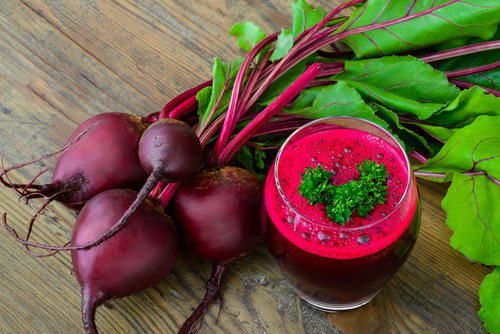
“…it seems crazy not to eat it on a regular basis.”
That’s the view of UK-registered dietitian and TV nutritionist Carrie Ruxton. She was extolling the nutritional properties and wide-ranging health benefits of beetroot — a vegetable packed with fiber, vitamins, minerals and phytonutrients.
Consumed on a regular basis, it reduces inflammation, slashed your risk of cancer, lowers your blood pressure and increases your endurance.
And now researchers have started to look at its potential to boost brain health.
Experts believe the chief benefit of beetroot is its high level of dietary nitrate.
Once in the body, nitrate is converted to nitric oxide in the endothelium – the lining or inner surface of the arteries. Nitric oxide plays a fundamental role in vascular function by dilating blood vessels – meaning it provides a wider tube for the blood to pass through. This helps maintain healthy blood and oxygen flow throughout the body.
In 2011, a team of researchers from Wake Forest University, North Carolina, were interested in whether beetroot could increase cerebral blood flow.
To this end, they split 16 volunteers with an average age of 75 into two groups. The participants were fed either 16 ounces of beetroot juice as part of a high nitrate diet, or had to follow a low nitrate diet. The study was conducted over four days.
Using scans, the researchers showed for the first time that a high nitrate diet increases blood flow to four areas of the frontal lobes — regions where blood flow diminishes with age. Loss of function in these parts of the brain is linked with cognitive decline and dementia.
In another study four years later, researchers from the UK enrolled 40 healthy men and women aged 18 – 27. The participants drank either 16 ounces of beetroot juice or a low nitrate placebo drink.
90 minutes later they were given cognitive tasks while their brains were scanned. Increased blood flow to the frontal cortex and improved cognitive performance were seen in the beetroot group.
In the most recent study, again conducted at Wake Forest, the researchers wanted to see if the somatomotor cortex could be boosted by beetroot juice. This part of the brain processes messages coming from muscles. An established benefit of exercise is the strengthening of this area.
The scientists were also interested in secondary connections between the motor cortex and the insula, which is involved in widely diverse processes including motor control and cognition.
26 participants, average age 65 and all of them diagnosed with high blood pressure, were assigned to six weeks of moderate exercise three times a week. No one in the group was taking more than two medications a week for their condition. An hour before each exercise session they drank either beetroot juice or a low-nitrate placebo. Their brains were scanned at the end of the trial period.
Results showed that the beetroot group had greater connectivity between brain regions to “more closely resemble that of younger adults…”
These findings were described by the Wake Forest team as “exciting” and could be important in maintaining brain health and mobility as we age.
By far the best source of nitrates in the diet are greens, butter and oak leaf lettuce, spring and beet greens, Swiss chard, bok choy, basil, coriander and parsley; all contain high amounts.
But the star is rocket salad (arugula) with 480 mg of nitrates per 100 grams.
While beets themselves contain a good amount of nitrate (110 mg per 100 grams), you need to consume them in the form of beetroot juice to enjoy the 279 mg per 100 grams that the drink contains. By eliminating the fiber, the juice provides a more concentrated dose of the nutrients.
If you do choose to go down this path, it’s best to check first with your doctor, as regular consumption of beetroot juice may not be indicated in certain medical conditions.