x






A year and a half ago, I was sitting in a room with my mother and she didn’t know who I was. We were having a polite conversation, like two strangers. She didn’t realize that she was talking to her own son. In that moment, it registered that every memory we’d had together was gone. All of the shared accomplishments, happiness, angst and tears had vanished. The person who made me who I was, had forgotten me.”
These are the words of Edward Shehab. Edward and his family watched helplessly for years as his mother’s mental and physical health declined. Edward’s mother passed from Alzheimer’s disease in June 2019. Upon his mother’s diagnosis, Edward began scouring the existing research on Alzheimer’s to figure out how to slow the progression of the disease. He learned a sobering truth. It’s never too early to start focusing on your brain health, but it can be too late.
During his exploration, Edward learned a great deal about how to preserve and protect your brain and discovered a brain supplement, Memory Health. He was so impressed with the product and science backing it, that he bought part of the company and made it his goal to help others avoid the gut-wrenching path of his mother.
Unfortunately, Edward’s story is not uncommon.
According to the Alzheimer’s Association, about 5.8 million Americans have Alzheimer’s disease in 2019. The number of people living with the disease doubles every five years beyond age 65. The total is projected to nearly triple to 14 million people by 2060, according to the Centers for Disease Control and Prevention.
Just to clarify, Alzheimer’s is a progressive, degenerative brain disorder in which plaque and tangles develop damaging brain cells resulting in memory and cognition problems as well as changes in behavior and personality. While costly tools, like brain scans and spinal fluid analysis, do exist to allow medical professionals to see the identifying features of the disease, most cases are diagnosed based on presenting symptoms.
By then, it’s already too late.
Solutions do exist which can help ease the symptoms of Alzheimer’s, but once the disease is symptomatic, it’s considered incurable and irreversible. In Outsmarting Alzheimer’s: What You Can Do To Reduce Your Risk, Kenneth S. Kosik MD writes:
Treating Alzheimer’s at this stage is a lot like treating cancer after it has already spread throughout the body or like treating heart disease after the first heart attack has already taken place.”
Studies indicate that Alzheimer’s changes begin in the brain long before any symptoms appear, maybe even twenty years prior. Currently, there’s no drug or technological treatment for Alzheimer’s, but research is showing that lifestyle habits can dramatically reduce your risk of developing the disease and help delay it.
One study, including more than a thousand people, aged 60 to 77, at risk for Alzheimer’s, determined that those people, who changed their lifestyles to include regular exercise, a brain-healthy diet, brain-stimulating brain training, and management of metabolic and vascular risk factors, scored 25 percent higher than the control group on tests measuring memory, thinking, and problem-solving.
In some specific areas, the results were profound. The scores of the brain-healthy living group were a whopping 83 percent higher for executive functioning and 150 percent higher for processing speed! Researchers found that even people already experiencing early symptoms of dementia benefitted from lifestyle changes.
What Edward Shehab learned on his mother’s journey through Alzheimer’s and what science has proven is that brain health is important at every age. The brain you’re building today is the one you’re going to have to live with tomorrow. There are typically five stages of brain development. It’s essential that the brain receives the right nourishment, stimulation, and protection from insult at every stage to optimize health and function then and in the future.
Today, Edward’s whole family follows a brain-healthy lifestyle and takes the Memory Health supplement.
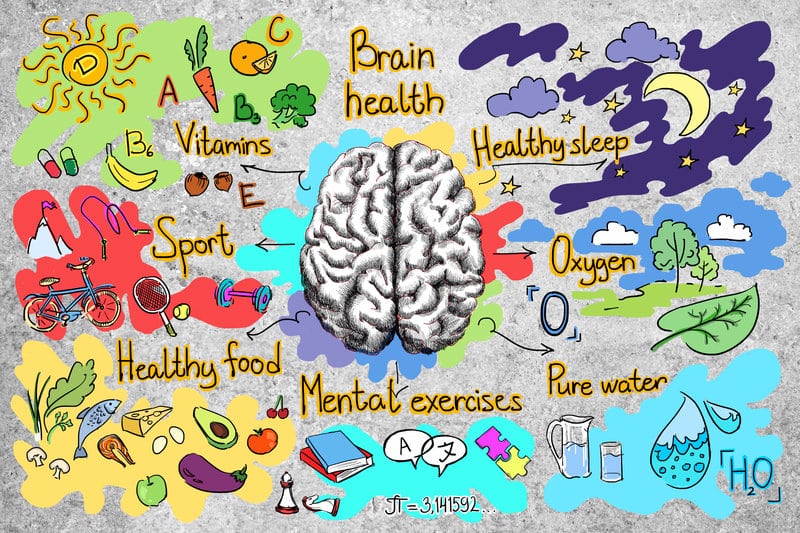
Brain-healthy lifestyle habits will help every brain function better at any stage of life and lower the risk of Alzheimer’s and other neurological diseases, memory problems, brain fog, and age-related decline. In Outsmarting Alzheimer’s: What You Can Do To Reduce Your Risk, Dr. Kosik outlines six key habits that have the most documented scientific evidence for protecting your brain. He calls it a “Brain Smart Plan”.
You can slash your risk of cognitive decline by staying actively connected to and supported by family and friends. Spending time with others helps to reduce stress levels and keeps cognitive skills sharp. According to one study, “Lonely individuals may be twice as likely to develop the type of dementia linked to Alzheimer’s disease in late life as those who are not lonely.” Loneliness hurts your brain.
Diets rich in plant foods and low in highly processed foods preserve brain function and overall health. Brain smart eating also includes fish, a small amount of meat, olive oil, nuts, and some wine, coffee, and dark chocolate in moderation. Research showed that the MIND diet lowered the risk of Alzheimer’s by as much as 53 percent in participants who adhered to the diet rigorously, and by about 35 percent in those who followed it moderately well. Give your brain the nutrients it needs to function optimally. Supplementation can help preserve and protect it.
Kosik writes, “The more you move, the fewer brain cells you lose.” Exercise even boosts the production of new brain cells. Luckily, your brain benefits from even a relatively low amount and intensity of physical activity. People who worked out at least three times a week for a minimum of 15 to 30 minutes were less likely to develop Alzheimer’s disease, even if it ran in their family according to one study. Moving your body increases blood flow to the brain. Exercise also triggers the release of brain-derived neurotrophic factor (BDNF), which promotes neuronal growth and survival, reduces inflammation, and supports the formation of long-term memories.
Long term, unrelenting stress, anxiety, depression, and other chronic emotional problems can raise your risk of Alzheimer’s by as much as 135 percent, reports Kosik. On the other hand, meditation, deep breathing exercises, massage, yoga, and other relaxation practices can keep your brain calm, resilient, and healthy. Not all stress is bad, but chronic stress can actually damage your brain. Many studies have shown that too much stress and elevated cortisol levels can generate overproduction of myelin-producing cells, inhibit the birth of new neurons and cause the hippocampus, a brain structure integral to learning and memory, to shrink.
The more you challenge your brain, keep it stimulated, active and out of its comfort zone, the better equipped it will be to fend off Alzheimer’s. A Mayo Clinic study showed that a college education, mentally demanding job, and intellectually engaging hobbies postponed the development of Alzheimer’s by almost a decade in people who carried one of the “Alzheimer’s genes”. People without a high-risk gene were able to delay the disease even longer. It’s thought that ongoing education and mentally challenging work build “cognitive reserve,” the capacity for the brain to cope better and keep working properly even if brain cells are damaged or die.
Sleep is critical to brain health at every age. Neurobiological processes occurring during sleep have a profound impact on brain health, and influence mood, energy level, and cognitive function. Numerous studies have shown that structural and physiological changes happening in the brain during sleep affect the capacity for new learning. Sleep plays a pivotal role in memory and impacts attention, problem-solving, and creativity.
Mounting evidence implicates disturbed sleep or lack of sleep as one of the risk factors for Alzheimer’s disease. When you sleep too few hours or not deeply enough, you not only feel foggy and less alert the next day, but an ongoing sleep deficit prematurely ages your brain and raises the risk for developing Alzheimer’s disease.
It’s never too early to start taking care of your brain, but it can be too late.