x




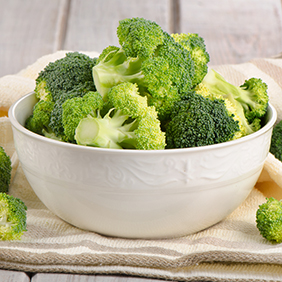
For the broccoli haters of the world, researchers may have more bad news: the vegetable may also help promote a healthy gut.
In a study, when mice ate broccoli with their regular diet, they were better able to tolerate digestive issues similar to symptoms of leaky gut and colitis than mice that were not placed on a broccoli-supplemented diet, according to Gary Perdew, the John T. and Paige S. Smith Professor in Agricultural Sciences, Penn State. He added that other vegetables, like Brussels sprouts and cauliflower, may also have similar gut health properties.
“There are a lot of reasons we want to explore helping with gastrointestinal health and one reason is if you have problems, like a leaky gut, and start to suffer inflammation, that may then lead to other conditions, like arthritis and heart disease,” said Perdew. “Keeping your gut healthy and making sure you have good barrier functions so you’re not getting this leaky effect would be really big.”
Good intestinal barrier function means that the gastrointestinal tract is helping protect the intestines from toxins and harmful microorganisms, while allowing nutrients to pass into the system, he said.
According to Perdew, the key to the process may be a receptor in the gut called Aryl hydrocarbon receptor, or AHR. The receptor helps the body regulate its reaction to certain environmental contaminants, as well as triggers other responses to toxin exposure.
The researchers, who released their findings in the current issue of the Journal of Functional Foods, suggest that cruciferous vegetables — such as broccoli, Brussels sprouts and cabbage — contain an organic chemical compound called indole glucosinolates, which breaks down into other compounds, including indolocarbazole — ICZ — in the stomach.
When ICZ binds to and activates the Aryl hydrocarbon receptor (AHR) in the intestinal lining, it aids in maintaining a healthy balance in the gut flora and immune surveillance, and enhances host barrier function, according to the researchers. This may help prevent diseases, such as various cancers and Crohn’s Disease, caused by inflammation in the lining of the gut.
According to Perdew, hyper-activating the AHR can cause toxicity, but using broccoli to activate the receptor locally — in the gut — rather than systemically might help avoid some of these problems.
“Dioxin, for example, activates this receptor, and if you hyper-activate it with dioxin, it will cause toxicity,” said Perdew. “What we were interested in is: Could you locally activate the receptor naturally at a level that would cause only modest AHR activation in the gut, but not cause systemic activation, which could possibly lead to negative effects?”
The researchers used two genetic lines of mice in the study to focus on AHR. One line had a low ability to bind ICZ to AHR, while the other line had a high ability to bind ICZ to AHR. They added 15 percent broccoli to the diets of both groups of mice.
After adding a substance that causes digestive problems, the researchers said that the mice with a higher ability to bind ICZ to the AHR were protected from a chemical that induced digestive problems, but the mice with the lower affinity suffered from the toxic insult.
For humans, the amount in the experiment would be equivalent to eating about 3.5 cups of broccoli each day, according to Perdew.
“Now, three and a half cups is a lot, but it’s not a huge amount, really,” said Perdew. “We used a cultivar — or variety — with about half the amount of this chemical in it, and there are cultivars with twice as much. Also, Brussels sprouts have three times as much, which would mean a cup of Brussels sprouts could get us to the same level.”
Because people with certain digestive conditions, such as colitis, are often warned to avoid too much roughage in their diets, future research may include determining the best ways for people to consume the broccoli — or other vegetables with similar effects — to receive the same health benefits, without causing any other associated digestive problems from the fibrous vegetables.
.png)