x




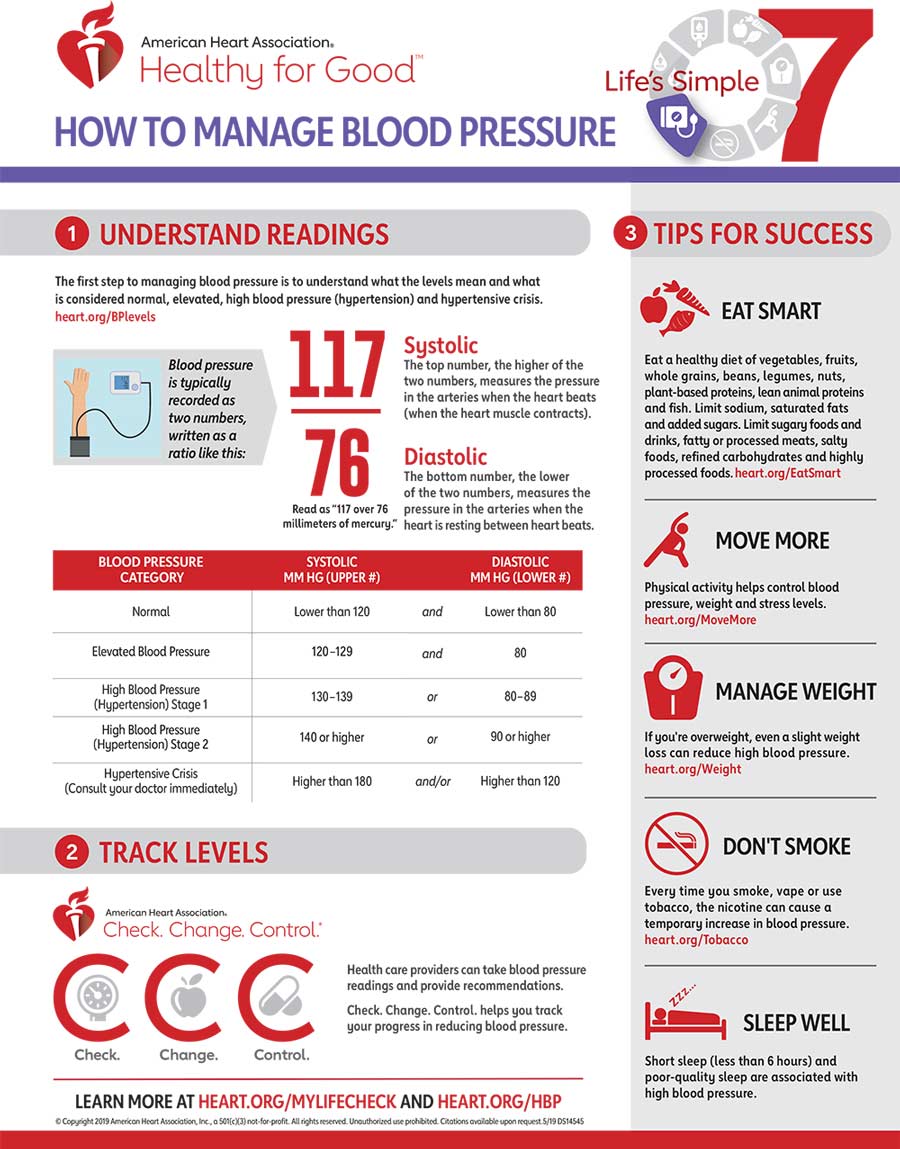
The first step to managing blood pressure is to understand what the levels mean and what is considered normal, elevated, high blood pressure (hypertension) and hypertensive crisis. heart.org/BPlevels
Blood pressure is typically recorded as two numbers: 117/76. Read as “117 over 76 millimeters of mercury.”
Health care providers can take blood pressure readings and provide recommendations. Check. Change. Control. helps you track your progress in reducing blood pressure. Track online at ccctracker.com/AHA.
Eat Smart: Eat a healthy diet of vegetables, fruits, whole grains, beans, legumes, nuts, plant-based proteins, lean animal proteins and fish. Limit sodium, saturated fats and added sugars. Limit sugary foods and drinks, fatty or processed meats, salty foods, refined carbohydrates and highly processed foods. heart.org/EatSmart
Move More: Physical activity helps control blood pressure, weight and stress levels. heart.org/MoveMore
Manage Weight: If you're overweight, even a slight weight loss can reduce high blood pressure. heart.org/Weight
Don’t Smoke: Every time you smoke, vape or use tobacco, the nicotine can cause a temporary increase in blood pressure. heart.org/Tobacco
Sleep Well: Short sleep (less than 6 hours) and poor-quality sleep are associated with high blood pressure.