x




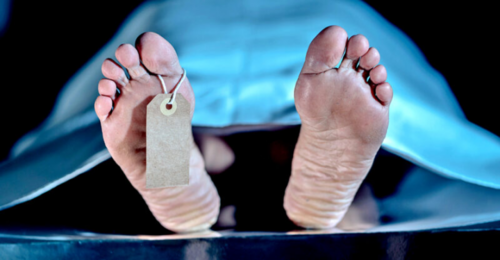
According to a 2011 Health Grades report, the incidence rate of medical harm occurring in the U.S. was estimated to be over 40,000 harmful and/or lethal errors daily.
Makary cites a 2014 Mayo Clinic survey of 6,500 American doctors, 10.5% of whom admitted they’d made a major medical mistake in the last three months.
He also cites a 2015 study by researchers at Massachusetts General Hospital that showed about half of all operations involved some kind of medication error.
That study and corresponding press release have since been removed and are no longer available online, Makary says.
Possibly because the hospital was embarrassed by the results.
In 2016, Makary and his research team published a report showing an estimated 250,000 Americans die from medical mistakes each year — about 1 in 10 patients — which (at that time) made it the third leading cause of death, right after cancer and heart disease.
According to Makary, that number may be higher, because the Centers for Disease Control and Prevention (CDC) does not collect vital statistics on medical errors.
A death cannot be recorded as a medical error as there’s no code for it.
Of course, since they didn’t do autopsies on every death, that number could also be lower, so the final estimate they came up with was between 125,000 and 350,000 deaths per year.
Another widely-cited study published in 2013 estimated the annual death toll for medical mistakes in the U.S. at 400,000 a year, Makary says.
But whatever the true number, and whether it’s the third cause of death or the ninth, medical mistakes are clearly a serious and too-frequent problem.
An estimated 30% of all medical procedures, tests and medications may also be completely unnecessary, and each of these unnecessary interventions opens the door for a medical mistake that didn’t need to happen.
Many doctors have long been concerned about the frequency of medical mistakes, unnecessary testing, and overtreatment, but the culture was such that it dissuaded open discussion and transparency.
It’s really only in the past decade or so that doctors and hospital administrators have started being more honest about these problems.
Now, a case (discussed below) in which a nurse was charged and found guilty of negligent homicide after accidentally administering the wrong medication threatens to undo much of that progress.
Milestones in patient safety
In medical jargon, a “near-miss” refers to a medical mistake that could have resulted in patient harm but didn’t, and a “preventable adverse event” refers to a medical mistake that does result in harm to the patient.
A “never event” is one that should never happen, regardless of circumstance. One example of a “never event” would be leaving a surgical instrument or sponge inside the patient.
In 2008, Medicare decided it would no longer pay for “never events,” in an effort to disincentivize sloppiness. Shortly thereafter, private insurance companies followed suit.
The following year, in 2009, the World Health Organization (WHO) organized a committee to address patient safety, as, worldwide, it was becoming apparent that many patients were dying from the care and not just from disease.
At the time, Makary had just published a surgery checklist for Johns Hopkins, and the WHO invited him to present it to the newly formed committee on patient safety.
This checklist eventually became known as the WHO Surgical Safety Checklist. To this day, it hangs on operating room walls across the world.
Later investigations have revealed this pre-op checklist does in fact reduce adverse event rates and save lives. If a loved one is in the hospital, print it out, bring it with you and confirm that each of the 19 items has been done.
This can help you protect your family member or friend from preventable errors in care. It’s available in several languages, including Arabic, Chinese, English, French, Russian, Spanish, Portuguese, Farsi, German, Italian, Norwegian and Swedish.
Opioid overdose is a leading cause of death among young adults
As of 2017, opioid overdoses have been the leading cause of death among Americans under the age of 50. The most common drugs involved in prescription opioid overdose deaths are methadone, oxycodone (such as OxyContin®) and hydrocodone (such as Vicodin®).
Lawsuits that have made their way through the judicial system in recent years have shown opioid makers such as Purdue Pharma, owned by the Sackler family, knew they were lying when they claimed opioids — which are chemically very similar to heroin — have an exceptionally low addiction rate when taken by people with pain.
As a result of their lies, doctors handed out opioids for pain as if they were candy. Even Makary admits to being fooled by the fraudulent PR.
“That is a form of medical mistake,” he says, adding “I’m guilty of it myself. I gave opioids out like candy, and I feel terrible about it.”
In recent years, the medical industry has cracked down on prescription opioids, making them harder to obtain, but many patients still struggle with addiction, and fentanyl-laced products obtained illegally are still causing many unnecessary deaths.
.jpg)