x




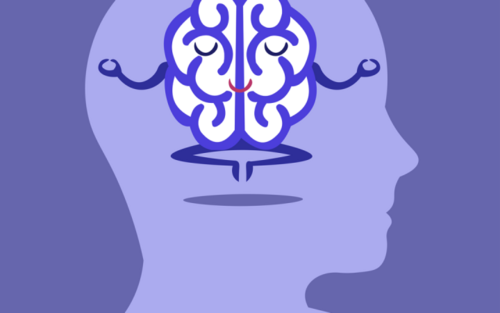
From a young age we are taught to behave and act in accordance to the outside/external world. Mostly no one really makes us focus on what lies within us, to listen and understand our own selves. We are trained to behave in ways our society approves of and are not truly allowed to understand what we want or express what we think is right for us. Due to this lack of understanding, whenever a state of chaos arises we are left confused, anxious and unsettled. Our mind starts wandering and a sense of disappointment prevails. This year with the pandemic looming over all of us, we are dealing with a lot of uncertainties. Experiencing disruption with our day to day life, we are dealing with uncomfortable feelings and emotions agitating our mind and body.
Human beings need to keep exercising their brain in a healthy way to live a complete and fuller life. And our present scenario makes it all the more important. Meditation is one such option that can help us not only during this difficult time but all throughout our life. It is a spiritual practice that helps calm our wandering mind. It helps us get to our centre when we are thrown off by all sorts of stresses in our life. Meditation is mind and body practice that focuses on the interaction of brain, mind, body and behavior. It encourages a heightened state of awareness and attention.
In earlier times meditation was limited to monks, saints and only a handful of people. But in recent decades it is being practiced by a much larger section of our population. People are becoming aware of its role in reducing stress, anxiety, and in providing mental clarity and peacefulness. They are investing time in learning to meditate, to breathe mindfully and are understanding the worth of living life in the present moment through meditation.
Scientific evidence has reinforced how beautifully meditation can help make us physically and psychologically healthier. Meditation is a form of self-directed neuroplasticity. You take the control of rewiring of your brain by consciously focusing inwards and thus mentally exercising the attentional networks of the brain and building up those neural pathways.
There has been a lot of ongoing research about how meditation helps in bringing positive change to our brain. A study in 2015 found that Meditation along with other modalities may be beneficial as a part of an Alzheimer’s disease prevention program. There is also an overall increase in the brain’s grey matter of the people who meditate, which is directly linked with processing information and intelligence. Not only that, meditation also helps with emotional regulation. Studies have found that long term meditation practices can reduce the amygdala reactivity to negative stimuli, which means more emotional control to affective stimuli. So our environment and emotional triggers remain the same but we react to them in a more balanced way. Meditation also strengthen the pons, which is an important part of the brain responsible for processing sensory input, basic physical functioning, sleep and facial function.
Researchers have also investigated the role of meditation in lowering blood pressure, improved blood circulation, irritable bowel syndrome, colitis, depression, and insomnia. Not only this, regular practice also helps the social aspect of our health, making people more empathetic, increasing mindfulness and resilience.
Knowing the amazing benefits of meditation, many of us want to start making it as part of our lifestyle. But it can be overwhelming and a little tough to start anything new. But consistency and a little help can help us pick up this practice and reaps out its benefits. There are also some apps like Headspace and Insight timer where people can start with guided meditation. For someone new below there are some simple steps to follow in order to start their practice:
.jpg)