x




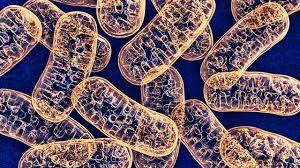
You may have heard mitochondria associated with the moniker, “the powerhouse of the cell”. How did they earn that nickname?
Mitochondria are the miniature power stations or factories in each and every cell in your body. A typical living human cell contains anywhere from hundreds to thousands of mitochondria.
Much in the same way as your digestive system, mitochondria are like small digestive systems in your cell, turning food into energy. Sugars, fats, and amino acids from proteins that we eat are converted into energy through the mitochondria. They are so effective at this that they generate an estimated 90% of the energy that our cells need.
Mitochondria look like little beans in your cell. They are made of two membranes: the outer membrane and the inner membrane.
The outer membrane acts as a wall, covering the entirety of the organelle.
The inner membrane looks like a series of folds, consisting of several compartments. This layered shape is intended to maximize the mitochondria’s surface area, supporting a higher efficiency in its function.
Within the inner membrane is a fluid called the matrix; this is where the magic happens.
Before the mitochondria became invaluable to human cells, they existed completely outside of them as single-celled, independent organisms. They looked a lot like bacteria. However, some time in ancient biological history, over two billion years ago, they merged with a simple cell to form a symbiotic relationship.
At first, the plan wasn’t just to merge. The mitochondria, as bacteria, only wanted to rob the host cells of their energy and then leave them to die. But the bacteria soon realized the benefit of working together with simple cells.
The simple cells provide them with antioxidants to protect them from free radicals and toxic reactive oxygen species that the mitochondria generate as a byproduct of energy production. In return, the mitochondria produced the energy the simple cells needed.
It’s a pretty sweet deal. It’s like the mitochondria are paying rent in return for housing and utilities.
Mitochondria are essentially aliens in your body. Our mitochondria even possess their own DNA, called mtDNA, giving them an independent genome. Furthermore, mitochondrial DNA is only passed down from mother to child, making you more genetically similar to your mother than your father. In fact, modern ancestry testing companies lean on your maternal ancestry line by using mitochondrial DNA.
The mitochondria have one primary purpose: to produce energy. In order to create energy, they create a much-needed molecule known as adenosine triphosphate or ATP.
Our bodies don’t just create and harness energy straight away. It actually stores the energy we produce from our food in a molecule.
ATP, or adenosine triphosphate, is the primary energy storage solution for our cells. They are like tiny batteries floating around, waiting to be used. “Tri”, meaning three, denotes that there are three phosphates in the molecular structure.
When cells need energy, ATP is broken down through a process called hydrolysis. This is actually pretty easy to do because ATP is such an unstable molecule. The three phosphates in ATP are like three roommates sharing a room. They don’t like each other and are just waiting to be split up.
When the split happens, the molecular bond between the phosphates in ATP’s tri-phosphate group is snapped off, removing one of the phosphates in the ATP molecule. The trio becomes a duo, thus turning ATP into ADP or adenosine di-phosphate.
This breakage releases immense energy and our cells use the energy to power important cellular activity.
Our mitochondria work hard to make sure our cells have enough of these ready-to-use “batteries”, or ATP, floating around.
In order to create more ATP, our mitochondria go through a series of chemical reactions to break down our food, particularly glucose, amino acids, and fatty acids.
Glucose is really the primary molecule that our food is broken down into so let’s focus on glucose to understand how our mitochondria convert food into energy.
Our mitochondria take our glucose molecules through a process called cellular respiration which is essentially just a process of breaking down and converting glucose by combining oxygen with a glucose molecule. The oxygen is derived from the air we breathe.
This process of adding oxygen to glucose produces a string of molecules. At its most rudimentary form, the process looks like the following formula:
Glucose + Oxygen = Carbon Dioxide, Water, and ATP.
Carbon Dioxide and water are byproducts of the process. This is cellular respiration, simplified.
Our mitochondria do not take glucose in its raw form. It’s not usable in its regular state so our cells break glucose down even more before passing it to our mitochondria. This process is called glycolysis.
The broken-down form of glucose is what is really combined with oxygen to produce a net of carbon dioxide, NADH, FADH2, and ATP. This process is what’s called the Krebs Cycle. Let’s break the products of this process down:
One of our byproducts. You breathe this out.
Nicotinamide adenine dinucleotide (NAD+) and flavin adenine dinucleotide (FAD) are coenzymes that help generate more ATP. NADH and FADH2 are their electron-charged forms. Ignore this for now.
Energy!