x




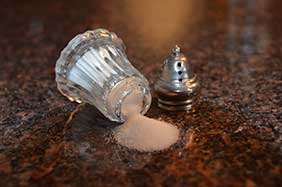
If you feel guilty every time you add a little salt to your food, you can now put that shaker back on the table.
A new study published in the American Journal of Hypertension finds evidence that the average daily sodium intake of most Americans is actually associated with better health outcomes than intake levels currently recommended by the CDC and major health departments, which are now being viewed by many in the scientific community as excessively and unrealistically low.
Too little salt is as bad as too much.
The study, “Compared With Usual Sodium Intake, Low-and Excessive-Sodium Diets Are Associated With Increased Mortality: A Meta-Analysis,” concluded that 2,645 – 4,945 mg of sodium per day, a range of intake within which the vast majority of Americans fall, actually results in more favorable health outcomes than the CDC’s current recommendation of less than 2300mg/day for healthy individuals under 50 years old, and less than 1500 mg/day for most over 50 years. This study was a combined analysis of 25 individual studies, which measured results from over 274,683 individuals.
Dr. Niels Graudal, the study’s lead author, says the results are an important extension of the findings of a major 2013 Institute of Medicine report, which cast doubt on the current CDC recommendations but failed to establish any specific optimum range of intake. “Our results are in line with the IOM’s concern that lower levels could produce harm, and they provide a concrete basis for revising the recommended range in the best interest of public health.”
“The good news,” he says, “is that around 95% of the global population already consumes within the range we’ve found to generate the least instances of mortality and cardiovascular disease.”
Analysis of the results found that, as with all other essential nutrients, there was a U-shaped correlation between sodium intake and health outcomes. When consumption deviated from the 2,645 – 4,945 mg range mortality increased, so that both excessively high and low consumption of sodium were associated with reduced survival.
The study also found that there is little-to-no variation in health outcomes between individuals as long as their consumption remained within the ideal intake range (2,645 – 4,945 mg/day).
So, you can politely pass the salt along with the pepper now.
.png)